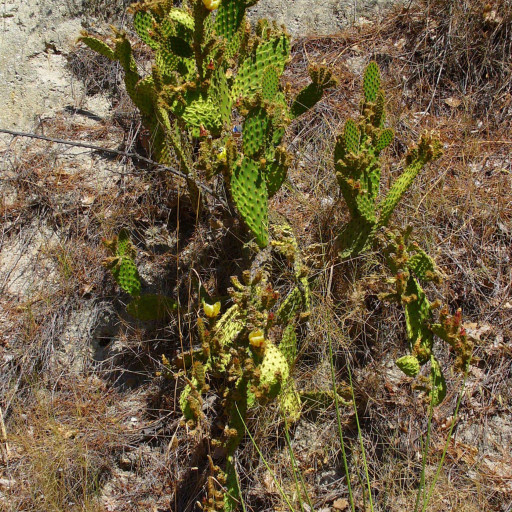
Plant Overview
Known as the "Prickly Pear" or "Indian Fig," this cactus is a resilient survivor that has traveled from the highlands of Mexico to every sun-drenched corner of the globe. It is famous for its vibrant, jewel-like fruits and iconic paddle-shaped stems that look like giant green ears. Whether it's standing tall in a desert landscape or tucked into a terracotta pot, it brings a bold, architectural vibe to any space.
🔍 How to Identify
- 🌵 The Pads: Large, flat, oval-shaped stems called cladodes that act as water reservoirs. They are thick, fleshy, and often a soft grey-green color.
- 🌼 The Bloom: Striking, cup-shaped flowers that appear along the upper edges of the pads, usually in shades of brilliant yellow, orange, or copper.
- 🍐 The Fruit: Known as "tunas," these oval fruits are covered in tiny bumps and turn from green to a deep magenta or golden-yellow when ripe.
🏡 In Your Garden
- 🏜️ Sun Worshiper: This cactus craves intense, direct sunlight. If grown indoors or in shade, the new pads will become "etiolated"—growing thin, pale, and stretched as they desperately reach for a light source.
- 💧 Drainage is Vital: It thrives in poor, sandy soil because its root system is designed for quick-drying environments. The fastest way to kill a Prickly Pear is "wet feet"; sitting in damp soil will cause the base to turn mushy and rot within days.
⚠️ Safety & Toxicity
- 🌵 Physical Irritant: While the large spines are intimidating, the real danger lies in the "glochids." These are microscopic, barbed hairs that detach at the slightest touch and can cause painful, lasting skin irritation.
- 🐾 Pets & Kids: The plant is non-toxic if accidentally nibbled, but the glochids are a major hazard. If a pet bites a pad, the tiny barbs can become embedded in the mouth or throat, often requiring veterinary assistance to remove.
✨ Fun Fact
The Opuntia ficus-indica is a historical powerhouse; it appears at the very center of the Mexican flag. According to legend, the Aztecs were told to build their empire (Tenochtitlan) where they saw an eagle perched on a prickly pear cactus devouring a snake.

Detailed Care Instructions
| Humidity | Dry |
| Lighting | Full Sun |
| Toxicity | Poisonous |
| Difficulty | Easy |
| Temperature | 15°C - 30°C |
| Hardiness Zones | 8A - 12B |
To grow Opuntia Ficus-indica, also known as prickly pear cactus, you can follow these steps:
- Choose a suitable location: Select a sunny spot in your garden or outdoor area where the plant can receive at least 6-8 hours of direct sunlight.
- Prepare the soil: Opuntia Ficus-indica prefers well-draining soil that is slightly acidic to neutral. Amend the soil with organic matter, such as compost or well-rotted manure, to improve drainage and fertility.
- Planting: Dig a hole that is slightly wider and deeper than the root ball of the plant. Gently place the plant in the hole and backfill with soil, ensuring that the top of the root ball is level with or slightly above the soil surface. Tamp down the soil gently to remove any air pockets.
- Watering: Water the plant thoroughly after planting to settle the soil. Opuntia Ficus-indica is drought-tolerant, so water sparingly to avoid overwatering. Allow the soil to dry out slightly between waterings.
- Mulching: Apply a layer of organic mulch around the base of the plant to retain moisture, suppress weed growth, and regulate soil temperature.
- Pruning: Prickly pear cactus generally requires minimal pruning. However, you can prune it to remove any dead or diseased pads or to shape the plant as desired. Use sharp, clean pruning shears and wear thick gloves to protect yourself from the spines.
- Fertilization: Opuntia Ficus-indica does not require heavy fertilization. Apply a balanced, slow-release fertilizer once per year in early spring. Follow the manufacturer's instructions for application rates.
- Pest and disease control: Prickly pear cactus is relatively pest and disease resistant. However, watch out for common pests such as aphids, mealybugs, or scale insects. If any infestation is detected, treat them with an appropriate organic insecticide or insecticidal soap.
- Protect from cold: Opuntia Ficus-indica is cold-hardy, but young plants may need protection from frost in colder climates. Cover the plant with frost cloth or burlap during extreme cold spells or provide a temporary shelter.
Following these steps should help you successfully grow Opuntia Ficus-indica in your garden. Remember to always handle the plant with caution due to its spines.

Place in a bright room that is sun drenched almost all day. Or directly in a south-facing window.

Opuntia Ficus-indica is a drought-tolerant plant that requires infrequent watering. When it does need watering, it is important to ensure that the soil is completely dry before watering again. This can be achieved by sticking a finger into the soil about 1 inch deep and checking for moisture.
When watering, it is recommended to use a deep watering technique rather than a light sprinkle. This involves thoroughly soaking the soil around the plant, allowing the water to penetrate deep into the roots. This helps to encourage healthy root growth and makes the plant more resilient to drought.
It is also important to avoid getting water on the leaves of the plant, as this can lead to rot and other diseases. To achieve this, it is best to use a watering can or hose with a gentle stream rather than a heavy spray.
During periods of hot weather or drought, Opuntia Ficus-indica may require more frequent watering. However, it is important not to overwater, as this can lead to root rot and other problems.
Overall, Opuntia Ficus-indica is a low-maintenance plant that requires infrequent watering and good drainage to thrive.
The Opuntia Ficus-indica plant can be fertilized once a month from early spring to late summer with a balanced fertilizer containing equal parts nitrogen, phosphorus, and potassium. Make sure to dilute the fertilizer in water according to the instructions on the label and apply it directly to the base of the plant. Avoid fertilizing during the winter months when the plant is dormant. Over-fertilizing can lead to excessive growth, weaker plants, and even plant death, so use caution and only fertilize as needed.
Opuntia Ficus-indica is a type of plant that prefers well-draining soil with good aeration. It grows best in soil that is rich in nutrients and organic matter. A mixture of sand, gravel, and potting soil in a 1:1:1 ratio is recommended for this plant. It is important to use soil that is slightly acidic with a pH level between 6-7.5. Additionally, adding perlite or vermiculite to the mixture can improve drainage and water retention. It is also important to ensure that the soil does not become waterlogged, as this can lead to fungal infections and root rot. Overall, the ideal soil for Opuntia Ficus-indica should be well-draining, nutrient-rich, and slightly acidic.
Opuntia Ficus-indica is a type of cactus plant that is often used for medicinal and culinary purposes. If you are looking to propagate this plant, you will need to follow a few simple steps.
First, choose a healthy and mature plant that has several pads or segments. Using sharp and clean shears, cut off a segment about 4-6 inches in length. Make sure to cut the segment at a 45-degree angle to minimize damage to the mother plant.
Next, let the cut segment dry out in a warm and dry place for several days to allow the wound to callus over. This helps to prevent moisture loss and potential infections.
Once the segment has callused, plant it in well-draining soil in a sunny and warm location. The soil should be moist but not waterlogged. Water the plant only when the soil has completely dried out.
The planted segment should begin to produce new roots and start growing within a few weeks. Be patient and avoid over-watering the plant as this can cause the cutting to rot.
With proper care, your propagated Opuntia Ficus-indica plant will grow and thrive, producing new segments that can be harvested and propagated again.
Common pests of the indian fig opuntia include Scale insect, mealybugs, spider mites. Make a habit of checking your indian fig opuntia frequently for pests so that any infestations can be caught and managed early.








