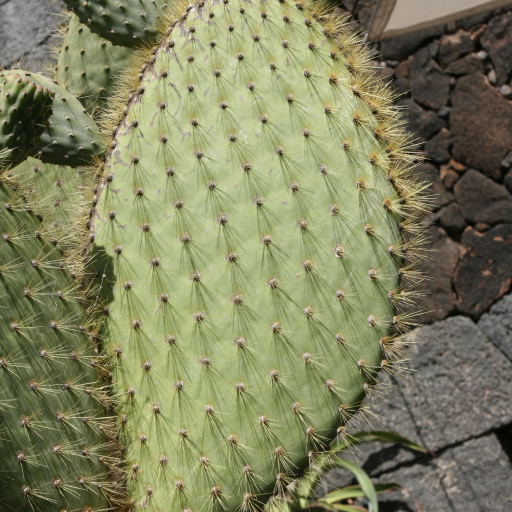
Plant Overview
Known as the "Giant Prickly Pear," Opuntia galapageia is one of the most iconic sights in the Galápagos archipelago. These botanical skyscrapers can grow up to 30 feet tall, evolving their tree-like trunks as a direct response to hungry giants. Over centuries, they have engaged in an evolutionary "arms race" with the famous Galápagos giant tortoises, growing taller and taller to keep their succulent pads out of reach of the tortoises' long necks.
🔍 How to Identify
- 🌵 The Trunk: Unlike typical ground-hugging cacti, this species develops a thick, woody trunk covered in reddish-brown, papery bark that peels away like a birch tree.
- 🌕 The Pads: The "leaves" are thick, flattened, and succulent green pads (cladodes) that often take on a yellowish-golden hue under the intense equatorial sun.
- ⚔️ Spine Variation: Depending on the island, the spines can range from soft and hair-like to stiff and needle-sharp, often clustered in dense "areoles" that protect the plant's moisture.
🏡 In Your Garden
- 🌋 Volcanic Roots: In a home setting, this cactus demands incredibly sharp drainage. It thrives in gritty, volcanic-style soil mixes and will quickly suffer from "wet feet" if left in standard potting soil.
- ☀️ Light Obsession: This is not a plant for the dim corner of a room. To maintain its rigid structure and prevent "stretching," it requires full, direct sun—mimicking the harsh, unshaded environment of its volcanic island home.
⚠️ Safety & Toxicity
- 🌵 Mechanical Hazard: While not chemically toxic or poisonous, this plant is heavily armed. The spines can cause deep puncture wounds, and the tiny, invisible "glochids" (barbed hairs) can embed in the skin and cause lasting irritation.
- 🐾 Pet Protection: It is generally safe for pets in terms of ingestion, but its physical armor makes it a danger to curious dogs or cats. It is best placed in a decorative pot where it cannot be bumped into.
✨ Fun Fact
Evolution is visible on this plant: On islands where giant tortoises are present, the Opuntia galapageia grows tall trunks to survive. On islands without tortoises, the same species often grows much closer to the ground, as there is no evolutionary "pressure" to reach for the sky!

Detailed Care Instructions
To grow Opuntia Galapageia, also known as the Galapagos prickly pear cactus, you can follow these steps:
- Select a suitable location: Opuntia Galapageia prefers a sunny location with well-draining soil. Ensure that the location receives at least 6-8 hours of direct sunlight daily.
- Prepare the soil: The soil should be well-drained and sandy. If the soil is heavy or clayey, mix it with sand or perlite to improve drainage.
- Watering: Opuntia Galapageia is a drought-tolerant plant, so it does not require frequent watering. Water deeply and then allow the soil to dry out before watering again. Overwatering can lead to root rot.
- Planting: Dig a hole twice the size of the root ball of the Opuntia Galapageia plant. Place the plant in the hole and backfill with soil, ensuring that the plant is upright. Gently tap the soil around the base of the plant to remove any air pockets.
- Spacing: If you are planting multiple Opuntia Galapageia plants, space them at least 2-3 feet apart to allow for proper growth.
- Mulching: Mulch around the base of the plant to help retain soil moisture and suppress weed growth. Use organic mulch like wood chips or straw.
- Fertilizing: Opuntia Galapageia does not require a lot of fertilization. In fact, too much fertilizer can lead to excessive growth and weaken the plant. Use a balanced fertilizer sparingly in spring, if desired.
- Pruning: As the Opuntia Galapageia grows, you may need to prune it to maintain its shape and size. Wear protective gloves and carefully remove any dead or damaged pads.
- Protect from frost: Opuntia Galapageia is not frost-tolerant, so if you live in an area with cold winters, consider providing protection during freezing temperatures. Cover the plant with a frost cloth or move it indoors.
- Pests and diseases: Opuntia Galapageia is generally resistant to pests and diseases. However, watch out for common cactus pests like mealybugs and scale insects. Treat any infestations promptly.
Remember that Opuntia Galapageia is a slow-growing plant, and it may take some time for it to reach mature size. Patience is key when growing this unique cactus.
The plant in question is a member of the cactus family that is native to the Galapagos Islands. It requires minimal watering, as it is adapted to living in arid environments. When it does need watering, it is important to use well-draining soil and allow the soil to dry out completely before watering again. Overwatering can lead to root rot and other issues. It is also important to avoid getting water on the leaves or stem, as this can lead to sunburn or other damage. To water the plant, gently pour water onto the soil around the base of the plant, being careful not to disturb the roots or soil. Checking moisture levels by sticking a finger into the soil can help avoid overwatering.
To fertilize this plant, apply a balanced fertilizer with an equal or nearly equal ratio of nitrogen, phosphorus, and potassium, such as a 10-10-10 or 20-20-20 formula. Apply the fertilizer in early spring when new growth appears and again in mid-summer. Be sure to dilute the fertilizer with water following the instructions on the packaging to avoid burning the plant's roots. Water the plant thoroughly after fertilizing.
When planting the Opuntia Galapageia plant, you should use soil that is well-draining. This means that the soil should be able to quickly drain water away from the roots of the plant. You may want to mix in sand or perlite to help with drainage. The soil should also be moderately fertile. This means that it should have enough nutrients to support the growth of the plant, but not so many that it becomes overly rich. You may want to add some compost or a balanced fertilizer to the soil before planting. Additionally, the soil should have a slightly acidic to neutral pH. Finally, it's important to choose soil that is appropriate for the climate and weather conditions in your area. For example, if you live in a hot, dry climate, you may want to use soil that is able to retain moisture.
To propagate this plant, you will need to obtain a pad or segment of the plant. Using a sharp, clean knife, cut off a healthy segment from the main plant, making sure to remove any spines. Let the cut end dry and callus over for a few days.
Place the cut end of the segment in well-draining soil or sand, and water lightly. It is important to avoid over-watering, as this can lead to rot. Keep the soil moist but not waterlogged, and place the pot in a bright but indirect light.
Over time, the cut end will begin to root and produce new growth. Once the plant has become established, it can be transplanted into a larger pot or into the ground. With proper care, your newly propagated Opuntia Galapageia plant will continue to thrive and produce new pads for years to come.








