Plant Overview
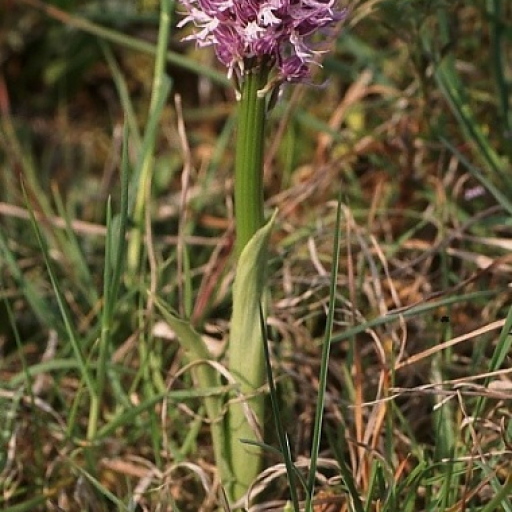
Meet the "Naked Man Orchid," a Mediterranean wonder that never fails to spark a laugh or a blush. Known for its strangely anthropomorphic flowers, this wild orchid looks as though a crowd of tiny, pink-hatted figures is climbing up its stem. It is a staple of rocky Mediterranean hillsides and remains one of the most photographed wild plants in the world due to its hilarious and unmistakable silhouette.
🔍 How to Identify
- 🌸 The "Naked Man": Each individual floret features a deeply lobed lower lip (labellum) that creates the distinct shape of a human body, complete with "arms" and "legs."
- 🎩 The Striped Helmet: The upper petals and sepals converge to form a dense, hood-like "helmet" that sits right above the tiny figure's head, usually featuring delicate purple veins.
- 🍃 Wavy Foliage: The leaves are bright green, often with wavy or ruffled edges, and grow in a rosette at the base of the plant.
🏡 In Your Garden
- 🏺 Wild Roots: This is a terrestrial orchid, meaning it grows in the ground rather than on trees. It is notoriously difficult to cultivate at home because it relies on a complex symbiotic relationship with specific soil fungi to germinate and thrive.
- ☀️ Mediterranean Temperament: In the wild, it favors well-drained, alkaline soil and sunny patches in meadows or light woodlands. It follows a Mediterranean cycle—growing during the damp winter and going completely dormant during the hot, dry summer.
⚠️ Safety & Toxicity
- ✅ Non-Toxic: Orchis italica is not known to be poisonous to humans, cats, or dogs.
- 🛑 Conservation Warning: The biggest "safety" concern is for the plant itself. In many countries, it is a protected species. Because of its sensitive tuberous root system, it almost never survives being transplanted from the wild to a garden pot. Always admire them where they stand!
✨ Fun Fact
In ancient times, these orchids were used to create "Salep," a flour made from grinding the dried tubers. This flour was used to make a popular creamy drink in the Ottoman Empire, and because of the plant's unique shape, it was widely believed to be a powerful aphrodisiac!

Detailed Care Instructions
| Humidity | Normal |
| Lighting | Full Sun |
| Difficulty | Medium |
| Hibernation | Cold Period |
| Temperature | 21°C - 26°C |
| Hardiness Zones | 4 - 8 |
Growing Orchis Italica, also known as the naked man orchid, can be a rewarding experience. Here are some tips to help you successfully grow this plant:
- Choose the right location: Orchis Italica prefers to grow in a sunny spot with well-draining soil. Make sure to choose a location that receives plenty of sunlight throughout the day.
- Planting: Plant the Orchis Italica bulbs in the early spring or fall, making sure to place them about 2-3 inches deep in the soil. Space the bulbs about 6 inches apart to allow for proper growth.
- Watering: Water the plant regularly, making sure to keep the soil moist but not waterlogged. Orchis Italica prefers slightly damp conditions, so be sure to water when the top inch of soil feels dry.
- Fertilizing: Fertilize the plant with a balanced fertilizer every 4-6 weeks during the growing season to promote healthy growth and flowering.
- Pruning: Remove any dead or decaying foliage to help prevent the spread of disease and promote new growth.
- Winter care: In regions with cold winters, protect the Orchis Italica bulbs by covering them with a layer of mulch or bringing them indoors during the winter months.
By following these tips, you can successfully grow and care for your Orchis Italica plant, enjoying its unique and beautiful blooms year after year.

Place in a bright room that is sun drenched almost all day. Or directly in a south-facing window.

Orchis Italica plants should be watered regularly to keep the soil consistently moist, but not waterlogged. Allow the top inch of soil to dry out slightly between waterings to prevent root rot. When watering, make sure to thoroughly saturate the soil to encourage deeper root growth. It is important to water at the base of the plant to avoid getting the foliage wet, as this can lead to disease. In drier climates or during periods of intense heat, the plant may require more frequent watering to thrive. Be sure to adjust your watering schedule accordingly based on the specific needs of your Orchis Italica plant and the conditions in which it is growing.
To fertilize Orchis Italica plants, apply a balanced, water soluble fertilizer with equal amounts of nitrogen, phosphorus, and potassium. Dilute the fertilizer according to the package instructions and apply it to the soil around the base of the plant. Fertilize the plant every 2-3 weeks during the growing season, typically in spring and summer. Be careful not to over-fertilize, as this can damage the plant. Water the plant after fertilizing to help the nutrients penetrate the soil and reach the roots.
Orchis Italica plants prefer to grow in well-draining, slightly acidic soil. A good choice for this plant would be a mixture of peat moss, perlite, and pine bark. This will provide a good balance of nutrients and moisture retention for the plant to thrive. Additionally, adding some organic matter such as compost can help improve the soil structure and supply essential nutrients for the plant's growth. Make sure to avoid using heavy clay soils, as they can cause waterlogging and root rot in Orchis Italica plants.
Propagation of this plant can be done through various methods, including division of established plants, sowing seeds, or through tissue culture.
To divide an established plant, carefully separate the rhizomes or tubers into smaller sections, making sure each division has at least one growing point or bud. Plant these divisions in a well-draining soil mix and keep them moist until they establish roots.
Seeds can also be collected from mature plants and sown in a pot filled with a mix of peat moss and perlite. Keep the soil moist and place the pot in a warm, bright location to encourage germination.
For tissue culture propagation, small pieces of plant tissue are placed in a sterile nutrient medium and encouraged to grow into new plants. This method allows for rapid multiplication of plants and can be useful for rare or endangered species.
Whichever method you choose, it is important to provide the right growing conditions for the newly propagated plants, including adequate light, water, and nutrients. With proper care, the plants will grow into healthy, mature specimens over time.
Common pests of the naked-man orchid include Mealybugs, spider mites, fungus gnats, thrips. Make a habit of checking your naked-man orchid frequently for pests so that any infestations can be caught and managed early.








