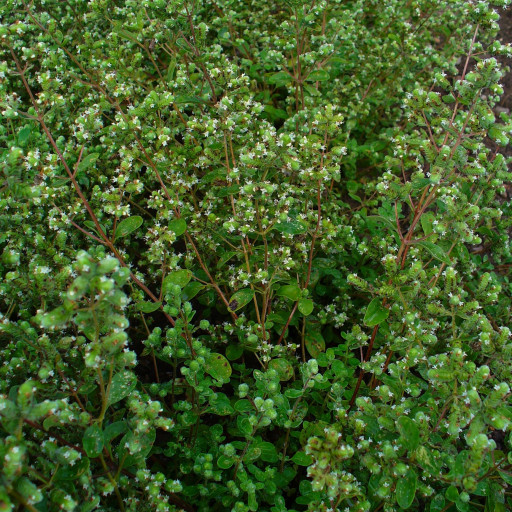
Plant Overview
Often called "Sweet Marjoram" or "Knotted Marjoram," this fragrant herb has been a staple of happiness and healing for millennia. According to Greek legend, its sweet scent was a gift from Aphrodite, the goddess of love, meant to symbolize joy. While often confused with its wilder cousin Oregano, Marjoram offers a much more delicate, citrusy, and floral aroma that is a hallmark of Mediterranean cuisine.
🔍 How to Identify
- 🍃 Velvety Foliage: The leaves are small, oval, and covered in fine, downy hairs that give the plant a soft, silvery-green appearance and a velvety texture.
- 🌸 "Knotted" Flowers: Before they bloom, the flower spikes look like tiny, tight green knots. When they open, they reveal small, delicate white or pale lavender blossoms.
- 🪵 Square Stems: As a member of the mint family (Lamiaceae), it features distinct square-shaped stems that tend to turn woody at the base as the plant matures.
🏡 In Your Garden
- ☀️ Sun & Sensitivity: Marjoram is a sun-worshiper that thrives in bright light. Unlike Oregano, it is quite sensitive to cold; in northern climates, it is often grown as an annual because it cannot survive a hard frost.
- 🌱 Drainage Over Diet: This herb prefers "lean" soil that drains quickly. Over-fertilizing or over-watering will lead to a lush plant with very little flavor—stressing the plant slightly actually helps it produce the essential oils we love.
⚠️ Safety & Toxicity
- 🥗 Culinary Safe: It is perfectly safe and highly encouraged for human consumption, whether fresh, dried, or steeped into a calming tea.
- 🐾 Pet Caution: While a kitchen favorite, it is considered mildly toxic to dogs and cats. The concentrated essential oils in the leaves can cause digestive upset or skin irritation if your pets decide to have a large snack.
✨ Fun Fact
In the ancient world, Marjoram was used to crown newlyweds to ensure a long and happy marriage. It was also planted on gravesites, as it was believed that if Marjoram grew on a tomb, it meant the departed soul had found eternal happiness.

Detailed Care Instructions
| Color | Green |
| Soil Ph | 6.5–7.5 |
| Humidity | Normal |
| Lighting | Full Sun |
| Toxicity | Poisonous |
| Soil Type | Sandy, Loamy, Well-Drained |
| Bloom Time | Summer |
| Difficulty | Medium |
| Plant Type | Perennial |
| Mature Size | 1–2 Feet Tall |
| Native Area | Europe |
| Temperature | 15°C - 21°C |
| Sun Exposure | Full Sun |
| Hardiness Zones | 9-10 |
To grow Origanum Majorana, also known as Sweet Marjoram, follow these steps:
- Choose the right location: Sweet Marjoram thrives in well-drained soil and requires full sunlight. Ensure that the chosen location receives at least 6-8 hours of direct sunlight per day.
- Obtain the seeds or young plants: You can germinate seeds indoors around 6-8 weeks before the last frost date or purchase young plants from a local nursery.
- Prepare the soil: Ensure the soil is loose, fertile, and well-drained. It should have a pH level between 6.5 and 7.5. If the soil is heavy or compacted, amend it with compost or organic matter to improve drainage.
- Planting seeds: If starting from seed, sow them in small pots or seed trays filled with a seed starting mix. Sprinkle the seeds lightly on the surface and cover them with a thin layer of the mix. Ensure the soil is consistently moist but not soggy. Once the seedlings are about 2-3 inches tall, transplant them into larger pots or directly into the garden.
- Transplanting young plants: If using young plants, dig a hole in the prepared soil, spaced around 10-12 inches apart for proper air circulation. Carefully remove the plant from its container, place it in the hole, and cover the roots with soil. Gently firm the soil around the plant.
- Watering and care: Marjoram requires regular watering, especially during dry periods. Keep the soil evenly moist but avoid overwatering, as it can lead to root rot. Mulching around the base of the plant can help retain moisture and suppress weeds.
- Fertilization: Applying a balanced organic fertilizer once or twice during the growing season can help promote healthy growth. Follow the package instructions for proper application rates.
- Pruning: Regularly prune the plant to encourage bushier growth and prevent it from becoming leggy. Pinch off the tips of the branches when the plant reaches about 6 inches tall, and continue to do so throughout the growing season.
- Harvesting: Once the plant is established, you can start harvesting the leaves. Pinch off individual leaves or cut entire stems as needed. For the best flavor, harvest the leaves before the plant flowers.
- Overwintering: In colder climates, Sweet Marjoram is often grown as an annual. However, it can be overwintered indoors by bringing potted plants indoors before the first frost and placing them in a sunny location. Ensure proper watering and monitor for pests during this time.
Remember to perform regular maintenance, such as checking for pests and diseases, to ensure the health and productivity of your Origanum Majorana plant.

Place in a bright room that is sun drenched almost all day. Or directly in a south-facing window.

To water this particular plant, it is important to consider the soil type and climate conditions. It requires well-draining soil to avoid waterlogging, which can lead to root rot. During the growing season, it is recommended to water the plant deeply but infrequently, allowing the soil to dry out between waterings. However, it is important to monitor the plant and adjust watering frequency based on weather conditions and the soil's moisture level. During the dormant season, the plant requires less water and can tolerate drought. Overall, remember to avoid overwatering and ensure that the soil has the right balance of moisture to support healthy growth.
To provide proper nutrition and support growth for this herbaceous plant, apply a balanced fertilizer with equal amounts of nitrogen, phosphorus, and potassium. Fertilize the plant once a month during the growing season, which usually lasts from spring to fall. It is important to dilute the fertilizer according to the instructions on the packaging to avoid burning the leaves or roots. Additionally, avoid fertilizing during the dormant period to prevent potential damage to the plant.
The best soil for Origanum Majorana plant would be well-draining soil, which can retain moisture while also allowing for excess water to drain away. The soil should be rich in nutrients, with a pH level of 6.5 to 7.5. Organic compost or manure can be worked into the soil prior to planting to improve its quality. It is important to avoid soil that is too heavy or dense, as this can cause poor drainage and root rot. Loamy soil with good aeration is ideal for this plant, as it helps to promote strong root development and healthy growth.
To propagate the plant, take cuttings from healthy, mature stems that are free from disease or damage. Prepare a pot or tray with well-draining soil mix, and make sure it is moist. The cuttings should be about four inches long, with leaves removed from the bottom inch. Cut the bottom of the stem at a 45-degree angle. Dip the cuttings in rooting hormone and place them about two inches deep in the soil. Gently pat the soil around the cutting to ensure that it is stable. Mist the cuttings lightly and cover the pot or tray with a plastic bag to create a humid environment. Place the pot or tray in a warm and bright location, but avoid direct sunlight. Keep the soil moist and mist the cuttings regularly to prevent the soil from drying out. After about three weeks, the cuttings should start developing roots. Once they have developed enough roots, transplant them into larger pots with well-draining soil mix.
Common pests of the sweet marjoram include Spider mites, fungus gnats, aphids, thrips, whiteflies. Make a habit of checking your sweet marjoram frequently for pests so that any infestations can be caught and managed early.








