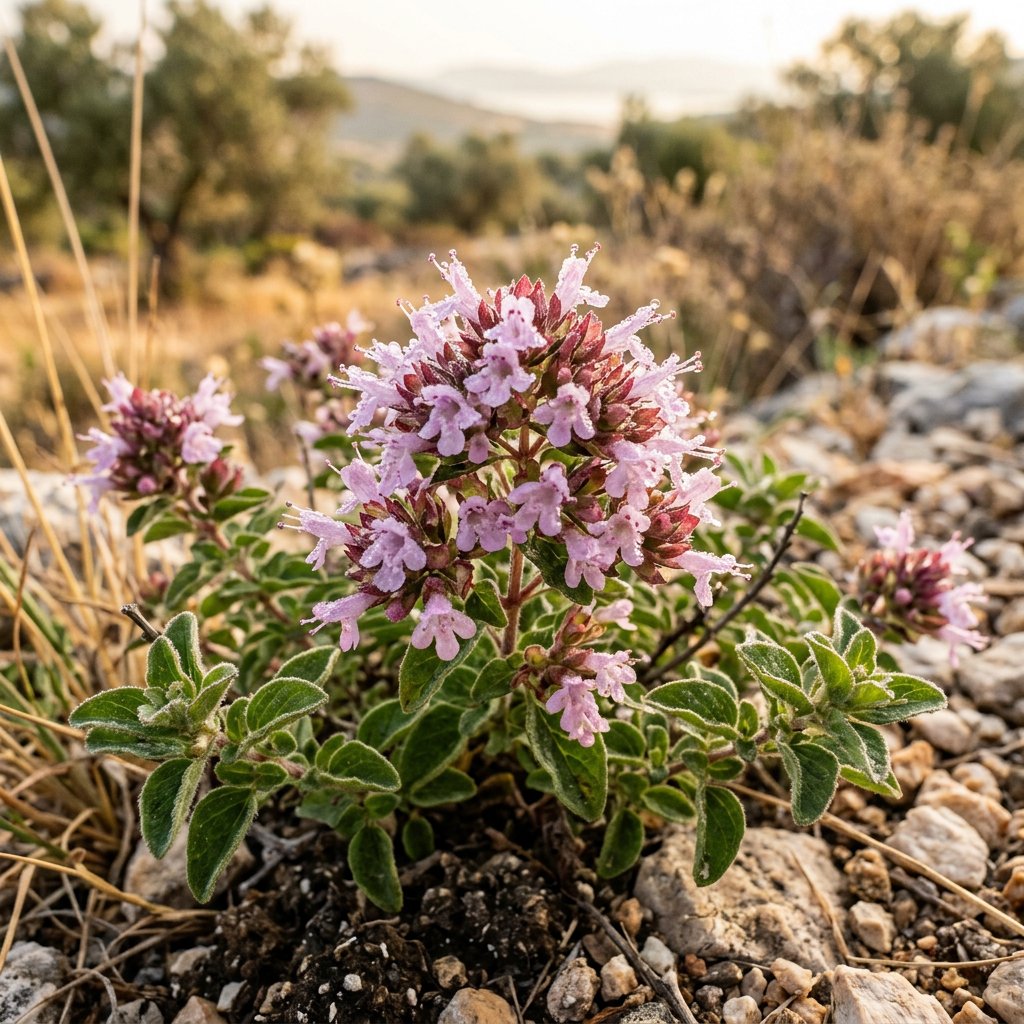
Plant Overview
Often called "Wild Marjoram," Origanum vulgare gets its name from the Greek words oros and ganos, which translate beautifully to "Joy of the Mountain." Native to the sun-drenched hillsides of the Mediterranean, this aromatic herb has been a kitchen staple and a medicinal wonder for thousands of years. Whether it’s bubbling in a pasta sauce or carpeting a rock garden, its presence is a sensory delight.
🔍 How to Identify
- 🌿 The Foliage: Small, oval-shaped leaves that are slightly fuzzy to the touch. They grow in "opposite" pairs along the stem, meaning two leaves emerge from the same point on either side.
- 📐 Square Stems: Like many members of the Mint family, its stems are distinctly square-shaped, becoming woody at the base as the plant matures.
- 🌸 Summer Blooms: In late summer, it sends up clusters of tiny, tubular flowers that range from white to a soft, dusky purple. These are a magnet for honeybees and butterflies.
🏡 In Your Garden
- ☀️ Sun-Kissed Flavor: To get the best scent and flavor, give it the brightest spot in the garden. Intense sunlight causes the plant to produce more essential oils, which is where that "pizza smell" comes from.
- 🏜️ Tough Love: This plant thrives on neglect. It hates "wet feet," so well-draining, sandy soil is a must. If the soil is too rich or wet, the plant may lose its pungent aroma and succumb to root rot.
- ✂️ Pruning for Growth: To prevent the plant from becoming too leggy or woody, it is best to harvest the stems frequently. Cutting it back by half after it flowers will encourage a fresh flush of tender, flavorful leaves.
⚠️ Safety & Toxicity
- ✅ Human Safe: Completely edible and widely used in culinary and herbal tea applications. It is high in antioxidants and antimicrobial properties.
- 🐾 Pet Sensitivity: While a tiny nibble won't hurt, concentrated oregano (especially the essential oil) is too strong for cats and dogs. It can cause digestive upset or liver stress if ingested in large quantities by pets.
- 🧴 Skin Contact: For most people, it's harmless, but the oils can be a "hot" irritant for those with sensitive skin if handled excessively in the midday sun.
✨ Fun Fact
In Ancient Greece, it was a tradition to crown newlyweds with garlands of Oregano to wish them a life of peace and happiness. It was also planted on gravesides; if it grew vigorously, it was believed the departed spirit was at peace.

Detailed Care Instructions
| Color | Pink, Purple, White |
| Soil Ph | 6.5-7.0 |
| Humidity | Normal |
| Lighting | Full Sun |
| Toxicity | Poisonous |
| Soil Type | Dry To Medium Moisture, Well-Drained Soil |
| Bloom Time | Summer |
| Difficulty | Medium |
| Plant Type | Perennial |
| Hibernation | Cold Period |
| Mature Size | 2 Feet Tall, 18 Inches Across |
| Native Area | Mediterranean |
| Temperature | 15°C - 21°C |
| Sun Exposure | Full Sun, Part Shade |
| Hardiness Zones | 4-10 |
To grow Origanum vulgare, commonly known as oregano, follow these steps:
- Choose a suitable location: Oregano grows best in well-draining soil and requires full sun, preferably at least six to eight hours of direct sunlight per day. Choose a location in your garden or a sunny spot on your balcony or patio.
- Prepare the soil: Oregano prefers slightly alkaline soil with a pH between 6.0 and 8.0. If your soil is acidic, add lime or wood ash to raise the pH. Incorporate organic compost or well-rotted manure into the soil to improve fertility and drainage.
- Sow seeds or plant seedlings: You can start oregano from seeds or purchase young seedlings from a nursery. If starting from seeds, sow them shallowly in well-draining soil and lightly cover them with a thin layer of soil. Keep the soil moist until the seeds germinate. If using seedlings, transplant them into the prepared soil, leaving at least 12-18 inches of space between each plant.
- Watering: Oregano prefers moderate watering. Water the plants deeply once a week, ensuring the soil is thoroughly moist but not waterlogged. Avoid overwatering, as it can lead to root rot.
- Fertilization: Oregano doesn't require excessive fertilization, but you can apply a balanced, slow-release fertilizer in spring to promote healthy growth. Follow the package instructions for application rates.
- Pruning: Regular pruning helps the plant maintain its shape and encourages bushiness. Once the plant reaches a height of 4-6 inches, pinch off the tips to encourage lateral growth and prevent legginess. Harvesting the leaves regularly also benefits the plant's growth.
- Harvesting: You can start harvesting oregano leaves once the plant is fully established. Harvest the leaves by cutting the stems near the base, and new growth will emerge from the cut stems. It's best to harvest oregano in the morning when the essential oils are most concentrated.
- Overwintering: Oregano is a perennial plant that can withstand mild winters. If you live in a colder region, it's advisable to mulch around the plant root zone in late fall to protect it from frost.
Following these steps and providing the necessary care should help you successfully grow and enjoy your own Origanum vulgare plant.

Place in a bright room that is sun drenched almost all day. Or directly in a south-facing window.

To water this plant, ensure that the soil is moderately moist but not waterlogged. This can be done by checking the top inch of soil and watering deeply when it feels dry to the touch. Avoid watering directly on the leaves or stem as this can encourage the growth of fungal diseases. If the plant is in a container, ensure that there is adequate drainage to prevent water buildup in the bottom. Additionally, it is best to water in the morning or evening when the sun is not as hot to prevent water from evaporating quickly.
To provide proper nutrition for this plant, scatter a balanced, slow-release fertilizer on the soil around it in early spring. Apply a water-soluble fertilizer every four weeks during the growing season, but avoid over-fertilizing as it can lead to weak growth. Keep the soil moist, but not waterlogged, and avoid getting water on the leaves to prevent fungal diseases. In late fall, stop fertilizing and allow the plant to go dormant for the winter.
The ideal soil for this particular plant would be a well-draining, nutrient-rich soil with a pH range of 6.0 - 8.0. It prefers soils that are slightly alkaline to neutral. The soil should be loose and airy, allowing for good drainage, and should contain a good amount of organic matter. If the soil is too heavy or clay-like, it can lead to waterlogging and root rot. In terms of moisture, the soil should be kept consistently moist but not waterlogged. This type of plant prefers to be in full sun or partial shade.
To propagate this plant, select a healthy, mature plant with strong stems and leaves. Cut a stem from the parent plant that is 3-4 inches long and remove the lower leaves. Dip the cut end in rooting hormone powder and plant it in a mixture of moist soil and perlite. Water the cutting and keep it in a warm, bright area with indirect sunlight. Mist the cutting regularly to keep the soil moist. After a few weeks, roots should start to form on the cutting. Once the roots are well-established, the new plant can be transplanted into a larger pot or directly into the ground.
Common pests of the oregano include Spider mites, fungus gnats, aphids, thrips, whiteflies. Make a habit of checking your oregano frequently for pests so that any infestations can be caught and managed early.








