Plant Overview
Known globally as the "Giver of Life" and the backbone of global cuisine, Oryza sativa is much more than just a pantry staple. This elegant, upright grass has shaped civilizations for over 8,000 years, transforming muddy marshlands into the iconic emerald-green terraces seen across Asia. While most associate it with massive farms, dwarf and ornamental varieties have recently become popular "water garden" features for home hobbyists.
🔍 How to Identify
- 🌾 The Foliage: It features long, flat, blade-like leaves that are slightly rough to the touch. While usually a vibrant lime green, some ornamental versions like 'Black Madras' sport deep purple leaves.
- 🎋 The Culm: The plant grows in "tillers" or tufts of hollow, jointed stems. These stems are surprisingly strong, allowing the plant to stand tall even when the heavy grain heads begin to ripen.
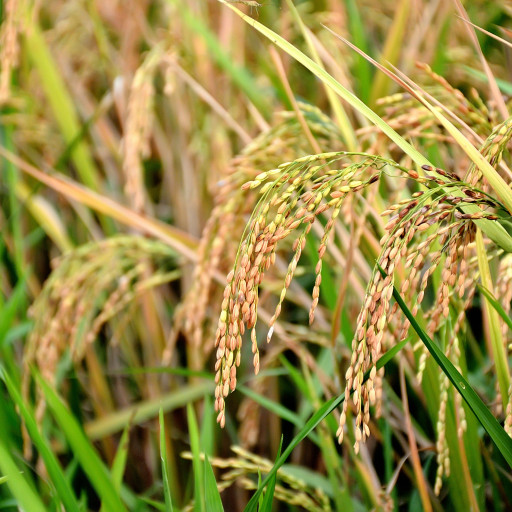
- 🌾 The Panicles: Instead of a single flower, rice produces arched, drooping clusters of spikelets. As the plant matures, these turn from green to a golden-straw color, filled with the individual grains of rice.
🏡 In Your Garden
- 💧 The "Wet Feet" Rule: Rice is semi-aquatic. It thrives in standing water or saturated soil because its stems contain special internal air-tunnels (aerenchyma) that pump oxygen down to the roots—a feat most other garden plants can't survive.
- ☀️ Energy for Grain: If you are hoping to actually harvest rice, the plant requires a long, warm growing season with at least 6-8 hours of intense sunlight. Without enough heat and light, the "hulls" will remain empty.
⚠️ Safety & Toxicity
- ✅ Pet & Child Safe: Oryza sativa is non-toxic to humans, cats, and dogs. It is one of the most hypoallergenic grains on the planet.
- 🌾 Sharp Edges: Be cautious when pruning or walking through tall rice; the edges of the leaves contain tiny silica crystals that can cause minor skin irritations or "grass cuts" similar to paper cuts.
✨ Fun Fact
In many cultures, rice is the ultimate symbol of fertility and prosperity. This is why the tradition of throwing rice at newlyweds began—it was a literal wish for the couple to have a "fruitful" and abundant life together!

Detailed Care Instructions
To grow Oryza sativa, commonly known as rice, follow these steps:
- Choose the right variety: Select an Oryza sativa variety suitable for your climate and cultivation method. There are thousands of varieties to choose from, including short-grain, long-grain, and aromatic types.
- Prepare the soil: Rice prefers a well-draining soil with a slightly acidic pH (around 5-6.5). Till the soil to loosen it and remove any weeds or debris. Add organic matter, such as compost or well-rotted manure, to improve soil fertility.
- Select a planting method: There are different methods to plant rice, including direct seeding, transplanting, or using the system of rice intensification (SRI). Direct seeding involves broadcasting seeds onto a prepared field, while transplanting involves planting young seedlings. SRI emphasizes planting fewer seedlings at wider spacing.
- Sow or transplant rice: If you choose direct seeding, scatter the rice seeds over the seedbed evenly and press them lightly into the soil. For transplanting, start rice seeds in a separate nursery area, and once they grow to about 2-4 inches tall, transplant them into the prepared field or paddy.
- Water management: Rice is a water-loving plant. If you have access to a paddy or a low-lying area, maintain a constant water level of around 2-3 inches during the growing season. You can also practice intermittent flooding by periodically filling and draining the paddy. Ensure adequate drainage to prevent waterlogging and root rot.
- Fertilization: Rice requires nitrogen, phosphorus, and potassium for healthy growth. Apply balanced fertilizers according to soil test recommendations or use organic alternatives like compost, bone meal, or fish emulsion.
- Weed control: Weed competition can affect rice yields. Avoid manual weeding if using the SRI method, as it encourages root growth and soil health. In conventional methods, hand-weeding or using pre-emergent herbicides can help control weed growth.
- Pest and disease control: Monitor your plants regularly for pests like the rice stem borer, brown plant hopper, or diseases such as rice blast and bacterial leaf blight. Use integrated pest management techniques and follow cultural practices accordingly.
- Harvest: Rice is ready for harvest when the grains turn golden brown or yellowish and the stalks start to bend. Harvest the plant by cutting the stalks close to the ground. Dry the harvested rice thoroughly before storing to avoid mold or rot.
- Storage: After drying, store the rice in a cool and dry place. Protect it from pests, moisture, and direct sunlight.
Remember to always check local agricultural resources or consult with local farmers for specific tips and techniques adapted to your region and cultivation practices.

Place in a bright room that is sun drenched almost all day. Or directly in a south-facing window.
To properly water this plant, it is important to consider its specific water requirements. It should only be given water when the top inch of soil has dried out, and the soil should be thoroughly soaked until water begins to drain out of the bottom of the pot. Overwatering should be avoided, as it can lead to root rot and other diseases. It is best to use room temperature water, as cold water can shock the plant's roots. Additionally, it is important to make sure the plant has proper drainage to prevent standing water.
For best results when fertilizing this plant, it is recommended to use a balanced fertilizer that contains equal amounts of nitrogen, phosphorus, and potassium. Apply the fertilizer evenly across the soil surface surrounding the plant, taking care not to allow any to come into direct contact with the plant itself. Water the plant immediately after fertilizing in order to help distribute the nutrients throughout the root system. Fertilize the plant every four to six weeks during the growing season, and reduce or discontinue fertilization during the plant's dormant period.
It is recommended to use a slightly acidic soil with a pH range of 5.5-6.5 for the successful growth of Oryza Sativa plants. The soil should be well-draining and rich in organic matter. The addition of compost or well-rotted manure to the soil is beneficial for the plants as it provides the necessary nutrients for growth. A soil that is too compact or clayey can impede root development and lead to stunted growth. It is important to avoid using soil that has been recently treated with herbicides or pesticides, as this can kill the plants. Watering the plants regularly but not excessively is crucial for their survival. Additionally, providing adequate amounts of sunlight and protection from strong winds is also important for the successful growth of Oryza Sativa plants.
To propagate this plant, you can first start by collecting the seeds that are produced by the parent plant. Then, prepare a suitable growing medium such as soil or a nutrient-rich hydroponic solution, ensuring that it is moist but not waterlogged.
Next, sow the seeds in the growing medium, being careful to space them apart to allow for adequate growth. Cover the seeds with a light layer of soil or vermiculite and water gently.
Keep the seeded area moist and warm by placing a plastic bag over the pot or tray to create a mini greenhouse effect. This will help to maintain the humidity levels that the young plants need to grow.
Once the seeds have germinated and the young plants have developed a few leaves, you can gently separate them and pot them up individually in separate pots or move them to a larger growing area.
To ensure optimal growth and development of the plants, provide them with plenty of light, water and nutrients as required. Regular monitoring and maintenance will ensure that your Oryza Sativa plants thrive and produce a bountiful harvest.








