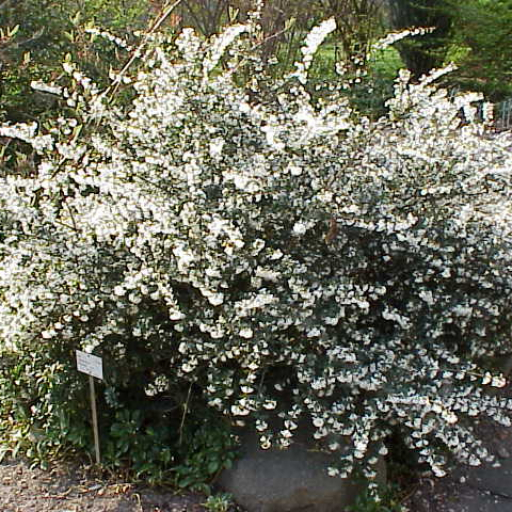
Plant Overview
Often referred to as the "Delavay Osmanthus," this elegant evergreen is a slow-growing masterpiece from the highlands of China. Discovered by the French missionary Father Jean Marie Delavay in the late 19th century, it has since become a staple for fragrance lovers. In early spring, this shrub covers itself in tiny, snowy blossoms that emit a powerful, jasmine-like scent so potent it can perfume an entire backyard on a still evening.
🔍 How to Identify
- 🍃 The Foliage: Small, oval, and leathery leaves that are a deep, lustrous dark green. They often have finely toothed edges that feel slightly prickly to the touch.
- ❄️ The Blooms: Clusters of small, tubular, four-lobed white flowers that grow in the leaf axils. They look like tiny porcelain trumpets nestled among the dark leaves.
- 🌳 Growth Habit: A dense, rounded, and mounding shrub. It grows slowly but can eventually reach 6 to 8 feet in height and width if left unpruned.
🏡 In Your Garden
- 🌬️ Wind Protection: While hardy, this plant dislikes cold, drying winds which can "burn" the edges of its leaves. Planting it near a wall or a taller hedge provides the shelter it needs to thrive.
- ✂️ Pruning Strategy: Because it grows so slowly, it rarely needs heavy pruning. If you must shape it, do so immediately after the spring flowers fade; otherwise, you risk cutting off the buds for next year’s fragrant display.
- 🌸 Sensory Placement: To get the most out of its "perfume factory" status, plant it near a patio, window, or walkway where the heavy fragrance can be enjoyed during the spring thaw.
⚠️ Safety & Toxicity
- ✅ Status: Generally non-toxic and safe.
- 🐾 Details: Osmanthus delavayi is not considered poisonous to humans, dogs, or cats. However, as with any ornamental shrub, it is best to discourage pets or children from chewing on the leathery leaves, as they can be a choking hazard or cause mild stomach upset.
✨ Fun Fact
- 🫒 Olive Relative: Despite its dainty appearance and floral scent, the Osmanthus is actually a member of the Oleaceae family, making it a distant cousin to the common Olive tree and the fragrant Lilac!

Detailed Care Instructions
To grow Osmanthus delavayi (also known as Delavay Osmanthus or Sweet Osmanthus), follow these steps:
- Location: Choose a spot in your garden that receives full to partial sun. Osmanthus delavayi prefers a well-draining soil with good organic content.
- Soil preparation: Before planting, amend the soil by adding compost or well-rotted manure to improve its fertility and drainage capabilities. Ensure that the soil pH is slightly acidic to neutral (around 5.5 to 7).
- Planting: Dig a hole that is twice as wide and as deep as the plant's root ball. Gently place the plant in the hole, ensuring that the top of the root ball is level with or slightly above the soil surface. Backfill the hole with soil, firming it gently around the roots.
- Watering: Water the newly planted Osmanthus delavayi thoroughly to settle the soil. After that, water regularly to keep the soil moist but not waterlogged. Allow the top inch of soil to dry out between waterings.
- Mulching: Apply a layer of organic mulch around the base of the plant to conserve moisture, suppress weed growth, and moderate soil temperature.
- Fertilizing: Feed the plant with a slow-release, balanced fertilizer in early spring. Follow the manufacturer's instructions for application rates.
- Pruning: Osmanthus delavayi typically requires minimal pruning. However, if necessary, prune after flowering to remove any dead, damaged, or overgrown branches. This will help maintain a compact shape and encourage new growth.
- Protection: In colder regions, young plants may benefit from winter protection. Apply a layer of mulch around the base, and consider using burlap or a frost blanket to shield the plant from harsh winter winds.
- Pests and diseases: Osmanthus delavayi is generally resistant to pests and diseases. However, keep an eye out for aphids, scale insects, or leaf spot diseases. If detected, treat accordingly with organic or chemical controls.
- Propagation: Osmanthus delavayi can be propagated through semi-hardwood cuttings taken in late summer or early autumn. Dip the cuttings in rooting hormone, insert them into a well-draining potting mix, keep the soil consistently moist, and provide bottom heat for faster rooting.
Remember to always refer to specific care instructions for your particular region and cultivar, as local conditions may vary slightly.

Place in a window with dappled sun or a spot in the middle of a room. Or directly in a window facing west or east.

1. Determine the watering needs of the plant: Before watering, it is important to understand the watering requirements of Osmanthus Delavayi. This plant needs to be watered when the soil feels slightly dry to the touch.
2. Check the soil moisture: To check the moisture level of the soil, insert a finger into the soil up to 2-3 inches. If the soil feels dry, it’s time to water the plant. If the soil feels moist, hold off on watering for a few days.
3. Water slowly and deeply: Water Osmanthus Delavayi slowly and deeply to ensure the roots get enough moisture. Use a watering can or hose with a soft spray to avoid damaging the plant. Water until the soil feels moist but not waterlogged.
4. Allow excess water to drain: Allow the water to drain from the pot or soil before returning the plant to its designated spot. This will prevent roots from sitting in standing water.
5. Water frequency: The frequency of watering Osmanthus Delavayi varies according to the season, humidity, and growing conditions. During the growing season, water the plant once or twice a week. In winter, water sparingly as the plant enters dormancy.
6. Monitor for signs of overwatering: Overwatering can cause root rot, which can damage or kill the plant. Monitor the plant for signs of overwatering such as yellowing leaves, a mushy stem, or a foul odor. In case of overwatering, reduce the frequency of watering and improve the drainage of the soil.
To fertilize this plant, you should use a balanced fertilizer that has equal amounts of nitrogen, phosphorus, and potassium. Apply the fertilizer during the growing season, which is usually in the spring. You can use a slow-release fertilizer or a liquid fertilizer that is diluted in water. Be careful not to over-fertilize, as this can lead to root damage and growth problems. Water the plant thoroughly after fertilizing to help the nutrients soak into the soil.
Osmanthus Delavayi plant prefers a well-draining soil that retains some moisture. The soil should be slightly acidic to neutral, with a pH range of 5.5 to 7.5. It is important to ensure the soil is of good quality and enriched with organic matter to ensure healthy growth and development of the plant. A mix of sand, loam and peat moss can be used to create a suitable soil blend for the plant. Additionally, the plant prefers a slightly shaded area with protection from extreme sunlight and wind.
To propagate this plant, select a healthy stem from the parent plant that is at least 8 inches long. Make a clean cut at a 45-degree angle using a sharp knife or pruning shears. Remove the lower leaves from the stem, leaving only the top few. Dip the bottom of the stem in rooting hormone powder. Fill a pot with well-draining soil and make a hole in the center. Gently insert the stem into the hole, making sure the powder-touching part of the stem is covered with soil. Water the soil until it is thoroughly soaked, making sure not to overwater. Keep the pot in a warm, bright spot, making sure the soil stays moist but not waterlogged. Wait for the roots to develop, which usually takes 2-4 weeks. Once the roots have established, you can transplant the new plant to a larger pot or directly into the ground.








