Plant Overview
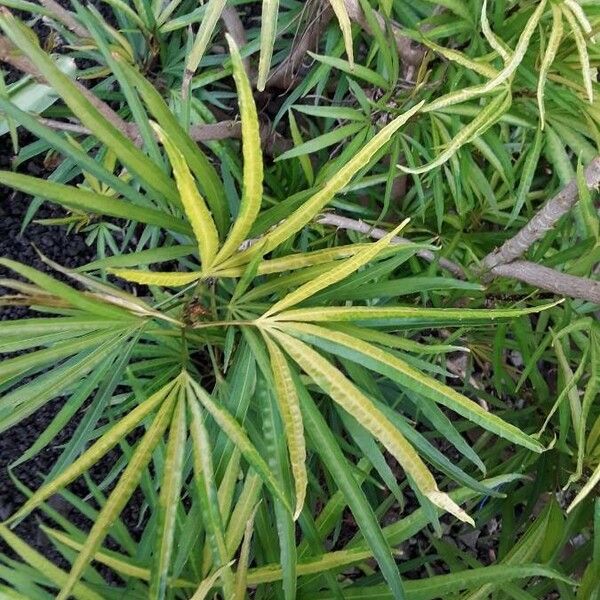
Known as the Miagos Bush or the Green Aralia, Osmoxylon lineare looks like a burst of green fireworks frozen in time. Native to the Philippines, this architectural shrub is a favorite for those who love a "Zen" or "Tropical Modern" aesthetic. Its thin, needle-like foliage provides a delicate, airy texture that contrasts beautifully against broad-leafed houseplants.
🔍 How to Identify
- 🌿 Linear Foliage: The most striking feature is its long, narrow, dark-green leaves that radiate from the stem like spokes on a wheel.
- 🎋 Shrubby Habit: It typically grows as a multi-stemmed evergreen shrub, reaching about 3 to 4 feet indoors, maintaining a compact and bushy silhouette.
- 🎇 Unique Inflorescence: When it blooms, it produces small, spherical clusters of flowers that look like tiny white or cream-colored beads, eventually turning into dark, berry-like fruits.
🏡 In Your Garden & Home
- 💧 Thirsty but Airy: While it loves consistent moisture, it is prone to "wet feet." Use a potting mix high in perlite or orchid bark to ensure the roots can breathe while staying damp.
- ☀️ Light Seekers: It craves bright, indirect light. If the light is too low, the plant will become "leggy" (stretched out) and lose its dense, pom-pom appearance.
- 🪴 Transplant Temperament: This plant is notorious for "pouting" after being repotted. It has a sensitive root system, so try to keep the root ball intact and avoid moving it to a different location immediately after a soil change.
⚠️ Safety & Toxicity
- 🐾 Mildly Toxic: Like many members of the Aralia family, it contains saponins and calcium oxalate crystals.
- 👶 Irritant Potential: While not deadly, chewing on the leaves can cause mouth irritation, drooling, or stomach upset in curious pets and small children. The sap may also cause mild skin redness in sensitive gardeners.
✨ Fun Fact
In its native habitat, Osmoxylon lineare is a master of disguise. Its tiny "false" flowers (the bead-like structures) often attract specific insects to ensure pollination for the real, much smaller flowers hidden within the cluster!

Detailed Care Instructions
To grow an Osmoxylon Lineare plant, you can follow these steps:
- Plant selection: Choose a healthy Osmoxylon Lineare plant from a reputable nursery or garden center.
- Pot selection: Select a pot with drainage holes to ensure proper water drainage.
- Soil preparation: Use a well-draining potting mix that is rich in organic matter. Osmoxylon Lineare prefers slightly acidic soil.
- Planting: Place the plant in the pot, ensuring that the top of the root ball is level with the soil surface. Gently pat the soil around the roots to secure the plant in place.
- Light requirements: Osmoxylon Lineare thrives in bright, indirect light or partial shade. Avoid direct sunlight as it can scorch the leaves.
- Watering: Keep the soil consistently moist, but not waterlogged. Water thoroughly when the top inch of soil feels dry to the touch. Adjust the frequency of watering based on the plant's needs and environmental conditions.
- Humidity: Osmoxylon Lineare benefits from slightly higher humidity levels. Mist the leaves regularly or place a tray filled with water near the plant to increase humidity.
- Temperature: Maintain a temperature between 65-85°F (18-29°C). Avoid exposing the plant to sudden temperature fluctuations or cold drafts.
- Fertilization: Feed the plant with a balanced houseplant fertilizer once every 4-6 weeks during the growing season (spring and summer). Follow the manufacturer's instructions for application rates.
- Pruning: Trim any dead, damaged, or overgrown branches to maintain a tidy appearance. Prune in early spring before new growth emerges.
- Repotting: Osmoxylon Lineare typically requires repotting every 2-3 years to provide ample space for root growth. Repot in a slightly larger pot using fresh potting mix.
- Pest control: Monitor the plant regularly for pests like mealybugs or spider mites. If infested, treat with an appropriate insecticide or wash the leaves with a mild soap solution.
By following these guidelines, you can successfully grow an Osmoxylon Lineare plant and enjoy its lush foliage in your home or garden.

Place in a bright room that is sun drenched almost all day. Or directly in a south-facing window.

This plant requires regular watering, but it is important to ensure that the soil is not waterlogged. To water, allow the top layer of soil to dry out slightly before watering thoroughly, ensuring that the excess water drains away. It is important to avoid getting water on the leaves or foliage, as this can lead to fungal diseases. During the winter months, reduce watering frequency to prevent waterlogging.
To fertilize the Osmoxylon Lineare plant, choose a balanced fertilizer with an N-P-K ratio of 10-10-10 or 20-20-20. Mix the fertilizer with water according to the instructions on the package and apply it to the soil around the base of the plant. Water the plant thoroughly after fertilizing. Fertilize once every two months during the growing season, which is typically from spring to fall. Avoid over-fertilizing, as this can damage the plant. Additionally, it is recommended to use a slow-release fertilizer to provide nutrients to the plant over a longer period.
When it comes to planting an Osmoxylon Lineare, it’s important to provide the right growing conditions so that the plant can thrive. One of the key factors that play a role in its growth is the soil.
The ideal soil for this plant should be well-draining and moderately fertile. It should have a pH range of 6.0 to 7.5, which means it should be slightly acidic to neutral. A soil that’s too alkaline can affect the plant’s ability to absorb nutrients from the soil.
To ensure good drainage, you can mix sand or perlite into the soil. This helps prevent waterlogging, which can lead to root rot. Additionally, you can add organic matter such as compost or well-rotted manure to provide nutrients and improve soil structure.
Avoid using heavy or clay soils as they tend to retain water, which can cause problems for the plant. Also, make sure that the soil is not compacted as this can affect the plant's ability to grow and develop.
Overall, providing the right soil conditions is essential for the growth of Osmoxylon Lineare, and can help ensure a healthy and thriving plant.
To propagate this plant, you can start by taking stem cuttings that are at least 4 inches long and have at least two nodes. Remove the lower leaves and dip the cutting in rooting hormone. Plant the cutting in sterile potting mix and keep it in a warm, humid location with bright, indirect light. Keep the soil moist but not waterlogged, and mist the cutting daily to maintain humidity. It may take several weeks for roots to form. Once established, the new plant can be repotted into a larger container or planted in the ground.








