Plant Overview
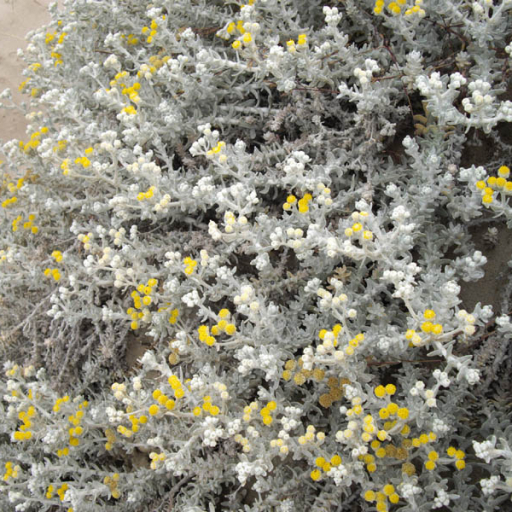
Commonly known as Cotton Weed or Sea Cotton, this silver-tufted beauty is a true survivor of the Mediterranean and Atlantic coastlines. Its dense, velvety white coating makes it look like it’s been dusted with fresh snow, even in the heat of a coastal summer. Historically, it has been cherished not just for its striking "ghostly" appearance, but for its incredible ability to anchor shifting sand dunes against the relentless sea winds.
🔍 How to Identify
- ☁️ Velvety Foliage: The entire plant is covered in a thick, white, woolly felt. This isn't just for looks; these tiny hairs protect the plant from salt spray and prevent water loss.
- 🌼 Button Flowers: In mid-to-late summer, it produces small, bright yellow, globe-shaped flower heads. They lack the typical "petals" (ray florets) of a daisy, appearing like golden buttons nestled in cotton.
- 🌿 Compact Growth: It typically grows in low, rounded mounds or cushions, reaching about 20–40 cm in height, which helps it stay below the harshest coastal gusts.
🏡 In Your Garden
- 🏖️ The Sandy Specialist: Because this plant naturally lives in dunes, it requires extremely well-draining soil. If planted in heavy clay or rich potting mix, the roots will likely rot. It thrives best in rock gardens or "xeriscaped" (water-wise) landscapes.
- ☀️ Sun Worshipper: To maintain that brilliant white color, it needs maximum sunlight. In the shade, the "wool" becomes thinner and the plant may turn a duller green as it struggles to photosynthesize.
⚠️ Safety & Toxicity
- ✅ Generally Safe: Otanthus maritimus is not known to be toxic to humans or common household pets like cats and dogs.
- 🧤 Skin Sensitivity: Like many members of the Asteraceae (daisy) family, the sap or the fine hairs can occasionally cause mild skin irritation or "contact dermatitis" in people with sensitive skin. It is wise to wear gloves if you are pruning a large patch.
✨ Fun Fact
The thick white "fleece" covering the plant acts like a natural air conditioner. It reflects sunlight to keep the plant cool and traps a layer of moist air against the stem, allowing the Cotton Weed to survive in scorching beach temperatures where other plants would simply shrivel.

Detailed Care Instructions
To grow Otanthus Maritimus, also known as Golden Buttons, follow these steps:
- Climate and Soil: Ensure that you live in a Mediterranean or coastal climate, as this plant thrives in regions with mild winters and hot summers. The soil should be well-draining and sandy, as this mimics their natural habitat.
- Planting: Choose a sunny spot in your garden or a large container with good drainage holes. Sow the seeds directly into the soil or plant young seedlings in spring, after the danger of frost has passed.
- Watering: Water the plant regularly, especially during dry periods. Avoid overwatering as this can lead to root rot. Allow the soil to dry slightly between waterings.
- Fertilizing: Apply a balanced, slow-release fertilizer in spring to provide nutrients to the plant. Follow the package instructions for dosage and frequency.
- Pruning: Trim the plant regularly to encourage bushier growth and prevent it from becoming leggy. Remove any dead or damaged branches to maintain its health and appearance.
- Pests and Diseases: Otanthus Maritimus is generally resistant to pests and diseases. However, keep an eye out for aphids, spider mites, or powdery mildew. If necessary, treat with appropriate insecticides or fungicides.
- Propagation: You can propagate Otanthus Maritimus by collecting and sowing seeds. Alternatively, take softwood cuttings in early summer to propagate new plants.
Remember that while Otanthus Maritimus is a resilient plant, it may not be suitable for colder climates. Therefore, it is crucial to provide the right growing conditions for it to thrive.
First, assess the soil moisture level by pressing a finger or a soil moisture sensor into the soil. If the soil is dry to the touch, it is time to water the plant.
When watering, use a watering can or hose to slowly water the base of the plant, avoiding getting the leaves wet. Water until the soil is moist, but not waterlogged.
During hot and dry weather, the plant may require more frequent watering to ensure the soil remains moist. In cooler weather, the plant may require less frequent watering.
It is important to note that overwatering can be harmful to this plant, as it prefers well-draining soil and can be susceptible to root rot. Allow the top inch of soil to dry out before watering again.
To fertilize this plant, apply a balanced, slow-release fertilizer in the early spring before new growth appears. Use a fertilizer with an NPK ratio of 10-10-10 or 12-12-12, following the manufacturer's instructions for application rates. Alternatively, you can use a liquid fertilizer every two to four weeks during the growing season. Be sure not to over-fertilize, as this can lead to excessive growth and weak stems. Always water the plant before and after fertilizing to avoid fertilizer burn.
The ideal soil for the Otanthus Maritimus plant should be well-draining and moderately fertile. It should have a pH range of 6.0 to 7.5 and should be loamy or sandy. The soil should be mixed with compost or well-aged manure to increase fertility. Organic matter should also be added to the soil to help retain moisture and nutrients. Additionally, the plant prefers a soil that is low in salt content as it is a coastal plant that grows in beach sand dunes. It is important to avoid soils that are heavy or clay-like in texture as they can hold too much water and lead to root rot.
To propagate this plant, you will need to take a cutting from a healthy adult plant. Choose a stem that is at least 4 inches long and has a few leaves on it. Use a sharp, clean pair of scissors or pruning shears to make a clean cut just below a node (where a leaf meets the stem).
Remove the leaves from the bottom 2 inches of the cutting, and make a small wound on the stem by scraping it lightly with a knife or your fingernail. This will encourage the cutting to grow roots.
Dip the cut end of the cutting in rooting hormone powder, if desired, and then insert it into a pot filled with moist potting soil. The soil should be well-draining but also hold moisture.
Water the cutting thoroughly and place it in a bright but shaded area. Keep the soil moist but not waterlogged, and avoid exposing the cutting to direct sunlight or cold drafts.
Over the course of several weeks, new roots should start to grow from the cutting. Once it has a good root system, you can transplant it into a larger pot or into your garden, taking care to protect it from extreme temperatures and harsh weather conditions.








