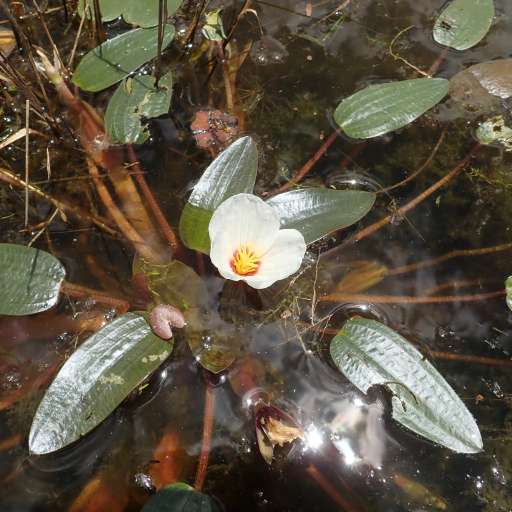
Plant Overview
Commonly known as the "Swamp Lily" or "Duck Lettuce," this charming Australian native is a classic sight in billabongs and farm dams. Despite its delicate appearance, it is a hardy aquatic perennial that plays a vital role in freshwater ecosystems. It is often mistaken for a common water lily, but its unique "maroon-hearted" flowers give it a personality all its own.
🔍 How to Identify
- 🍃 The Leaves: Mature leaves are broadly oval (elliptic), glossy dark green, and float gracefully on the water surface. They are attached to the base of the pond by long, fleshy stalks.
- 🌸 The Bloom: A delicate, three-petaled flower that looks like crinkled silk. The petals are usually creamy white or pale flush pink, featuring a deep purple or maroon center.
- 📏 Submerged Foliage: Interestingly, the plant looks different underwater! Younger leaves are often strap-like and translucent, only developing the oval "floating" shape as the plant matures.
🏡 In Your Garden
- 💧 Depth & Stability: This plant isn't a "floater" like duckweed; it must be rooted in the substrate. It thrives best in still or very slow-moving water between 30cm and 1 meter deep.
- ☀️ Sun Chaser: To get those iconic blooms, it needs plenty of direct sunlight. In a garden pond, ensure it isn't completely overshadowed by taller marginal plants or overhanging trees.
⚠️ Safety & Toxicity
- ✅ Status: Non-toxic and generally safe.
- 🦆 Animal Interaction: As the name "Duck Lettuce" suggests, it is a favored food source for waterfowl. It is considered safe for pets and livestock, though it can become quite "prolific" in nutrient-rich water, potentially clogging small pumps or filters.
✨ Fun Fact
Ottelia ovalifolia is a master of insurance! It produces two types of flowers: the beautiful ones you see on the surface, and "cleistogamous" flowers that stay submerged, never open, and self-pollinate underwater to ensure the plant's survival even in poor weather.

Detailed Care Instructions
Growing an Ottelia ovalifolia plant can be a rewarding experience. Here are some steps to help you grow one:
- Obtain the plant: Look for a reputable nursery or online seller specializing in aquatic plants. Ensure you are purchasing a healthy Ottelia ovalifolia plant.
- Choose a suitable container: Ottelia ovalifolia is an aquatic plant that thrives in water bodies like ponds or large containers. Select a pot or container with a minimum size of 1-2 feet in diameter and a depth of 1-2 feet. Make sure it has drainage holes to prevent waterlogging.
- Set up the container: Place the container in a sunny spot that receives at least 6-8 hours of direct sunlight daily. Fill the container with clean water, preferably rainwater or dechlorinated tap water.
- Planting the Ottelia ovalifolia: Gently plant the Ottelia ovalifolia plant in the container, ensuring the roots are submerged in water. The leaves should float on the water's surface. Be cautious not to damage the plant while planting.
- Water conditions: Ottelia ovalifolia prefers slightly acidic to neutral water with a pH range of 6.5-7.5. Ensure the water temperature remains between 20-30°C (68-86°F). Change the water regularly to maintain its cleanliness and quality.
- Fertilization: Ottelia ovalifolia plant benefits from regular fertilization. Use a slow-release aquatic plant fertilizer or fertilize once every two weeks with a balanced liquid fertilizer specifically formulated for water plants. Follow the instructions on the fertilizer packaging for the appropriate dosage.
- Control algae growth: Algae can be a common issue in aquatic plants. Minimize excess nutrient levels in the water to prevent algae blooms. You can also introduce algae-eating fish or snails into the container to help control its growth.
- Pruning: Regularly prune any dead or decaying leaves to maintain plant health and prevent decay from spreading. Use clean, sterilized pruning tools to avoid the spread of diseases.
- Winter care: Ottelia ovalifolia is a tropical plant and may not withstand frost or cold temperatures. If grown in regions with cold winters, you may need to bring the plant indoors or protect it with a greenhouse during the winter months.
- Enjoy and observe: Observe your Ottelia ovalifolia plant as it grows and flourishes. It may produce lovely white flowers and add beauty to your water feature or pond.
Remember to research and consider the specific requirements of the Ottelia ovalifolia plant and adapt the instructions accordingly based on your local climate and environmental conditions.

Place in a bright room that is sun drenched almost all day. Or directly in a south-facing window.

In order to properly water this plant, it is important to first understand its specific watering needs. Ottelia Ovalifolia plants would require regular watering, but it is important to avoid overwatering as this can lead to root rot and other issues.
It is recommended to water this plant deeply, allowing the water to fully penetrate the soil. When watering, it is important to avoid getting water on the leaves or flowers as this can lead to damage or disease.
One way to ensure proper watering is to use a watering can or similar tool that allows for precise watering. Another option is to use a drip irrigation system that delivers a consistent amount of water to the plant.
It is also important to observe the plant regularly and adjust watering frequency and amount as needed based on factors such as temperature, humidity, and rainfall. With proper care and attention, this plant can thrive and bring beauty to any space.
- When fertilizing Ottelia Ovalifolia, choose a balanced fertilizer with equal parts of nitrogen, phosphorus, and potassium.
- Apply the fertilizer once every two weeks during the growing season.
- Dilute the fertilizer according to the manufacturer's instructions.
- Carefully apply the fertilizer in a circular motion around the base of the plant.
- Avoid fertilizing too close to the stem, as this can cause root damage.
- Water the plant immediately after fertilizing, allowing the fertilizer to penetrate the soil and reach the roots.
- Monitor the plant for signs of overfertilization, such as burnt leaves or stunted growth. If this occurs, reduce the frequency of fertilization.
The optimal soil for Ottelia Ovalifolia plants is typically one that is well-draining and rich in nutrients. It should have a pH level between 6.5 and 7.5, which means it is slightly acidic to neutral. The soil should be able to hold moisture but not become waterlogged, as excessive moisture can lead to root rot. Soil that is sandy or loamy with a mixture of organic matter is ideal. Composted manure or other organic materials can also be used to enrich the soil and provide nutrients for the plant. It is recommended to repot the plant every two years using fresh soil to promote healthy growth.
To propagate this plant, you will need to obtain a healthy parent plant. Once you have a healthy parent plant, you can propagate it through vegetative propagation.
First, select a healthy stem from the parent plant. The stem should be at least 4 inches (10 cm) long and have multiple leaves attached to it.
Next, remove the lower leaves from the stem, leaving only a few at the top.
Then, dip the cut end of the stem in rooting hormone powder or liquid to encourage root growth.
Place the stem in a container with moist soil or water, keeping it in a warm, bright location. If using water, change the water every few days to prevent bacterial growth and ensure that the stem is not submerged too deeply.
Keep the soil or water consistently moist and monitor the plant closely for several weeks. Within a few weeks, you should begin to see roots growing from the cut end of the stem.
Once the roots are established, you can transfer the new plant to a larger container or directly into the soil. Be sure to keep the soil consistently moist and provide plenty of light for the newly propagated plant.








