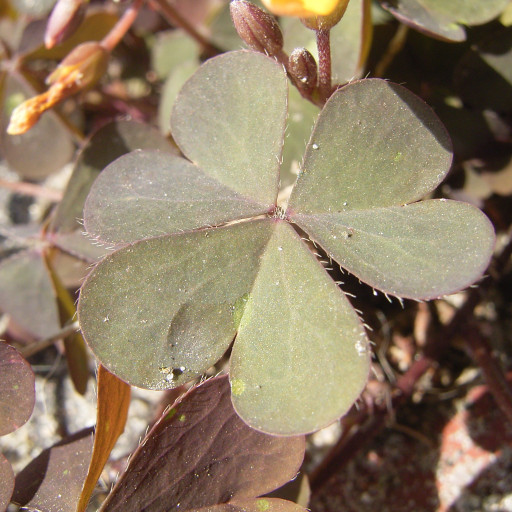
Plant Overview
Known as the "Creeping Woodsorrel" or the "Sleeping Beauty" of the garden, this tiny wanderer is a master of survival. Though often dismissed as a common weed, its delicate heart-shaped leaves and bright yellow blooms have earned it a spot in botanical folklore across the globe. It is one of the most widely distributed plants on Earth, frequently hitchhiking in nursery pots and sidewalk cracks.
🔍 How to Identify
- ☘️ The Foliage: Distinctive trifoliate leaves, where each of the three leaflets is a perfect heart shape. Depending on the sun exposure, the leaves range from a vibrant clover-green to a deep, moody burgundy.
- 🌼 The Flowers: Tiny, five-petaled yellow blossoms that look like miniature stars. These flowers are photophilic, meaning they usually open wide in the morning sun and tuck themselves away as evening approaches.
- 🌱 Growth Habit: As the name "creeping" suggests, it stays low to the ground. It sends out runners (stolons) that root wherever they touch the soil, allowing it to form a dense, carpet-like mat very quickly.
🏡 In Your Garden
- 🏜️ The Ultimate Opportunist: This plant thrives in "neglected" corners, favoring well-drained soil but surviving easily in pavement cracks. It is often a sign that your garden soil is slightly acidic or that a potting mix has been reused.
- 🚀 Explosive Spread: If you see small, upright, horn-like seed pods, be careful! When ripe, these pods use internal pressure to "explode" at the slightest touch, launching seeds several feet away. This "ballistic" dispersal is why it seems to reappear in every pot on your patio.
⚠️ Safety & Toxicity
- 🧪 Oxalic Acid: The plant contains high levels of oxalic acid, which gives it a sharp, lemony tang. While humans sometimes use it as a garnish, it should be avoided in large quantities, especially by those prone to kidney stones.
- 🐾 Pet Warning: It is considered toxic to dogs, cats, and horses. If ingested in significant amounts, the oxalates can cause drooling, tremors, or even kidney stress in smaller animals.
✨ Fun Fact
- 💤 Nyctinasty: Oxalis corniculata performs "sleep movements." Every night or during heavy rain, the heart-shaped leaflets fold downward and close up. Scientists believe this protects the plant from cooling down too much or helps shed excess water.

Detailed Care Instructions
| Color | Yellow |
| Soil Ph | Acidic |
| Humidity | Normal |
| Invasive | Weed |
| Lighting | Full Sun |
| Toxicity | Poisonous |
| Soil Type | Loamy, Sandy, Well-Drained |
| Bloom Time | May – June |
| Difficulty | Easy |
| Plant Type | Perennial |
| Hibernation | Cold Period |
| Mature Size | About 2-8" Tall |
| Temperature | 16°C - 28°C |
| Sun Exposure | Full, Partial Sun |
| Hardiness Zones | 4-8 |
To grow Oxalis Corniculata, also known as Creeping Wood Sorrel or Sourgrass, you can follow these steps:
- Choose a suitable location: Oxalis Corniculata thrives in full to partial sunlight, so select a spot where it can receive at least a few hours of direct sunlight daily. It can adapt to various soil types, but well-draining soil is essential to prevent waterlogging.
- Obtain the seeds or starter plants: You can purchase Oxalis Corniculata seeds online or from a local nursery. Alternatively, you can try propagating from stem cuttings.
- Prepare the soil: Loosen the soil and remove any weeds or debris. Enriching the soil with organic matter like compost or well-rotted manure can improve its fertility.
- Sow the seeds or plant the starters: If using seeds, sprinkle them over the soil surface and gently press them down. Water the area lightly to settle the seeds in place. If using starter plants, dig a small hole, place the plant in it, and cover the roots with soil.
- Watering: Oxalis Corniculata prefers consistently moist but not waterlogged soil. Water regularly, keeping the soil evenly moist, especially during dry periods. Avoid over-watering, as it can cause root rot.
- Fertilization: Although not usually necessary for Oxalis Corniculata, you can apply a balanced, all-purpose fertilizer once or twice during the growing season to enhance growth and flowering. Follow the instructions on the fertilizer packaging for proper usage.
- Weed control: Monitor the area to prevent the growth of weeds that may compete with your Oxalis Corniculata plants. Regularly remove any unwanted plants manually or by using mulch to help suppress weed growth.
- Pruning: If Oxalis Corniculata becomes invasive or spreads in unwanted areas, you can control its growth by trimming it back. Regular pruning can help maintain its desired shape and prevent overgrowth.
- Protection from pests: This plant is generally not highly susceptible to pests or diseases. However, watch out for common garden pests such as aphids or snails and take appropriate measures to control them if necessary.
- Harvesting seeds: To propagate more plants, wait until the flowers produce seed pods. Collect the dried seed pods and extract the seeds for sowing in the next growing season.
With proper care and maintenance, your Oxalis Corniculata plant should grow and spread, creating a beautiful ground cover or green accent in your garden.

Place in a window with dappled sun or a spot in the middle of a room. Or directly in a window facing west or east.

The best way to water this plant is to gently pour water around the base of the stems, being careful not to get water on the leaves. It is important to not over-water the plant, as it prefers slightly moist soil but can suffer from root rot if the soil becomes waterlogged. It is also recommended to allow the soil to dry out partially in between watering. The plant should be watered regularly, especially during periods of dry weather or when grown indoors in dry conditions.
To fertilize this plant, use a balanced fertilizer with equal amounts of nitrogen, phosphorus, and potassium. Apply the fertilizer every two weeks during the growing season, which is typically from spring to fall. Follow the instructions on the fertilizer package for the amount to apply. Be sure to water the plant thoroughly after fertilizing to help the nutrients reach the roots. Avoid over-fertilizing, as this can lead to burnt foliage and damage to the plant.
The best soil to use with this particular plant is a loose, well-draining soil that is slightly acidic with a pH between 5.5 to 6.0. It should also have a high organic matter content to promote healthy growth. A mixture of peat moss, perlite, and vermiculite is an ideal choice. Make sure not to overwater the plant as it can lead to root rot.
To propagate this plant, you will need to locate its rhizomes. Rhizomes are underground stems that grow horizontally and produce new shoots. They can be found by carefully digging around the base of the plant and gently pulling out the soil.
Once you have located the rhizomes, carefully cut them into sections that each contain a few shoots and some roots. Make sure that each section is large enough to support the necessary tissue for growth.
Next, plant each section in a pot filled with a well-draining soil mixture. Water the soil lightly and place the pot in a bright, indirect light. Keep the soil moist but not waterlogged, and be patient as new growth emerges.
As the new plants take root and begin to flourish, you can begin to care for them as you would any other plant of this species. With proper care, your new plants will grow to be strong and beautiful.
Common pests of the creeping wood sorrel include Spider mites, fungus gnats, aphids, thrips. Make a habit of checking your creeping wood sorrel frequently for pests so that any infestations can be caught and managed early.








