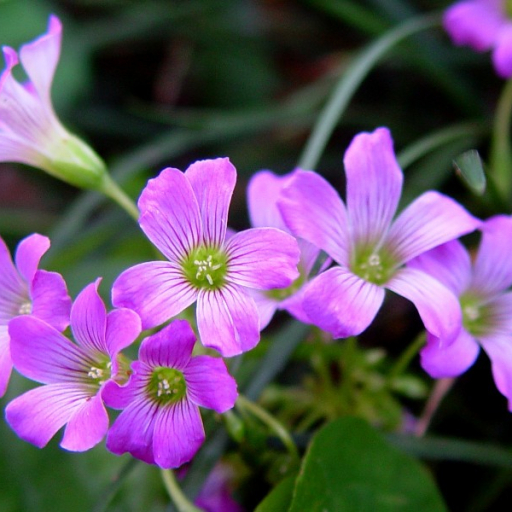
Plant Overview
Often called the "Pink Woodsorrel" or "Windowbox Woodsorrel," Oxalis rubra is a cheerful South American native that has captured the hearts of gardeners worldwide. Known for its shamrock-shaped foliage and prolific, candy-pink blooms, this plant adds a touch of cottage-core charm to any setting. It is a resilient survivor, often passed down through generations as a "pass-along" plant because of its hardy, clumping nature.
🔍 How to Identify
- ☘️ Shamrock Foliage: The leaves are trifoliate (three-parted), consisting of three heart-shaped leaflets with a distinct notch at the tip.
- 🌸 Veined Blooms: It produces clusters of five-petaled, rose-pink flowers. If you look closely, you’ll see delicate, darker pink veins radiating from a lime-green throat.
- ☂️ The "Sleep" Movement: This plant exhibits nyctinasty, meaning its leaves and flowers fold downward at night or during heavy rain, looking like tiny closed umbrellas.
🏡 In Your Garden
- 🪵 Rhizomatous Roots: Unlike many plants with delicate roots, this Oxalis grows from small, woody rhizomes. This means if the plant dies back due to a sudden frost or lack of water, it can often "reboot" itself from the energy stored underground.
- ☀️ Light Sensitivity: While it loves bright light to produce flowers, the leaves will often droop or "wilt" in the heat of a mid-afternoon sun. It prefers a spot that offers a bit of shade during the hottest part of the day.
- 💤 Natural Dormancy: Don’t be alarmed if the plant stops growing and loses its leaves occasionally. It may be entering a short dormancy period to recharge its energy for the next big bloom cycle.
⚠️ Safety & Toxicity
- 🐱 Pet Warning: Oxalis rubra contains oxalic acid. While it has a bitter, sour taste that usually deters animals, it can be toxic to cats and dogs if ingested in large quantities, potentially leading to kidney issues.
- 👶 Kid-Friendly Caution: While the leaves are technically edible for humans in very small amounts (and have a lemony tang), large amounts can cause stomach upset. It’s best to keep it as a decorative-only guest in homes with curious toddlers.
✨ Fun Fact
The name "Oxalis" is derived from the Greek word oxys, which means "acid" or "sour." This refers to the sharp, acidic taste of the plant's sap—a natural defense mechanism designed to stop insects from making a meal out of its pretty leaves!

Detailed Care Instructions

Place in a window with dappled sun or a spot in the middle of a room. Or directly in a window facing west or east.

The presence of a dry surface layer of soil does not indicate that the plant requires water. Instead, stick your finger 1-2" (3-5 cm) deep in the soil to feel dampness or moisture content. If the soil seems dry, it's time to water your greens. If the soil is still moist, however, it is better not to water your plant and instead wait a day or two. Overwatering or waterlogging raises the risk of root rot. So if the soil takes longer than a week to dry, check the light conditions because it's likely that the plant isn't getting enough light. It's fine if the upper layer of soil is dry between waterings, but the deeper soil layer should always have some moisture.
These plant needs regular fertilizing during growing seasons. Fertilizing your plants in dormant state during the winter, might result in scorching or browning of the leaf tips. If mature plants display signs of nutrient insufficiency, fertilizer administration is necessary to restore the plant to its previous state.
You may use All Purpose Plant Food or Flower Fertilizer for your Pink-Sorrel
Common pests of the pink-sorrel include Spider mites, fungus gnats, aphids, thrips. Make a habit of checking your pink-sorrel frequently for pests so that any infestations can be caught and managed early.








