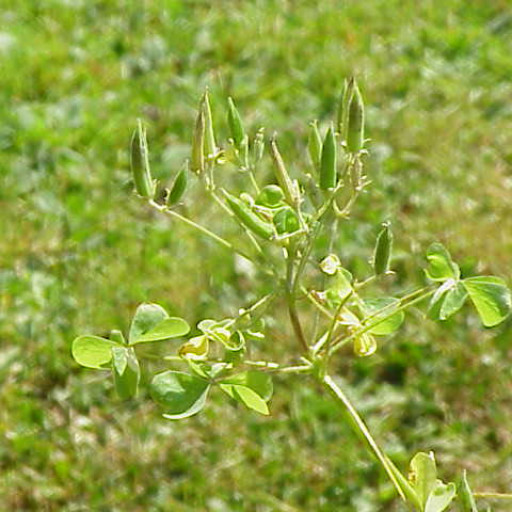
Plant Overview
Often mistaken for a common clover, Oxalis stricta—famously known as Yellow Woodsorrel or "Sourgrass"—is a resilient little survivor found in lawns and woodland edges alike. While many gardeners view it as a persistent weed, it has a long history of being used as a tangy, citrus-flavored garnish by foragers. Its upright stems and cheerful yellow blooms make it a common, if sometimes uninvited, guest in many backyards.
🔍 How to Identify
- 🍃 Heart-Shaped Leaves: Unlike true clovers, which have oval leaflets, Woodsorrel features three distinct, perfectly heart-shaped leaflets that often fold downward in the evening.
- 🌼 Five-Petal Flowers: It produces small, bright yellow flowers with five delicate petals that bloom from spring through autumn.
- 🥒 Pickle-Like Pods: After flowering, the plant develops upright, angular seed pods that look like miniature okra or tiny pickles.
🏡 In Your Garden
- 🌱 The Great Exploder: This plant is a master of dispersal; when the seed pods dry, they "explode" at the slightest touch, launching seeds up to 10 feet away. This is why it seems to pop up everywhere at once!
- ☀️ Adaptable Survivor: It thrives in disturbed soil and is often the first to colonize bare spots. It prefers full sun but is incredibly shade-tolerant, making it a difficult plant to fully eradicate from garden beds.
⚠️ Safety & Toxicity
- 🍋 Oxalic Acid: The plant’s sour flavor comes from oxalic acid. While humans can enjoy small amounts in salads, consuming large quantities can interfere with calcium absorption and lead to nutritional imbalances.
- 🐾 Pet Warning: Oxalis stricta is considered toxic to dogs, cats, and horses if eaten in significant amounts. It can lead to kidney stress or stomach upset, so it is best to keep it away from curious pets.
✨ Fun Fact
The leaves of the Yellow Woodsorrel are "nyctinastic," meaning they exhibit sleep movements. They fold up tightly at night or during heavy rain to protect themselves and then "wake up" by unfolding as soon as the sun rises.

Detailed Care Instructions
| Color | Yellow |
| Soil Ph | Acidic |
| Humidity | Normal |
| Invasive | Weed |
| Lighting | Part Sun |
| Toxicity | Poisonous |
| Soil Type | Loamy, Sandy, Well-Drained |
| Bloom Time | May – June |
| Difficulty | Medium |
| Plant Type | Perennial |
| Hibernation | Cold Period |
| Mature Size | 6 To 20 Inches |
| Native Area | North America And Eurasia |
| Temperature | 15°C - 23°C |
| Sun Exposure | Full, Partial Sun |
| Hardiness Zones | 4-8 |
To successfully grow Oxalis stricta, also known as common yellow woodsorrel or sourgrass, follow these steps:
- Choose the right location: Oxalis stricta can grow in both full sun and partial shade, but it prefers a location with well-draining soil.
- Prepare the soil: Ensure that the soil is loose, fertile, and rich in organic matter. It should be slightly acidic with a pH between 6 and 7.
- Sow the seeds: You can either sow the seeds directly in the garden or start them indoors 8-10 weeks before the last frost. Sow the seeds shallowly, barely covering them with soil.
- Watering: Keep the soil moist but not waterlogged. Water regularly, especially during dry spells.
- Fertilization: Oxalis stricta does not require much fertilization. You can add a balanced fertilizer once or twice during the growing season if desired.
- Weed control: It is important to keep the area around the plant free from weeds. Regular weeding will prevent competition and allow the Oxalis stricta plant to grow unhindered.
- Mulching: Applying a layer of organic mulch around the plants can help retain soil moisture, suppress weeds, and regulate temperature.
- Pruning: Trim back the plant occasionally to maintain its shape and prevent it from becoming too messy. Pruning also encourages healthy growth.
- Pests and diseases: Oxalis stricta is generally resistant to pests and diseases, but keep an eye out for any signs of damage or infestation. Treat any issues promptly.
- Propagation: If you want to propagate Oxalis stricta, you can collect the seeds or divide established clumps of the plant in early spring or fall for replanting.
Remember, Oxalis stricta can be an invasive plant in some regions. Be mindful of its growth and spread to prevent it from becoming a problem in your garden or natural areas.

Place in a window with dappled sun or a spot in the middle of a room. Or directly in a window facing west or east.

To water this plant, first, check the soil moisture level by inserting your finger about an inch deep into the soil. If it feels dry, it's time to water. Use a watering can or a gentle stream of water to moisten the soil thoroughly. Make sure not to overwater, as this plant is susceptible to root rot. Allow any excess water to drain out of the bottom of the container, ensuring the roots do not sit in standing water. Watering frequency will depend on the temperature and humidity in your environment, but typically once or twice a week should suffice.
To fertilize this plant, use a balanced fertilizer with equal parts nitrogen, phosphorus, and potassium. Apply the fertilizer every 2-3 weeks during the growing season, which is typically spring through fall. Be careful not to over-fertilize, as this can cause damage to the plant. Always follow the instructions on the fertilizer packaging for the correct dosage and watering recommendations.
Oxalis Stricta is a plant that prefers well-draining soil. It is best suited to a soil mixture that is loose and sandy, allowing excess water to drain away. This plant does not tolerate waterlogged conditions, so a soil mix that promotes good drainage is essential.
To create a suitable soil environment for Oxalis Stricta, it is recommended to use a combination of sand, perlite, and organic matter such as peat moss or well-rotted compost. The addition of sand aids in improving drainage, preventing the soil from becoming compacted.
Perlite is a lightweight volcanic rock material that provides aeration to the soil, enhancing root development and preventing waterlogging. It also helps to maintain an ideal moisture balance in the soil.
Organic matter, such as peat moss or compost, helps retain moisture while providing essential nutrients for the plant's growth. It also allows for a stable soil structure, supporting the plant's root system and overall health.
A recommended soil mix for Oxalis Stricta could consist of a 1:1 combination of sandy soil and perlite, with the addition of organic matter in a ratio of about 1:3 or 1:4 (organic matter to sandy soil mixture).
Overall, the soil for Oxalis Stricta should be well-draining, loose, and slightly acidic. This type of soil composition ensures proper aeration, drainage, and nutrient availability for the plant, promoting healthy growth and development.
Propagation of this plant can be done through several methods. One way is through division of its bulb-like structures, which can be carefully separated and planted separately in new pots or outdoor areas. Another method is by taking stem cuttings and rooting them in water or soil. Care should be taken to select healthy stems with several nodes and to remove any leaves from the lower portion of the cutting that will be placed in the rooting medium. It's also important to keep the cuttings moist and in a warm, well-lit area until they have developed roots and can be transplanted into their permanent location. Finally, this plant can also produce seeds that can be collected and planted in soil to grow new plants. Seeds should be harvested when the pods have turned brown and the seeds are fully matured. They can then be stored until the next growing season and planted according to the instructions on the seed packet.
Common pests of the yellow wood-sorrel include Spider mites, fungus gnats, aphids, thrips. Make a habit of checking your yellow wood-sorrel frequently for pests so that any infestations can be caught and managed early.








