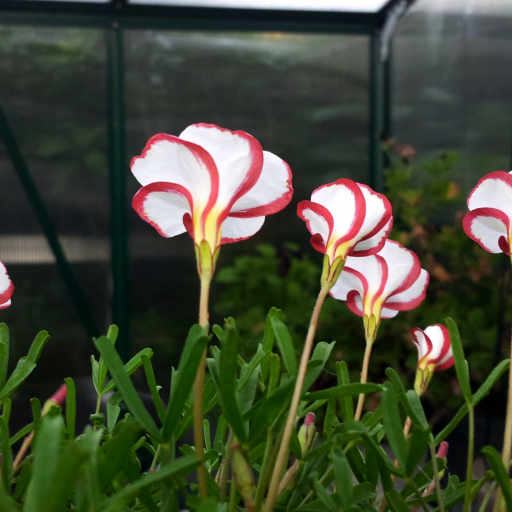
Plant Overview
Often called the "Candy Cane Sorrel," this South African gem is a favorite among bulb collectors for its whimsical, striped appearance. Before the flowers fully unfurl, they look exactly like tiny peppermint sticks tucked into a bed of green clover. It is a cheerful winter-growing plant that brings a touch of holiday magic to windowsills and rock gardens just when most other plants are going dormant.
🔍 How to Identify
- 🍭 The Buds: The most iconic feature; tightly spiraled white petals with vibrant crimson-red margins that create a "candy cane" stripe.
- 🌼 The Bloom: When the sun hits, the buds unfurl into trumpet-shaped white flowers with a delicate red picotee edge and a yellow throat.
- ☘️ The Foliage: Tiny, bright green leaves that grow in clusters of three (trifoliate), looking very similar to a miniature clover or shamrock.
🏡 In Your Garden
- ☀️ Sun Seekers: This plant is "photoblastic," meaning the flowers only open in bright, direct light. On cloudy days or at night, they roll back up into their striped "cane" shape.
- 💤 Summer Slumber: Unlike many garden plants, Oxalis versicolor goes dormant in the heat of summer. If the leaves turn yellow and die back in July, don't panic—the bulb is just resting and should be kept dry until autumn.
- Drainage is Life:** Because it grows from small bulbs, it is highly susceptible to rot. It thrives best in a gritty, sandy potting mix that allows water to pass through quickly.
⚠️ Safety & Toxicity
- 🐾 Status: Mildly toxic to pets and humans.
- ⚠️ Details: Like all members of the Oxalis family, it contains oxalic acid. While it has a very bitter taste that usually deters animals, if ingested in large quantities, it can cause salivation, tremors, or kidney issues in cats and dogs.
✨ Fun Fact
The Oxalis versicolor is a master of "Nyctinasty"—the biological rhythm that causes plants to close their petals at night. This isn't just for show; it protects the pollen from dew and keeps the flower's reproductive organs warm during chilly South African nights!

Detailed Care Instructions
To grow an Oxalis Versicolor plant, you can follow these steps:
- Choose a pot: Select a well-draining pot with drainage holes at the bottom. The pot should be large enough to accommodate the plant's growth.
- Soil: Opt for a well-draining, light, and slightly acidic soil mix. You can combine equal parts of potting soil, perlite, and peat moss to create a suitable mixture.
- Planting: Place the Oxalis Versicolor bulb on the soil surface and cover it with a thin layer of the soil mixture. Ensure that the bulb is not fully buried, as this may hinder its growth.
- Watering: Water the plant immediately after planting and keep the soil slightly moist at all times. Avoid overwatering as excess moisture can lead to rotting. Aim to water the plant when the top inch of the soil feels dry to the touch.
- Light: Provide your Oxalis Versicolor with bright, indirect light. Avoid placing it in direct sunlight as this may scorch the leaves. A well-lit room or a spot near a window with filtered light is ideal.
- Temperature: Oxalis Versicolor prefer temperatures between 60-75°F (15-24°C). Keep the plant away from drafts or extreme temperature fluctuations.
- Fertilizer: During the growing season (spring and summer), feed the plant with a balanced, water-soluble fertilizer, diluted to half the recommended strength. Apply the fertilizer every 2-4 weeks.
- Dormancy period: In late fall or early winter, the leaves of the Oxalis Versicolor will begin to die back. At this stage, reduce watering gradually until the soil is almost dry. Allow the plant to go into dormancy by withholding water completely for a couple of months.
- Reviving the plant: After the dormancy period, resume watering and gradually increase the light exposure. New shoots should start emerging within a couple of weeks.
- Repotting: Once every few years, when the plant becomes crowded in its pot, you can repot the Oxalis Versicolor. Choose a pot one size larger and follow the same planting and care instructions.
By following these guidelines, you can successfully grow an Oxalis Versicolor plant. Remember to observe and adjust the care routine according to the specific needs of your plant.

Place in a bright room that is sun drenched almost all day. Or directly in a south-facing window.

To properly water Oxalis Versicolor, it is important to understand its unique watering needs. Here are some guidelines to ensure the plant receives appropriate hydration:
1. Observe the soil: Before watering, check the moisture level of the soil. Stick your finger about an inch into the soil to determine if it feels dry. If it does, it's time to water.
2. Watering frequency: Oxalis Versicolor prefers to be kept evenly moist, but not waterlogged. Aim to provide water when the top layer of soil starts to dry out. This typically occurs every 7-10 days, but it can vary depending on environmental conditions.
3. Watering method: The best way to water Oxalis Versicolor is by using the bottom-up method. Fill a tray or saucer with water and place the plant's pot on it. Allow the plant to soak up water through its drainage holes for about 15-30 minutes. This method helps prevent overwatering and ensures that the plant gets enough water at the root level.
4. Avoiding excess water: Make sure not to leave excess standing water in the tray after the recommended watering duration. Empty any remaining water to prevent root rot and other related issues.
5. Consider temperature and humidity: The water requirements of Oxalis Versicolor can vary with changes in temperature and humidity. During warmer months or in dry climates, the plant may need slightly more frequent watering. Conversely, during cooler months or in humid environments, it may require less frequent watering.
6. Use appropriate watering tools: To ensure accurate and controlled watering, use a small watering can or a gentle spray bottle. This will help distribute water evenly and prevent damage to the plant's delicate foliage.
Remember, it is always best to tailor watering practices to the specific needs of the plant, taking into account its individual environmental conditions and growth requirements. Regularly monitoring the soil moisture and adjusting watering accordingly will help promote the health and vitality of your Oxalis Versicolor plant.
To fertilize the Oxalis Versicolor plant, use a balanced liquid or granular fertilizer with an N-P-K ratio of 10-10-10 or similar. Dilute the liquid fertilizer as per the instructions on the packet or use the recommended amount of granules.
Apply the fertilizer during the plant's active growing season, typically from spring to early fall. Avoid fertilizing during the winter months when the plant goes dormant.
Before applying the fertilizer, make sure the soil is moist. You can water the plant the day before fertilizing to ensure the soil is adequately hydrated.
Carefully follow the instructions on the fertilizer packaging for the correct amount and method of application. Generally, you can either sprinkle the granules evenly around the base of the plant or mix the liquid fertilizer with water according to the recommended dilution and pour it onto the soil.
Avoid getting the fertilizer directly on the leaves or stems of the plant as it can cause burning or other damage.
After fertilizing, water the plant lightly to help the nutrients settle into the soil and prevent any potential root burn.
Repeat the fertilization process every four to six weeks during the growing season or as directed by the specific fertilizer's instructions. Monitor the plant's response to the fertilizer and adjust the frequency or dosage if necessary.
Remember to always read and follow the instructions provided by the fertilizer manufacturer, as different products may have slightly varied application methods and timing recommendations.
When selecting soil for Oxalis Versicolor, it is important to choose a well-draining soil that retains moisture without becoming waterlogged. This plant prefers a slightly acidic to neutral pH, ideally ranging between 6.0 and 7.0. The soil should be rich in organic matter and nutrients to support healthy growth.
A recommended soil mix for Oxalis Versicolor could include a combination of peat moss or coconut coir, perlite or vermiculite, and a high-quality potting mix or garden soil. These components help ensure good drainage and aeration, preventing waterlogging and root rot.
Peat moss or coconut coir is beneficial in retaining moisture, which is particularly important for Oxalis Versicolor, as the plant prefers slightly moist conditions. The perlite or vermiculite improves drainage by preventing the soil from compacting and becoming too dense.
To further enrich the soil, you may consider adding compost or well-rotted organic matter that will provide additional nutrients for the plant's growth. This organic matter helps improve the soil structure, encourages beneficial microbial activity, and provides essential nutrients for overall plant health.
When potting Oxalis Versicolor, ensure that the container has drainage holes at the bottom to allow excess water to escape and prevent the soil from becoming waterlogged. It is also advisable to avoid using heavy clay-based soils that tend to retain too much water, as this can lead to root rot.
Regularly monitor the moisture levels in the soil and water the plant when the top inch of soil feels dry. Taking care not to overwater or underwater is essential for maintaining optimal soil conditions, which will promote healthy growth and vibrant foliage for your Oxalis Versicolor plant.
To propagate Oxalis Versicolor, follow the steps below:
- Select a healthy and well-established Oxalis Versicolor plant as the parent plant for propagation. Ensure that it is in its active growing phase.
- Prepare a suitable pot or container with drainage holes. Fill it with a well-draining potting mix that consists of equal parts of peat moss, perlite, and sand. This mixture provides adequate drainage while retaining some moisture.
- Carefully remove the parent plant from its pot, taking care not to damage the roots. Gently shake off excess soil to expose the rhizomes.
- Locate healthy rhizomes on the parent plant. These are the thick, underground stems from which new plants will emerge. Select rhizomes that are at least 2-3 inches long and have a few healthy leaves attached.
- Using a clean, sharp knife or garden shears, carefully separate the selected rhizomes from the parent plant. Ensure that each rhizome has at least one leaf attached and healthy-looking roots.
- Plant the separated rhizomes in the prepared potting mix. Make a small hole in the soil using your finger or a pencil, and gently place the rhizome in the hole, covering it with soil. Avoid planting them too deep, as this may inhibit growth.
- Water the newly planted rhizomes thoroughly. Ensure that the water saturates the soil and drains out through the bottom of the pot. Allow the excess water to drain.
- Place the potted rhizomes in a bright location with indirect sunlight. Avoid direct sunlight, as it may scorch the leaves. Maintain a temperature range of 65-75°F (18-24°C).
- Keep the soil consistently moist but not waterlogged. Check the moisture level regularly, and water when the top inch of soil feels slightly dry. Avoid overwatering, as it can lead to root rot.
- Within a few weeks, new growth should emerge from the planted rhizomes. Once the new plants are well established and have grown a few inches tall, they can be gently transplanted into separate pots or garden beds if desired.
Remember to provide regular care to the propagated plants by supplying water, balanced fertilizer, and maintaining the appropriate lighting conditions. With proper care, your Oxalis Versicolor plants should continue to thrive and produce beautiful foliage.
Common pests of the peppermint rock sorrel include Spider mites, fungus gnats, aphids, thrips. Make a habit of checking your peppermint rock sorrel frequently for pests so that any infestations can be caught and managed early.








