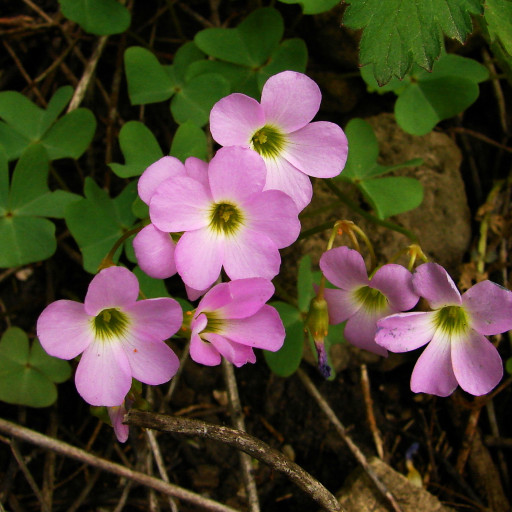
Plant Overview
Often called the Violet Woodsorrel, this delicate North American native is like a splash of watercolor on a woodland floor. Unlike the common yellow weeds often found in lawns, this species is a graceful perennial that emerges from small bulbs to brighten up rock gardens and shady borders. Its shamrock-style leaves and starry lavender flowers have earned it a reputation as a lucky charm for native plant enthusiasts.
🔍 How to Identify
- ☘️ The Foliage: Features three heart-shaped leaflets that look remarkably like a traditional clover, often tinged with a deep maroon or purple hue on the undersides.
- 🌸 The Bloom: Dainty, five-petaled flowers ranging from soft lavender to vibrant violet, centered with a tiny, glowing yellow "eye" and held up by slender, leafless stalks.
- 🌱 Growth Habit: A low-lying plant that grows in tidy clumps, usually reaching only 6 to 12 inches in height, making it a subtle but beautiful groundcover.
🏡 In Your Garden
- 🌳 The Woodland Vibe: This plant thrives in "dappled light"—the kind of sunlight that filters through tree canopies—replicating its natural forest floor habitat.
- 🪴 Bulb Sensitivity: Because it grows from small, scaly bulbs, it prefers to stay put; frequent transplanting can stress the plant and delay its seasonal comeback, so choose its home carefully.
⚠️ Safety & Toxicity
- 🐾 Pet Warning: While occasionally nibbled by humans for its tangy "lemon" flavor, it contains oxalic acid, which is toxic to cats and dogs if consumed in large quantities, potentially leading to kidney distress.
- 👶 Human Caution: Small amounts are often used as a garnish, but anyone with a history of kidney stones or rheumatism should avoid it entirely due to the high oxalate content.
✨ Fun Fact
The Violet Woodsorrel is a master of "sleep movements" known as nyctinasty. When the sun goes down or a heavy rainstorm begins, the leaflets fold down vertically against the stem to protect themselves, looking like a series of tiny, closed umbrellas until the weather clears.

Detailed Care Instructions
| Lighting | Full Sun |
| Hardiness Zones | 4A - 9A |
To grow Oxalis Violacea plant, also known as Violet Wood Sorrel, follow these steps:
- Choose the right location: Oxalis Violacea prefers partial shade to full sun. Make sure the area receives indirect sunlight for at least a few hours a day.
- Prepare the soil: The plant thrives in well-draining soil. So, amend the soil by adding compost or organic matter to improve drainage.
- Planting: Plant the Oxalis Violacea bulbs in spring or fall. Dig holes that are about 2-3 inches deep and space them about 4-6 inches apart. Place the bulbs in the holes with the pointed ends facing upward and cover them with soil.
- Watering: Keep the soil moist but not soaked. Water thoroughly after planting and then water whenever the top inch of soil dries out.
- Fertilizing: Oxalis Violacea doesn't require much fertilizer. In early spring, you can apply a balanced slow-release fertilizer according to the package instructions.
- Mulching: Mulch around the plants with organic mulch, such as wood chips or leaves, to retain moisture and inhibit weed growth.
- Pruning: Regularly trim or prune back the plant to maintain its shape and size. It helps to encourage new growth as well.
- Pests and diseases: Oxalis Violacea is generally pest-free, but it can be susceptible to diseases like fungal infections. Ensure proper air circulation and avoid overwatering to prevent disease issues.
- Propagation: You can propagate Oxalis Violacea by dividing the bulbs or planting the seeds. Dividing the bulbs is the easiest way. Dig up the bulbs, separate them into smaller clumps, and replant them.
Overall, Oxalis Violacea is a relatively easy plant to grow with proper care. Enjoy the beautiful violet flowers and the unique foliage of this charming plant.

Place in a window with dappled sun or a spot in the middle of a room. Or directly in a window facing west or east.

To water the plant that belongs to the Oxalis Violacea species, you should first ensure that the soil in which it is planted is completely dry before watering it. When you are ready to water it, pour enough water into the soil until it is moist but not waterlogged. Be careful not to over-water it, as this can lead to root rot and other fungal diseases. The amount of watering required depends on various factors such as the humidity, temperature, size of the pot and the amount of sunlight it receives. It is generally recommended to water it once or twice a week, depending on the prevailing conditions. Additionally, make sure to use well-draining soil and a pot with drainage holes to prevent excess moisture from collecting in the soil.
To fertilize this particular plant, it is important to use a balanced fertilizer with equal amounts of nitrogen, phosphorus, and potassium. Fertilizers with a ratio of 10-10-10 or 20-20-20 are appropriate. It is recommended to apply the fertilizer every six to eight weeks during the growing season, which is typically from spring to fall. When applying the fertilizer, make sure to water the plant thoroughly before and after to prevent damaging the roots. Avoid over-fertilizing and always follow the instructions on the fertilizer package.
The ideal soil for the plant should be well-draining, loose, and rich in organic matter. A mix of coarse sand, peat moss, and perlite can ensure good drainage while also retaining moisture. The soil pH should be slightly acidic, around 6.0-6.5, to support optimal growth. Avoid using heavy clay soil or soil that is too compacted as it can cause waterlogging and root rot. It is also recommended to fertilize the plant with a balanced, slow-release fertilizer during the growing season.
Propagation of this plant can be done through various methods such as stem cuttings, division of tubers, and seed propagation.
For stem cutting propagation, select a healthy stem with multiple leaves and make a clean cut with a sharp pair of scissors. Remove the lower leaves and dip the cut end into rooting hormone powder. Place the stem cutting into moist potting soil and keep it in a shaded area until roots develop in about 2-4 weeks.
Division of tubers is another method where the plant is dug up carefully and the tubers are separated and replanted in new pots or garden beds. This is typically done in the spring when new growth is beginning to emerge.
Seed propagation involves collecting seeds from the plant and sowing them in a seed-starting mix. Keep the soil moist and warm until the seeds germinate, which usually takes about 2-3 weeks. Once the seedlings have developed several leaves, they can be transplanted into their own pots or garden locations.
It's important to note that propagation success may vary depending on the specific plant and growing conditions, so it's best to do some research on the specific needs of the plant before attempting any propagation methods.
Common pests of the violet woodsorrel include Spider mites, fungus gnats, aphids, thrips. Make a habit of checking your violet woodsorrel frequently for pests so that any infestations can be caught and managed early.








