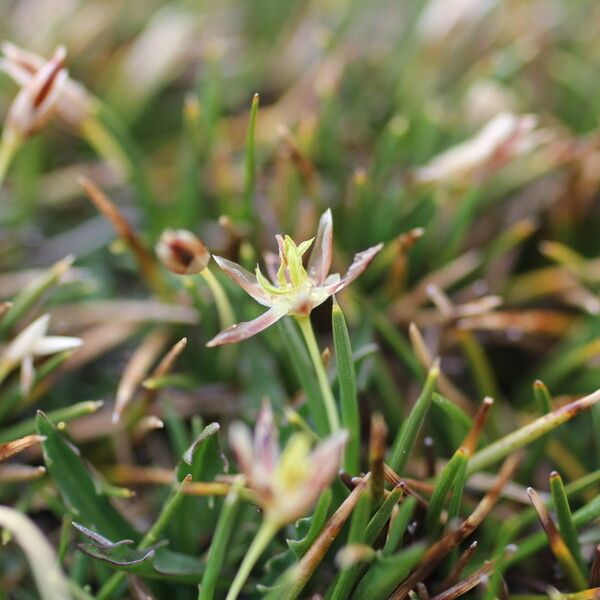
Plant Overview
Known as a master of the "High-Altitude Architect" style, Oxychloe andina is a remarkable cushion plant native to the extreme environments of the Andes Mountains. Often nicknamed the "Puna Cushion," it looks less like a typical garden plant and more like a dense, mossy boulder or a living green sculpture. In its native habitat, it survives freezing nights and scorching sun by hugging the ground in a compact, impenetrable mat.
🔍 How to Identify
- 🌵 Growth Habit: It forms incredibly dense, hard cushions that can grow several feet wide but only a few inches high, feeling almost like solid wood or rock to the touch.
- 🗡️ Foliage: The leaves are stiff, needle-like, and very sharp at the tips. They are arranged in tight rosettes that lock together to trap heat and moisture.
- 🟤 Flower Texture: The flowers are tiny, brownish, and relatively inconspicuous, tucked deep within the spiny rosettes to protect them from the harsh mountain winds.
🏡 In Your Garden
- 🏔️ The Ultimate Survivor: If you are trying to grow this at home, it requires "Alpine House" conditions. It hates humidity and "wet feet," requiring gritty, volcanic, or rocky soil that mimics the thin air and drainage of the 13,000-foot peaks.
- 🤝 Nurse Plant Role: In nature, this plant acts as a biological "nurse." Because it traps heat and moisture within its dense structure, other smaller, more fragile plants often sprout inside the cushion to hide from the elements.
⚠️ Safety & Toxicity
- 🟢 Status: Generally Non-Toxic.
- 🧤 Details: While it doesn't contain dangerous chemicals or poisons, its primary defense is physical. The leaves are incredibly sharp and rigid; they can easily puncture skin or cause irritation to curious pets or children who try to touch the "soft-looking" mound.
✨ Fun Fact
- Oxychloe andina is a master of "convergent evolution." Even though it looks like a moss or a succulent, it is actually a member of the Juncaceae (rush) family—meaning it is technically a relative of the soft grasses and reeds you find in marshes!

Detailed Care Instructions








