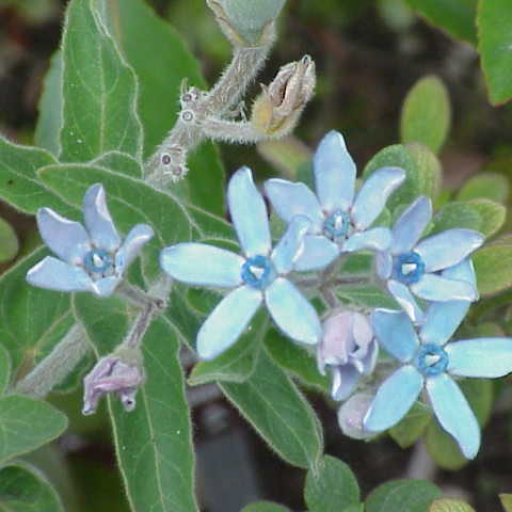
Plant Overview
Commonly known as Tweedia or the Blue Milkweed, Oxypetalum coeruleum is one of the few plants in the world that produces a "true blue" flower. Native to the sunny plains of Uruguay and Argentina, this "Star of the Argentine" is a favorite for cottage gardens and bridal bouquets alike, offering a dreamy, turquoise hue that is rare in the botanical world.
🔍 How to Identify
- ⭐ Starry Blooms: The flowers are distinctly star-shaped with five petals. They emerge as a brilliant turquoise or sky blue and gradually fade into a soft lilac or purple as they age.
- ☁️ Velvety Foliage: The gray-green, heart-shaped leaves are covered in fine, downy hairs, giving the entire plant a soft, felt-like texture.
- 🥛 Milky Sap: Like its cousins in the Milkweed family, the stems and leaves release a sticky, white milky latex if broken or cut.
🏡 In Your Garden
- 🧗 The Scrambling Habit: While often labeled as a vine, Tweedia is actually a "scrambler." It doesn't have tendrils to grip surfaces tightly, so it needs a bit of help from a trellis or nearby sturdier plants to reach its full height.
- 🦋 Pollinator Magnet: This plant is a powerhouse for local ecology. It acts as a nectar source for bees and butterflies, and in some regions, it can even serve as a host plant for Monarch butterfly larvae, similar to common Milkweed.
- ☀️ Drainage is Key: It loves the sun but is prone to root rot if its "feet" stay wet. It’s best to plant it in terracotta pots or sandy soil mixes that allow water to move through quickly.
⚠️ Safety & Toxicity
- 🧪 Status: Mildly toxic and a skin irritant.
- 🧤 Details: The milky latex sap contains small amounts of cardiac glycosides. It can cause skin irritation or rashes upon contact, so wearing gloves while pruning is recommended. It should not be ingested by pets or children, as it can cause digestive upset.
✨ Fun Fact
The flowers of the Oxypetalum are famous among florists for their "color-shifting" ability; a single stem can display multiple shades of blue and purple simultaneously as the older flowers transition while new buds open.

Detailed Care Instructions
As a part of the milkweed family, this plant attracts various types of pollinators and makes a great addition to a butterfly garden. Its long bloom season also makes it a fine addition to any border garden. Blue tweedia pairs nicely in gardens with other late-blooming plants such as lavender, sunflower, black-eyed Susan, and purple coneflower.
How long does blue tweedia live?
When grown as a perennial in warmer climates, Oxypetalum coereleum is sometimes a relatively short-lived plant. It's common for plants to begin declining after five years or so. It's a good idea to propagate a mature plant in order to ensure the survival of the specimen.
Does blue tweedia make a good cut flower?
Though the flowers are relatively small, they last well when cut for vase display. They are normally cut and displayed along with sprigs of the plant's gray-green foliage with heart-shaped leaves.
Does blue tweedia attract monarch butterflies?
Unlike native North American milkweeds, this plant does not specifically host monarch butterfly larvae, but it is still attractive to a variety of butterflies who feed on the nectar of the flowers.
To successfully grow Oxypetalum coeruleum (also known as Tweedia caerulea or blue milkweed vine), follow these steps:
- Planting: Start by selecting a suitable location with full sun or partial shade. Ensure the soil is well-draining and rich in organic matter. In cooler climates, grow it in containers to bring indoors during winter.
- Germination: Soak the seeds for 24 hours in warm water to soften the hard seed coat. Sow the seeds directly onto the soil or in seed trays filled with potting mix. Cover them with a thin layer of soil (approximately 1/4 inch).
- Germination conditions: Maintain a temperature of around 70-75°F (21-24°C) for successful germination. Keep the soil consistently moist but not waterlogged.
- Transplanting: Once the seedlings have grown to a suitable size with 2-3 true leaves, transplant them into larger pots or into the garden, ensuring they are spaced at least 12-18 inches apart.
- Watering: Provide regular watering, especially during dry spells. However, avoid overwatering, as otherwise the plant may become susceptible to root rot.
- Support: As the plant grows, provide a trellis or support structure for it to climb. This vine can reach up to 6 feet in height and may need assistance as it grows.
- Fertilization: Feed the plant with a balanced, slow-release fertilizer during the growing season to promote healthy growth and flower production.
- Pruning: Prune any dead or damaged leaves or stems and remove spent flowers to encourage continuous blooming and a tidy appearance.
- Pest and disease management: Oxypetalum coeruleum is relatively pest and disease-resistant. However, keep an eye out for common garden pests like aphids or snails. If necessary, treat with appropriate organic or chemical pest control methods.
- Winter care: In regions with cold winters, bring the plant indoors before the first frost. Place it in a cool, bright location, and reduce watering. Resume regular care and move it back outdoors after the danger of frost has passed.
By following these guidelines, you can successfully grow Oxypetalum coeruleum, enjoying its beautiful blue flowers in your garden or as a container plant.

Place in a bright room that is sun drenched almost all day. Or directly in a south-facing window.

The best way to water this plant is to allow the soil to dry slightly between waterings. When it is time to water, thoroughly saturate the soil until water begins to come out of the drainage holes in the bottom of the pot. Be sure to empty any excess water from the saucer underneath the pot to prevent root rot. During the growing season, increase watering frequency and fertilize with a balanced plant food every 2-4 weeks. In winter, reduce watering frequency and withhold fertilizer. Avoid getting water on the leaves to prevent damage.
To properly fertilize your Oxypetalum Coeruleum plant, you should use a balanced fertilizer with equal amounts of nitrogen, phosphorus, and potassium. Apply the fertilizer every two weeks during the growing season, which is typically in the spring and summer months. Be sure to dilute the fertilizer according to the manufacturer's instructions, and water the plant thoroughly before and after applying the fertilizer. Avoid over-fertilizing, as this can cause damage to the plant. Monitor the growth and health of your Oxypetalum Coeruleum plant and adjust your fertilization schedule as needed.
It is recommended to use a well-draining soil mix that is rich in organic matter. The soil should have a pH level of around 6.0-7.0. The plant prefers a soil that is slightly moist but not waterlogged. It is important to avoid overwatering, as this can lead to root rot and other complications. Adding perlite or sand to the soil mix can help improve drainage. It is also recommended to fertilize the soil with a balanced fertilizer during the growing season to promote healthy growth and flowering.
One way to propagate this plant is through stem cuttings. Choose a healthy stem with at least two sets of leaves. Using a sterilized sharp knife or scissors, cut a piece of stem about four to six inches long. Strip off the bottom sets of leaves, leaving only the top two sets. Dip the cut end of the stem in rooting hormone powder and plant it in a moist potting mix. Keep the soil moist and place the cutting in a warm and indirect light area. The cutting should start sprouting roots in about four to six weeks. Once the cutting has rooted, transplant it to a larger pot with well-draining soil and care for it as you would a mature plant.








