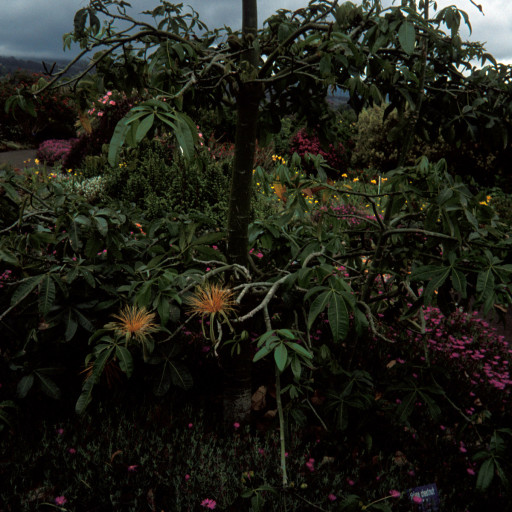
Plant Overview
Known as the "Money Tree," the Pachira aquatica is a staple in homes and offices worldwide, prized for its association with luck, prosperity, and financial success. While often seen with its iconic braided trunk in nurseries, this resilient tropical native originates from the swamps of Central and South America. It is a "living sculpture" that brings a lush, jungle-like feel to any indoor space while remaining surprisingly easy to please.
🔍 How to Identify
- 🌿 The Foliage: Large, bright green palmate leaves that typically grow in groups of five to seven leaflets, spreading out like the fingers of a hand.
- 🪵 The Trunk: In its juvenile form, the stems are flexible and green, often braided together by growers. As it matures, the base becomes thick and woody (a "caudex") to store water.
- 🌸 The Hidden Bloom: While rare indoors, in the wild, it produces spectacular, large flowers with long, spindly yellowish-red petals that look like exploding pom-poms.
🏡 In Your Garden & Home
- 💧 The "Swamp" Paradox: Because it originates in wetlands, it loves high humidity, but in a pot, it is highly susceptible to root rot. It’s better to underwater than overwater; wait until the top couple of inches of soil are dry.
- ☀️ Light Logic: It thrives in bright, indirect sunlight. If the leaves start to turn yellow and drop, it’s often a sign of "wet feet" or a sudden draft. If they turn brown and crispy, it’s likely getting too much direct afternoon sun.
- 🔄 Movement Sensitivity: This plant is a bit of a homebody. It dislikes being moved frequently and may drop its leaves in protest if its environment changes suddenly.
⚠️ Safety & Toxicity
- 🐾 Pet Friendly: Great news for pet owners! The Pachira aquatica is considered non-toxic to cats, dogs, and horses.
- 👶 Child Safe: It is generally safe for humans as well, though the seeds (which rarely appear on indoor specimens) should not be eaten raw as they contain certain fatty acids that require cooking.
✨ Fun Fact
The tradition of braiding the Money Tree didn't start in the wild—it began in Taiwan in the 1980s. A truck driver supposedly grew five small trees in a single pot and braided them together, sparking a global Feng Shui phenomenon where the braid is said to "lock in" fortune and luck.

Detailed Care Instructions
| Color | Yellow/White, With Red-Tipped Stamens |
| Soil Ph | 6.0 To 7.5 |
| Humidity | Normal |
| Lighting | Part Sun |
| Toxicity | Non-Toxic |
| Soil Type | Well-Drained Potting Soil |
| Bloom Time | Summer (Doesn't Flower Indoors) |
| Difficulty | Easy |
| Plant Type | Tree, Bombacoideae Family |
| Hibernation | Cold Period |
| Mature Size | Between 6 Feet To Eight Indoors |
| Native Area | Central And South America |
| Temperature | 18°C - 27°C |
| Sun Exposure | Medium To Bright Indirect Light |
| Hardiness Zones | 9B - 12 |
To grow a Pachira Aquatica plant, commonly known as the Money Tree or Guiana Chestnut, follow these steps:
- Choose a location: Pachira Aquatica prefers bright, indirect sunlight. Find a spot in your home that receives bright but filtered light, away from direct sunlight or drafts.
- Pot selection: Select a pot with good drainage holes and a size suitable for the size of the plant. The pot should be slightly larger than the plant's root ball.
- Soil: Use a well-draining soil mixture that retains some moisture but doesn't become waterlogged. A mixture of peat moss, perlite, and potting soil or cactus mix can work well.
- Planting: Place the plant in the center of the pot, ensuring the root ball remains level with the rim of the pot. Fill the remaining space with soil, gently pressing it down.
- Watering: Water the plant thoroughly until water drains out of the bottom of the pot. Allow the top inch of soil to dry out before watering again. Overwatering can lead to root rot, so it's important not to let the plant sit in water.
- Humidity: Pachira Aquatica appreciates higher humidity levels. Misting the leaves occasionally or placing a humidity tray filled with water and pebbles near the plant can help.
- Fertilization: Use a balanced, water-soluble fertilizer once a month during the growing season (spring and summer). Follow the instructions on the fertilizer packaging for proper dilution.
- Pruning: Trim back any dead or yellowing leaves to maintain a neat appearance. Additionally, you can trim the plant at the top to encourage bushier growth.
- Repotting: Once the plant outgrows its pot or becomes root-bound, you can repot it into a slightly larger pot. This is typically done every 1-2 years in spring.
- Pest control: Inspect the plant regularly for pests like spider mites, mealybugs, or scale insects. If any pests are detected, treat the plant with an appropriate insecticide or use natural remedies like insecticidal soap or neem oil.
Remember to research and understand the specific care requirements of Pachira Aquatica to ensure you provide the ideal conditions for its growth.

Place in a window with dappled sun or a spot in the middle of a room. Or directly in a window facing west or east.

The plant requires regular watering, but it is important to not overwater it. The soil should be evenly moist but not waterlogged. The frequency of watering depends on the size of the plant, time of year, and level of light exposure. Ensure the soil has good drainage to prevent waterlogging. When watering, avoid getting water on the leaves as it can lead to fungal diseases. Use room temperature water and ensure the root ball is fully saturated.
To fertilize this plant, use a well-balanced water-soluble fertilizer and dilute it to half of the recommended strength. Apply the fertilizer once a month in the growing season (spring and summer) and reduce it to every 2-3 months in the dormant season (fall and winter). Avoid over-fertilizing, as it can lead to salt buildup and damage the roots. Also, make sure to water the plant thoroughly before applying the fertilizer solution.
Pachira Aquatica prefers a well-draining soil that is rich in nutrients. The soil should be slightly acidic to neutral with a pH range of 6.0-7.0. It is best to use a mixture of peat moss, perlite, and vermiculite or a pre-made potting mix suitable for indoor plants. It is important to ensure that the soil stays moist but not waterlogged, as they do not tolerate soggy or dry soil. The plant will also benefit from regular fertilization with a balanced, water-soluble fertilizer.
To propagate this plant, start by taking a cutting from a healthy stem. The cutting should be about four to six inches long and have a few leaves attached. Remove any leaves from the lower part of the stem that will be submerged in water.
Next, fill a clean glass or jar with water and place the cutting the water, making sure the lower part of the stem is submerged. Place the jar in a bright, indirect light location and change the water every few days to prevent algae growth.
After a few weeks, you should see roots starting to grow from the lower part of the stem. Once the roots are several inches long, the cutting can be planted in soil.
Prepare a pot with well-draining soil and create a hole in the center. Carefully remove the cutting from the jar and plant it in the prepared pot, making sure the roots are covered with soil.
Water the newly planted cutting thoroughly and place it in a bright, indirect light location. Keep the soil moist but not overly wet, and avoid direct sunlight or drafts for the first few weeks. With proper care, your new plant should begin to thrive and grow.
Common pests of the money tree include Mealybugs, spider mites, fungus gnats, thrips. Make a habit of checking your money tree frequently for pests so that any infestations can be caught and managed early.








