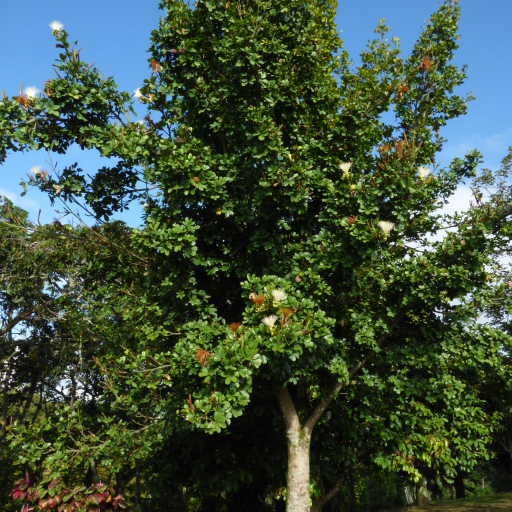
Plant Overview
Often called the "Money Tree" or "Saba Nut," Pachira glabra is the lucky charm of the indoor gardening world. While it originates from the wetlands of Central and South America, it has become a global symbol of prosperity and good fortune. You’ll most often find it with a distinctively braided trunk—a human-made design intended to "trap" wealth within its folds while providing structural stability for young saplings.
🔍 How to Identify
- 🍃 Leaf Structure: It features glossy, bright green palmate leaves that fan out like fingers, typically appearing in groups of five to seven leaflets per stalk.
- 🪵 The Trunk: The bark is smooth and greenish-gray. In its natural form, the base of the trunk is often "pachycaul" (thickened), which the plant uses to store water.
- 🌸 Shaving Brush Flowers: When grown in ideal conditions, it produces spectacular greenish-white flowers with exceptionally long, thread-like stamens that look like an exploding firework or a shaving brush.
🏡 In Your Garden
- 💧 Water Storage: Because the thick trunk acts as a built-in reservoir, this plant is remarkably resilient to occasional neglect. However, it is highly susceptible to "wet feet"; if the soil stays soggy, the roots and trunk will quickly succumb to rot.
- ☀️ Light Context: In the wild, it grows under the canopy of larger trees. In your home, it prefers "bright indirect light." If the leaves begin to yellow and drop, it’s usually a plea for more light or a warning that it's being moved too frequently.
- ☁️ Humidity Needs: It thrives in humid environments. If your indoor air is dry (especially in winter), the leaf tips may turn brown and crispy, signaling a need for a pebble tray or a nearby humidifier.
⚠️ Safety & Toxicity
- 🐾 Pet-Safe: This is one of the rare "superstar" indoor plants that is completely non-toxic to cats and dogs, making it a perfect choice for pet-owning households.
- 👶 Safe for Kids: It is generally considered safe for children, though the sap can occasionally cause mild skin irritation in individuals with highly sensitive skin.
✨ Fun Fact
The legend of the Money Tree tells of a poor farmer who prayed for wealth and discovered this "new" plant in his field. He realized he could grow more from its seeds and soon became rich by selling them, proving that the plant itself was the answer to his prayers!

Detailed Care Instructions
To grow a Pachira glabra plant, also known as a money tree, you can follow these steps:
- Purchase a healthy Pachira glabra plant from a reputable nursery or garden center. The plant is commonly sold as a small tree or shrub.
- Choose a suitable location: Pachira glabra prefers bright, indirect sunlight. Place the plant near a window with filtered light or in a shaded area outdoors if the climate allows.
- Select a well-draining pot: Use a pot with drainage holes to prevent water from sitting in the soil, which can cause root rot. The pot should also be large enough to accommodate the plant's roots as it grows.
- Potting mix: Use a well-draining potting mix that allows water to flow freely and does not retain excessive moisture. You can mix regular potting soil with perlite or coarse sand to improve drainage.
- Watering: Water the Pachira glabra plant thoroughly when the top inch of soil feels dry. Avoid overwatering, as this can lead to root rot. Allow excess water to drain out through the pot's drainage holes.
- Humidity: The money tree appreciates moderate to high humidity. You can mist the plant with water regularly or place a tray filled with water and pebbles beneath the pot to increase humidity around the plant.
- Fertilizer: Feed the Pachira glabra plant every two to four weeks during the growing season, using a balanced liquid fertilizer at half the recommended strength. Reduce or avoid fertilization during the winter months.
- Pruning: Prune the plant as needed to maintain its desired shape and promote branching. Remove any dead, damaged, or overgrown branches. Pruning can be done throughout the year.
- Repotting: When the roots start to outgrow the pot, usually every two to three years, it's time to repot. Choose a pot that is only slightly larger and use fresh potting soil.
- Pest control: Monitor your money tree regularly for common houseplant pests like aphids, mealybugs, or spider mites. If detected, treat the infested plant with insecticidal soap or an appropriate insecticide, following the instructions on the product.
With proper care, your Pachira glabra plant will grow and thrive, adding beauty and possibly some symbolism of good fortune to your space.

Place in a window with dappled sun or a spot in the middle of a room. Or directly in a window facing west or east.

Watering the plant should be done regularly, but not excessively. Make sure that the soil is kept moist but not waterlogged. You can check the moisture level of the soil by touching it to see if it is dry or damp. It's important to note that the Pachira Glabra plant does not like standing water. So it's important to not let excess water accumulate in the pot or saucer.
When you water the plant, it's best to water it from the top and wait until the water has drained through the bottom of the pot. If the pot has a saucer, make sure to dump out any excess water. It's also a good idea to water the plant in the morning or evening when the temperatures are cooler, which will help to reduce stress on the plant.
In addition to watering, the Pachira Glabra plant will also benefit from being misted. This is because it prefers a humid environment, so misting the plant will help to increase the humidity level around it. Just make sure to use room temperature water when misting, as cold water can shock the leaves of the plant.
Overall, the key to watering the Pachira Glabra plant is to keep the soil moist but not waterlogged, and to avoid excess water accumulation in the pot or saucer.
To fertilize this plant, use a balanced, water-soluble fertilizer with equal amounts of nitrogen, phosphorus, and potassium. Mix the fertilizer according to package instructions and dilute it to half-strength. Apply the fertilizer once every two weeks during the plant's active growth period, which is usually in the spring and summer. Do not fertilize during the plant's dormant period in the fall and winter. Water the plant thoroughly before and after fertilizing to prevent root burn.
When selecting soil for the Pachira Glabra plant, it is important to choose a well-draining soil that is rich in organic matter. The soil should be loose and airy to promote healthy root growth and prevent waterlogging. A good soil mix for Pachira Glabra may include a combination of peat moss or coconut coir, perlite or vermiculite, and garden soil or compost. Avoid soils that are too heavy or compact, as these can lead to root rot and other plant diseases. Additionally, it is recommended to fertilize the soil regularly with a balanced fertilizer to promote the plant's growth and overall health.
- Select a healthy parent plant: Look for a mature, healthy, and strong parent plant from which you want to propagate a new plant. Choose a plant that has a strong and sturdy stem with healthy leaves.
- Prepare a cutting: Once you choose your desired parent plant, take a sharp and sterile cutting tool and cut a stem from the parent plant. Make sure the stem is at least 5 inches long and has three to four leaves. Remove the lower leaves from the stem.
- Apply rooting hormone: Apply rooting hormone to the cut end of the stem to help it root faster. This will also reduce the risk of the cutting rotting.
- Plant the cutting: Fill a pot with a well-draining potting mix and make a hole in the center. Insert the cutting into the hole and gently press the soil around it. Water well.
- Provide proper care: Keep the cutting in a warm and humid area with indirect sunlight. Mist the plant regularly to provide the required humidity. Water the plant when the top inch of soil is dry. Make sure the pot has drainage holes.
- Wait for root growth: In three to four weeks, the stem will start to grow roots. Once roots appear, reduce misting and increase the amount of indirect sunlight.
- Transplant the new plant: Once the roots are well-established, you can transplant the new plant into a bigger pot or plant it in the ground.
- Continue to care for the new plant: Provide the new plant with regular watering, fertilization, and proper lighting.
Common pests of the moneytree include Mealybugs, spider mites, fungus gnats, thrips. Make a habit of checking your moneytree frequently for pests so that any infestations can be caught and managed early.








