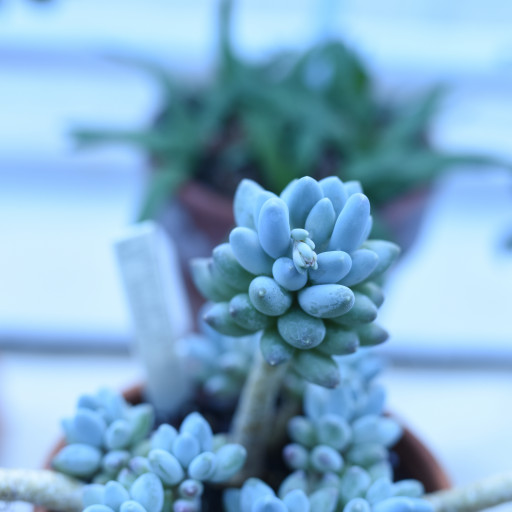
Plant Overview
Known as Hooker’s Pachyphytum or sometimes "Succulent Corn," this Mexican native is a masterpiece of geometric evolution. Its incredibly plump, finger-like leaves look more like polished river stones or pieces of candy than traditional foliage. In its natural habitat, it clings to rocky crevices, making it a rugged survivor that brings a sense of architectural calm to any indoor collection.
🔍 How to Identify
- 🌵 Fleshy Foliage: The leaves are thick, cylindrical, and slightly pointed at the tips, often resembling chubby, elongated grapes.
- ❄️ The "Farina" Glow: The plant is covered in a delicate, powdery wax called farina, giving it a soft, silvery-blue or mint-green frosted appearance.
- 🌸 Bell-Shaped Blooms: In the spring, it sends up a tall stalk bearing small, nodding flowers that are usually coral-pink or reddish on the outside with yellow interiors.
🏡 In Your Garden
- 🖐️ Look, Don't Touch: While it’s tempting to squeeze those plump leaves, the powdery coating (farina) is easily rubbed off by fingerprints. Once removed, this natural "sunscreen" does not grow back, leaving the plant vulnerable to sunburn and permanent smudges.
- 🎨 Stress for Color: To see this plant at its most beautiful, give it plenty of bright light. When slightly "stressed" by sun or cool (not freezing) temperatures, the tips of the leaves will blush with lovely shades of lavender, pink, or orange.
- 💧 Drought Specialist: Because the leaves are so thick, they store an immense amount of water. It is much easier to kill this plant with kindness (overwatering) than with neglect. Always wait for the soil to feel bone-dry all the way through.
⚠️ Safety & Toxicity
- ✅ Safe Status: Pachyphytum hookeri is generally considered non-toxic to humans, cats, and dogs.
- 🌱 Gentle Reminder: While safe, the leaves are brittle and can snap off easily if bumped by curious pets. It’s best kept on a high shelf where its "gems" can be admired from a distance.
✨ Fun Fact
The name Pachyphytum comes from the Greek words pachys (thick) and phyton (plant). This specific species was named in honor of Sir Joseph Dalton Hooker, a famous British botanist and close friend of Charles Darwin!

Detailed Care Instructions
| Soil Ph | 6.4 - 6.8 |
| Lighting | Full Sun |
| Toxicity | Non-Toxic |
| Soil Type | Well-Draining Sand Or Potting Soil |
| Bloom Time | Blooms Appear In Winter And Early Spring |
| Plant Type | Perennial |
| Mature Size | Up To 4 Inches Tall, And 12 Or More Inches Wide |
| Native Area | Cliffs Of Central Mexico |
| Sun Exposure | Full Or Partial Sunlight |
| Hardiness Zones | 10-11 |
To grow Pachyphytum hookeri, also known as the "Little Jewel," follow these steps:
- Select a suitable pot or container: Choose a pot with drainage holes at the bottom to prevent waterlogging. Pachyphytum hookeri does well in small containers, so you can start with a 4-6 inch pot.
- Soil and planting: Use a well-draining succulent or cactus mix. If it's not readily available, you can create your own by combining regular potting soil with perlite or sand for better drainage. Fill the pot with the soil mix, leaving enough space for the plant's roots.
- Planting: Gently remove the plant from its nursery pot and loosen the root ball. Place it in the new pot, ensuring the roots are covered with soil. Press the soil gently around the base of the plant to secure it.
- Light: Pachyphytum hookeri requires bright, indirect sunlight. Place it near a south or east-facing window where it can receive 4-6 hours of sunlight daily. If you don't have enough natural light, you can also use a grow light to supplement.
- Temperature: Pachyphytum hookeri prefers average to warm temperatures ranging from 60-85°F (16-29°C). Protect it from extreme cold or hot drafts.
- Watering: Water the plant thoroughly when the top inch of soil feels completely dry. Allow excess water to drain out of the pot, ensuring it's not sitting in water. Overwatering can lead to root rot, so it's better to underwater than overwater. Adjust the watering frequency based on the environmental conditions and the plant's needs.
- Humidity: Pachyphytum hookeri prefers low humidity levels, so there's no need to provide any additional humidity.
- Fertilizer: Feed the plant with a diluted, balanced succulent fertilizer once a month during the growing season (spring and summer). Follow the instructions on the fertilizer packaging for proper dilution.
- Pruning and propagation: Pachyphytum hookeri may produce offsets or "babies" around its base. These can be detached and rooted in a separate pot to propagate new plants. Pruning is generally not required unless you want to remove any damaged or leggy growth.
- Maintenance: Check the plant regularly for signs of pest infestation, such as mealybugs or spider mites. If you notice any pests, treat them promptly with insecticidal soap or neem oil.
With proper care and attention, your Pachyphytum hookeri will thrive and grow into a beautiful succulent.

Place in a window with dappled sun or a spot in the middle of a room. Or directly in a window facing west or east.

Watering Pachyphytum Hookeri plant may vary depending on several factors like the season, humidity level, and location. However, it is crucial to note that this plant should not be over-watered as it can lead to root rot. To determine if your plant needs water, you should check the top inch layer of the soil and only water it when it is dry.
When watering the Pachyphytum Hookeri plant, use a watering can or a hose with a gentle flow of water, and aim to wet the soil evenly. Allow the water to drain out of the pot and do not let the plant sit in excess water.
During the summer months, when the plant is actively growing, water it more frequently, but it is recommended to reduce watering in the winter to avoid over-watering. Additionally, if the humidity level is low, you can mist the plant occasionally or place a humidifier nearby to keep the air moist.
In conclusion, the key to watering the Pachyphytum Hookeri plant is to check the soil moisture level regularly and maintain a proper watering schedule to prevent over-watering.
To fertilize this type of plant, mix a balanced fertilizer with water according to the manufacturer's instructions. Apply the fertilizer solution to the soil around the base of the plant, taking care not to get any on the leaves. Fertilize every two to four weeks during the growing season. During the winter months, reduce or suspend fertilization. Always make sure the soil is moist before fertilizing.
The ideal soil for this plant is well-draining and porous, with a good balance of organic matter and minerals. It should be slightly acidic and have a pH range of 6.0 to 7.0. A soil mixture consisting of peat moss, coarse sand, perlite, and vermiculite in equal parts can provide the necessary drainage and aeration that Pachyphytum Hookeri requires. Avoid using heavy clay soils or potting mixes with high moisture retention as they can cause root rot and other fungal diseases. Instead, opt for a soil mix that promotes healthy root growth and allows for air circulation. The plant prefers to grow in slightly dry soil, so always ensure that soil is completely dry before watering.
To propagate this plant, begin by selecting a healthy plant with strong stems and undamaged leaves. Cut off a stem using a sharp and sterile knife or scissors. Allow the stem to dry before planting it in well-draining soil. Make sure that the soil is moist and that the stem is buried at least one inch deep in the soil. Water the soil lightly and cover it with a plastic bag or dome to maintain humidity. Place the newly planted stem in a bright and warm location but protect it from direct sunlight. Keep the soil moist but not waterlogged and wait for the stem to root and new growth to appear. Once the new growth has established, remove the plastic covering and water the plant as normal.
Common pests of the hooker's fat plant include Mealybugs. Make a habit of checking your hooker's fat plant frequently for pests so that any infestations can be caught and managed early.








