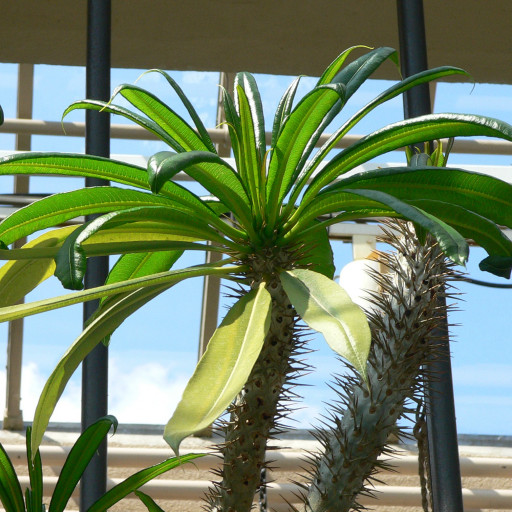
Plant Overview
Often mistaken for its more common cousin, Pachypodium lamerei, the Pachypodium geayi is the silver-maned royalty of the succulent world. Known as the "Silver Madagascar Palm," it isn't actually a palm at all, but a magnificent pachycaul (thick-stemmed) tree that looks like a prehistoric cactus decided to grow a crown of leaves. In its native dry forests of Madagascar, it stands as a resilient, shimmering pillar that can survive months of extreme drought.
🔍 How to Identify
- 🥈 Silver Foliage: Unlike other species, its long, narrow leaves have a distinct metallic, silver-grey sheen and a fine, felt-like texture on the underside.
- 🌵 The "Armored" Trunk: The trunk is metallic grey and covered in sharp, grey spines that typically grow in clusters of three, protecting its water-storing core.
- 🌸 White Blossoms: Mature plants produce beautiful, waxy white flowers with yellow centers, though it can take many years for an indoor specimen to reach blooming age.
🏡 In Your Garden
- ☀️ Light Worship: This plant is a true sun-seeker. It requires intense light to maintain its metallic color and thick trunk; without enough sun, it will grow "leggy" and lose its signature silver luster.
- 💧 Drought Strategy: Because the thick trunk (caudex) acts as a built-in water reservoir, this plant is incredibly sensitive to overwatering. It prefers a "soak and dry" method and should be kept almost completely dry during its winter dormancy to prevent root rot.
- 🌡️ Cold Sensitivity: Coming from the warm regions of Madagascar, it has no tolerance for frost. If the temperature drops below 50°F (10°C), it may drop its leaves as a defense mechanism to go dormant.
⚠️ Safety & Toxicity
- 🚫 Toxicity Level: High. The plant is toxic if ingested by humans or pets.
- 💉 Physical Hazard: The spines are very sharp and can cause puncture wounds. Always wear thick gloves when repotting.
- 🧪 Irritating Sap: The milky sap contains cardiac glycosides, which can cause skin irritation or severe gastric distress if swallowed. Keep it out of reach of curious cats, dogs, and toddlers.
✨ Fun Fact
Pachypodium geayi is a master of efficiency; when it drops its leaves during a drought, it can actually perform photosynthesis directly through its silver trunk to keep itself alive!

Detailed Care Instructions
To successfully grow Pachypodium Geayi, or Geay's Pachypodium plant, follow these steps:
- Climate and sunlight: Pachypodium Geayi thrives in warm and dry conditions. It requires a lot of direct sunlight, so place it in a sunny spot, such as a window facing south or west. If you live in a colder climate, you can grow it indoors or in a greenhouse, ensuring it receives adequate sunlight.
- Soil: Use a well-draining soil mix consisting of equal parts of potting soil, sand, and perlite. This will prevent the roots from sitting in standing water, which can lead to root rot.
- Watering: Pachypodium Geayi is a drought-resistant plant and is prone to rot if overwatered. Water it sparingly but deeply, allowing the soil to dry out between waterings. In winter months, reduce watering even further.
- Fertilizer: During the growing season (spring and summer), feed your Pachypodium Geayi once a month with a balanced fertilizer diluted to half strength. Avoid fertilizing during the dormant period in winter.
- Pruning and shaping: Prune your Pachypodium Geayi to maintain its desired shape and encourage a bushier growth habit. Prune in late winter or early spring before new growth begins.
- Repotting: Pachypodium Geayi prefers to be slightly root-bound, so repot it only when absolutely necessary. Choose a pot with drainage holes and move the plant to a slightly larger pot with fresh soil every 2-3 years.
- Pests and diseases: Typically, Pachypodium Geayi is relatively pest-free. However, it may occasionally attract mealybugs or aphids. Check regularly for any infestations and treat them promptly with insecticidal soap or neem oil.
- Winter care: During winter, reduce watering and keep the plant in a cooler location (around 50-55 degrees Fahrenheit or 10-13 degrees Celsius) to simulate its natural dormant period. Reduce sunlight exposure during this rest period to help the plant conserve energy.
By following these care guidelines, you can successfully grow and care for a Pachypodium Geayi plant. Remember to always observe your plant's specific needs and adjust care accordingly.

Place in a window with dappled sun or a spot in the middle of a room. Or directly in a window facing west or east.

To water this specific plant, it is important to take into consideration its specific needs. First, it is important to ensure that the pot or container it is in has proper drainage to avoid water build-up. When watering, it is important to thoroughly saturate the soil and allow excess water to drain out. Avoid over-watering, as this can lead to root rot. It is also important to let the soil dry out between waterings, as this plant prefers drier conditions. It is recommended to water this plant sparingly during the winter months when it is dormant.
To fertilize this plant, use a balanced fertilizer containing equal amounts of nitrogen, phosphorus, and potassium. Apply the fertilizer sparingly once a month during the growing season, which is typically spring and summer. Avoid over-fertilization, as this can cause damage to the plant. Additionally, make sure the soil is well-draining to prevent waterlogging and other issues.
Pachypodium Geayi is a species of plant that requires well-draining soil with high porosity. It grows well in a mixture of sandy soil and perlite since it favors a sandy soil rather than a soil that retains too much moisture. An ideal soil for this plant should have a pH level ranging from 5.5 to 7.5.
To propagate this plant, take a sterile cutting of the stem or root. Allow the cutting to callus over for a few days before planting it in a well-draining soil mixture. Keep the soil moist but not waterlogged and place the cutting in a warm, bright location. The cutting should develop roots within several weeks and can be transplanted into a larger container or garden bed once it has become established. It is important to protect the plant from cold temperatures and frost during the propagation process.
Common pests of the madagascar palm include Scale insect, mealybugs, spider mites, thrips. Make a habit of checking your madagascar palm frequently for pests so that any infestations can be caught and managed early.








