Plant Overview
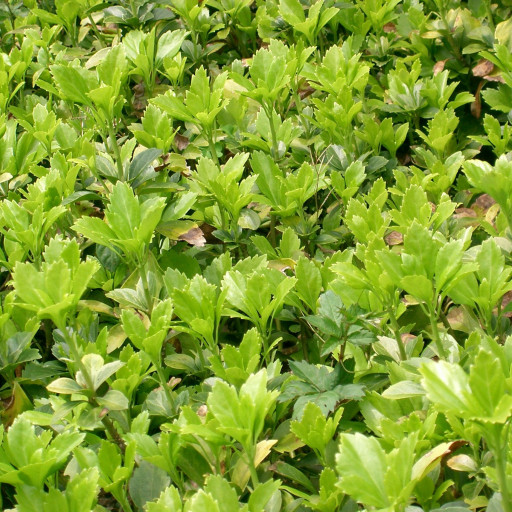
Known as the "Evergreen Carpet" or "Japanese Spurge," Pachysandra terminalis is the ultimate problem-solver for those dark, shady corners where grass refuses to grow. Originating from the woodlands of Japan and China, this hardy groundcover creates a lush, glossy mat that stays vibrant even in the depths of winter. It is a favorite among landscape designers for its ability to turn "dead zones" under large trees into elegant, living rugs.
🔍 How to Identify
- 🍃 Leaf Shape: Glossy, dark green leaves that are spoon-shaped and feature coarse "teeth" or serrations only on the upper half of the leaf.
- 🌀 The Rosette: The leaves grow in a distinct whorled pattern at the tips of the stems, making each branch look like a small, green flower from above.
- ☁️ Spring Blooms: In early spring, it produces tiny, upright spikes of creamy white flowers that, while small, provide a delicate fragrance and a touch of brightness to the shade.
🏡 In Your Garden
- 🌳 The Shade Specialist: This plant is an "obligate shade" lover. While most plants struggle without sun, Pachysandra will actually bleach and turn yellow if it receives too much direct light. It is perfect for planting under the heavy canopy of maples or oaks.
- 🛡️ Weed Suppression: Because it spreads via underground runners (rhizomes) to form a dense, thick mat, it acts as a natural mulch that prevents weeds from germinating. It is also famously deer-resistant, as the leathery leaves are not on the local wildlife's menu.
⚠️ Safety & Toxicity
- 🤢 Mildly Toxic: Pachysandra contains steroidal alkaloids that make it toxic if ingested in significant quantities.
- 🐾 Pets & Kids: It is generally safe to touch, but keep an eye on curious pets or toddlers. Ingestion can cause stomach upset, drooling, or vomiting. It is best used as a decorative groundcover rather than in areas where pets might frequently graze.
✨ Fun Fact
Pachysandra is a member of the Boxwood family (Buxaceae). If you look closely at the leaf texture and the way the plant resists pests, you can see the family resemblance to the sturdy Boxwood shrubs used for formal hedges!

Detailed Care Instructions
| Soil Ph | Acidic Soil |
| Humidity | Normal |
| Lighting | Part Sun |
| Difficulty | Medium |
| Plant Type | Evergreen Perennials |
| Hibernation | Cold Period |
| Temperature | 10°C - 30°C |
| Sun Exposure | Partial To Full Shade |
| Hardiness Zones | 4-8 |
To grow Pachysandra Terminalis plants, follow these steps:
- Choose a suitable location: Pachysandra Terminalis prefers partial to full shade. Select an area with well-drained soil and avoid direct sunlight.
- Prepare the soil: Clear any weeds or debris from the planting area. Dig the soil to a depth of 6-8 inches (15-20 cm) and amend it with organic matter, such as compost or peat moss, to improve moisture retention and nutrient content.
- Plant pachysandra: Dig small holes about 6 inches (15 cm) apart for each pachysandra plant. Ensure there is enough space to accommodate spreading growth. Place each plant in a hole at the same depth as it was in its nursery container. Backfill the hole with soil and gently press down to remove air pockets.
- Water thoroughly: After planting, thoroughly water the pachysandra to settle the soil. Keep the soil evenly moist, especially during the initial establishment period. However, be cautious not to overwater as it can cause root rot.
- Mulch the area: Apply a layer of organic mulch, such as wood chips or leaf compost, around the pachysandra plants. This helps to conserve moisture, suppress weed growth, and moderate soil temperatures.
- Regular maintenance: Pachysandra Terminalis requires minimal maintenance. Keep the area clear of competing weeds by hand-pulling or using mulch. Water during dry spells and monitor for pests or diseases.
- Propagation: Pachysandra can be propagated by division. After a few years, when the plants have spread, dig up an established plant and divide it into smaller sections. Replant the divisions in desired areas or share them with others.
By following these steps, you can successfully grow Pachysandra Terminalis plants in your garden.

Place in a window with dappled sun or a spot in the middle of a room. Or directly in a window facing west or east.

To water this plant, you should first check the soil moisture. Stick your finger into the soil up to your knuckle. If the soil feels dry, it is time to water. Water slowly and deeply, making sure the water reaches the roots. Avoid getting the leaves wet as this can promote disease. The plant prefers well-drained soil that is consistently moist but not waterlogged. In hot weather or periods of drought, the plant may require more frequent watering. Be careful not to overwater, as this can lead to root rot.
To fertilize this plant, choose a well-balanced slow-release fertilizer and apply it in early spring before new growth emerges. Use caution not to apply too much fertilizer, as this can lead to excessive leaf growth and decreased overall health. Water the plant after fertilizing to promote nutrient uptake. Avoid fertilizing during periods of drought or high heat, as this can stress the plant.
Pachysandra Terminalis thrives in well-drained, acidic soil with high organic content. The soil should have a pH between 5.0 and 6.5, and have good water retention while allowing for drainage. It is important to ensure that the soil is not too compact or heavy, which can lead to poor drainage and root rot. A mix of peat moss, sand, and organic compost can be mixed into the soil to improve its structure and provide nutrients. Mulching around the base of the plant can also help retain moisture and suppress weed growth.
To propagate this plant, you can take stem cuttings or divisions of the root system. For stem cuttings, select healthy stems that are at least four inches long with no flowers or buds. Cut the stem at a 45-degree angle just below a node and remove any leaves from the lower portion of the cutting. Dip the cut end into rooting hormone and plant it in a well-draining soil mix. Keep the soil moist and place the cutting in a shaded area until new growth appears. For root division, dig up the plant and separate the root system into smaller pieces with a sharp, clean knife, making sure each piece has some leaves and a strong root system. Plant the divisions in a well-draining soil mix and keep the soil moist. Place the new plants in a shaded area until they establish themselves.








