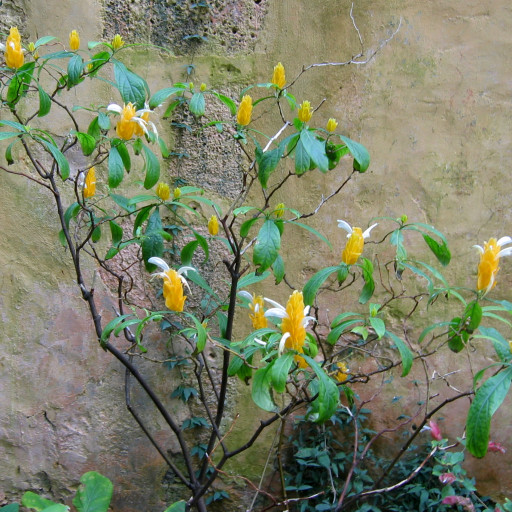
Plant Overview
Commonly known as the Golden Shrimp Plant or the Lollipop Plant, this Peruvian native looks like it belongs in a vibrant coral reef rather than a backyard. Its most striking feature isn't actually its flower, but the stack of neon-yellow "scales" that stand upright like a golden torch. It is a tropical showstopper that brings an architectural, exotic flair to any collection, making it a favorite for those wanting a permanent "summer vibe" indoors or in a conservatory.
🔍 How to Identify
- 💛 The "Shrimp" Bracts: The plant is defined by its 4-sided, overlapping yellow bracts (modified leaves) that look like a golden shrimp tail or a tall lollipop.
- 🤍 True Flowers: Small, white, tongue-like flowers peek out from between the yellow scales. These are delicate and usually only last a day or two, while the yellow bracts stay vibrant for weeks.
- 🍃 Deep Green Foliage: The leaves are large, lance-shaped, and heavily veined, providing a dark, matte contrast that makes the yellow "shrimp" pop visually.
🏡 In Your Garden
- ✂️ Pruning for Shape: This plant has a tendency to become "leggy" or tall and thin if left to its own devices. To keep it bushy and full of blooms, you must aggressively pinch back the stems after a flowering cycle to encourage new horizontal growth.
- 💧 The Humidity Requirement: Because it hails from the tropics of South America, it craves high humidity. If the air is too dry, the leaf edges will turn brown and crispy, and the plant may drop its lower leaves in protest.
- ☀️ Light Sensitivity: While it loves bright light to produce those golden bracts, direct afternoon sun can scorch the foliage. It performs best in "dappled" sunlight, mimicking the forest floor of its native habitat.
⚠️ Safety & Toxicity
- ✅ Safe Status: The Golden Shrimp Plant is generally considered non-toxic to both humans and common household pets like cats and dogs.
- 🌿 Skin Sensitivity: While not poisonous, the sap of many tropical plants can cause mild irritation to those with very sensitive skin, so wearing gloves during heavy pruning is always a wise precaution.
✨ Fun Fact
The Pachystachys lutea is a master of disguise; while the bright yellow part is what everyone calls the "flower," it is actually a biological billboard designed to attract hummingbirds. The actual reproductive flowers are the small white tubes that emerge briefly to offer nectar to their feathered friends!

Detailed Care Instructions
| Humidity | Normal |
| Lighting | Part Sun |
| Difficulty | Medium |
| Temperature | 18°C - 25°C |
| Hardiness Zones | 10A - 11B |
To grow a Pachystachys Lutea plant, also known as the Lollipop Plant or Golden Shrimp Plant, follow these steps:
- Lighting: Place the plant in a location that receives bright, indirect sunlight. Avoid direct sunlight as it may scorch the leaves.
- Temperature: Pachystachys Lutea prefers warm temperatures between 65-75°F (18-24°C) year-round. Avoid exposing it to temperatures below 55°F (13°C).
- Watering: Keep the soil consistently moist but not waterlogged. Water the plant when the top inch of soil feels dry to the touch. Use room temperature water and make sure to drain any excess water from the saucer to prevent root rot.
- Humidity: Pachystachys Lutea enjoys high humidity, so misting the leaves regularly or placing the pot on a tray filled with water and pebbles to increase humidity around the plant can be beneficial.
- Soil: The plant prefers well-draining soil that retains some moisture. A mix of peat moss, perlite, and regular potting soil can work well.
- Fertilization: Feed the plant with a balanced, water-soluble fertilizer every two weeks during the growing season (spring and summer). Follow the package instructions for the appropriate dosage.
- Pruning: To promote bushier growth and maintain a compact shape, prune any leggy or yellowing stems. Also, remove dead flowers to encourage new blooms.
- Propagation: Pachystachys Lutea can be propagated through stem cuttings. Take a healthy cutting just below a leaf node, remove the lower leaves, and place it in a glass of water or directly in a pot with moist soil. Keep it warm and provide bright, indirect light until it roots.
Remember to regularly monitor your plant for pests such as spider mites or aphids and take appropriate measures for pest control if necessary. With proper care, your Pachystachys Lutea plant should thrive and produce a profusion of beautiful golden flowers.

Place in a window with dappled sun or a spot in the middle of a room. Or directly in a window facing west or east.

To water this plant, it is important to keep the soil consistently moist but not waterlogged. One way to achieve this is to water the plant deeply and then allow the top few inches of soil to dry out before watering again. It is also recommended to use room temperature or slightly warm water, as cold water can shock the plant's roots. Additionally, this plant prefers high humidity levels, so misting the leaves with water can help keep it healthy.
- Use a balanced fertilizer with an N-P-K ratio of 10-10-10.
- Dilute the fertilizer to half strength before applying it to the plant.
- Fertilize the plant every two weeks during the growing season (spring and summer).
- Apply the fertilizer directly to the soil around the base of the plant.
- Avoid getting fertilizer on the leaves or stems of the plant as it can cause damage or burn.
- Water the plant thoroughly after fertilizing to ensure the nutrients are absorbed into the soil.
- Reduce fertilizing to once a month during the fall and winter seasons.
- Monitor the plant for any signs of nutrient deficiencies or excesses, such as yellowing leaves or stunted growth. Adjust the fertilizer amount or frequency accordingly.
The recommended soil for Pachystachys Lutea should have good drainage capabilities and be rich in nutrients. It should be slightly acidic with a pH level of 5.5 to 6.5. A mixture of peat moss, compost, and perlite or vermiculite is a great choice for this plant. It is also important to ensure that the soil is consistently moist, but not waterlogged, as this can lead to root rot and other issues. Fertilization should be carried out regularly to ensure that the plant gets the nutrients it needs. A balanced fertilizer with a 10-10-10 or 20-20-20 ratio can be used every two weeks during the growing season.
Pachystachys Lutea plant can be propagated through stem cuttings. Firstly, select a healthy parent plant from which to take cuttings. Choose a healthy stem with several leaves, making sure it is not too woody and has no signs of disease or pest infestation.
Using clean shears or a sharp knife, cut a stem from the parent plant just below a leaf node. Remove any leaves from the bottom half of the stem, leaving only a few at the very top.
Dip the cut end of the stem in rooting hormone powder and plant it in a pot filled with moist, well-draining soil. Cover the pot with a clear plastic bag or dome to create a humid environment, and place it in bright, indirect light.
Monitor the cutting regularly, making sure the soil stays moist but not waterlogged, and mist the foliage with water to maintain humidity. After a few weeks, roots should begin to develop and the cutting can be removed from the dome or bag.
Once the cutting has established roots, it can be transplanted into a larger pot or into the garden if weather conditions are favorable. With proper care, the new plant should grow and thrive just like its parent.
Common pests of the golden shrimp plant include Scale insect, mealybugs, spider mites. Make a habit of checking your golden shrimp plant frequently for pests so that any infestations can be caught and managed early.








