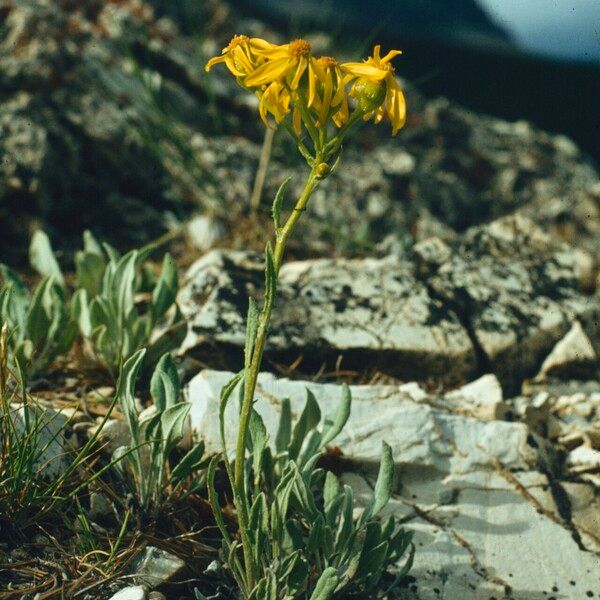
Plant Overview
Known as the Woolly Groundsel, this plant is a silver-toned survivor of the rugged mountains and dry prairies of North America. Its nickname comes from the dense, felt-like hairs that coat its leaves, acting as a natural shield against intense sun and drying winds. It is a favorite for rock gardeners looking for a splash of golden sunshine contrasted against metallic, cool-toned foliage.
🔍 How to Identify
- 🌿 The Foliage: Look for soft, silvery-gray leaves that feel like felt to the touch; this "wool" is usually densest on the undersides and newer growth.
- 🌼 The Blooms: Bright, golden-yellow daisy-like flowers appear in flat-topped clusters (corymbs) atop stalks that rise well above the leafy base.
- 📏 Growth Habit: It typically forms a tidy, low-growing basal rosette, making it an excellent ground-hugging specimen for harsh environments.
🏡 In Your Garden
- 🏜️ The Drainage Specialist: This plant is a "lithophyte" at heart, meaning it loves rocky cracks. If you plant it in heavy, wet clay, it will likely suffer from root rot; it demands gritty, fast-draining soil.
- ☀️ Sun Worshiper: To keep that signature silver color intense, give it the brightest spot in the garden. In shade, the plant may lose its woolly coat and turn a duller green as it struggles to catch the light.
⚠️ Safety & Toxicity
- 🚫 Toxic if Ingested: Packera cana contains pyrrolizidine alkaloids, which are known to cause cumulative liver damage if consumed.
- 🐾 Pet & Livestock Warning: While the bitter taste usually deters animals, it is considered toxic to horses, cattle, and household pets. It is best enjoyed as a visual treat rather than a culinary one.
✨ Fun Fact
The "wool" on the leaves isn't just for soft aesthetics—it functions like a high-tech survival suit. It traps a layer of still air against the leaf surface to reduce evaporation and reflects harmful UV rays, allowing the plant to thrive at high altitudes where the sun is punishing.

Detailed Care Instructions

Place in a bright room that is sun drenched almost all day. Or directly in a south-facing window.

Some plants require more regular watering than others, which should be done every few days. It's critical to maintain the soil moist all of the time. The water requirements of the same plant placed in pots with varying sizes will differ. Because the water in the smaller pot evaporates faster than the water in the larger pot, it will require more watering. Regardless of pot size, the surface should constantly be maintained moist.







