Plant Overview
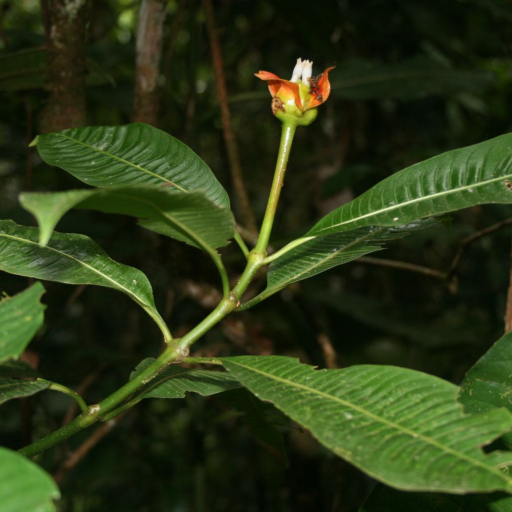
Known famously as the "Hooker’s Lips" or "Hot Lips Plant," Palicourea elata is perhaps the most flirtatious inhabitant of the tropical rainforest. This rare woody shrub is world-renowned for its bright red, kissable bracts that look exactly like a pair of luscious, pouted lips. Native to the rain forests of Central and South America, it has become an internet sensation, though it remains a reclusive beauty that faces threats from deforestation in its natural habitat.
🔍 How to Identify
- 💋 The "Lips": The most striking feature is a pair of waxy, bright scarlet modified leaves called bracts. These "lips" are designed to protect the delicate flowers within.
- 🌼 The True Flowers: Small, star-shaped white or cream-colored flowers eventually emerge from the center of the red bracts.
- 🍃 Leaf Texture: The foliage consists of large, opposite, deep-green leaves with prominent veins, typical of an understory species that thrives in filtered light.
🏡 In Your Garden
- ☁️ Humidity is Everything: This is not a beginner-friendly houseplant. It requires the high-humidity environment of a greenhouse or a specialized terrarium to mimic the damp, misty conditions of a tropical cloud forest.
- 🌡️ Temperature Sensitive: It "hates" the cold. Even a brief dip in temperature can cause the plant to drop its leaves or lose its vibrant red color. It thrives in stable, warm environments with consistently moist, well-draining soil.
⚠️ Safety & Toxicity
- 🐾 Mildly Toxic: While not classified as a deadly plant, it is considered non-edible. If ingested by pets or curious children, it may cause stomach upset or nausea.
- 🧴 Skin Sensitivity: Some individuals may experience mild skin irritation from the waxy coating on the bracts, so it is best handled with care or kept as a "look but don't touch" specimen.
✨ Fun Fact
The "kissing" shape is a clever evolutionary trick! The plant assumes this lip-like form specifically to attract its primary pollinators—hummingbirds and butterflies—who are drawn to the vibrant red color against the dark green jungle canopy.

Detailed Care Instructions

Place in a window with dappled sun or a spot in the middle of a room. Or directly in a window facing west or east.

The presence of a dry surface layer of soil does not indicate that the plant requires water. Instead, stick your finger 1-2" (3-5 cm) deep in the soil to feel dampness or moisture content. If the soil seems dry, it's time to water your greens. If the soil is still moist, however, it is better not to water your plant and instead wait a day or two. Overwatering or waterlogging raises the risk of root rot. So if the soil takes longer than a week to dry, check the light conditions because it's likely that the plant isn't getting enough light. It's fine if the upper layer of soil is dry between waterings, but the deeper soil layer should always have some moisture.
These plant needs regular fertilizing during growing seasons. Fertilizing your plants in dormant state during the winter, might result in scorching or browning of the leaf tips. If mature plants display signs of nutrient insufficiency, fertilizer administration is necessary to restore the plant to its previous state.
You may use All Purpose Plant Food or Green Plant Food for your Hot Lips








