Plant Overview
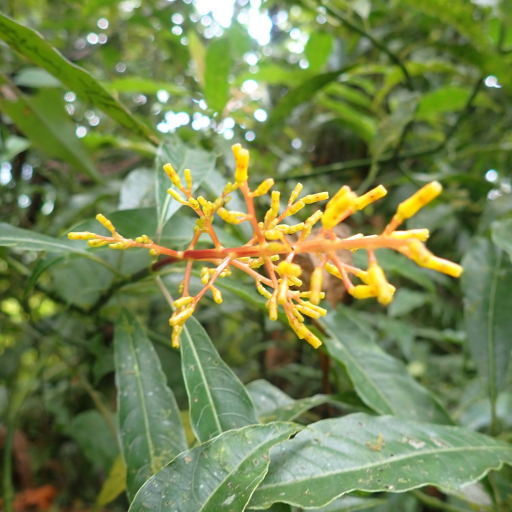
Commonly known as the Yellow Palicourea or Tortuguito, this vibrant tropical shrub is a masterpiece of the cloud forest. Native to the humid highlands of Mexico and Central America, it is often nicknamed the "Hummingbird’s Buffet" because of its neon-bright flowers that seem to glow against the misty green canopy. In its native habitat, it plays a vital role in supporting local ecosystems, acting as a reliable energy source for traveling birds.
🔍 How to Identify
- 🌼 The Flowers: Look for clusters of small, tubular flowers that are a striking lemon-yellow or bright orange. These tubes are perfectly shaped for a hummingbird’s beak.
- 🍒 The Stems: One of its most distinctive features is the "pedicel" (the little stalk holding the flower), which often turns a brilliant, contrasting scarlet red.
- 🍃 The Foliage: The leaves are large, oval, and deeply veined, with a rich emerald-green color and a slightly waxy texture that helps shed excess rainwater.
🏡 In Your Garden
- ☁️ Cloud Forest Vibes: This plant thrives on humidity. If you are growing it outside its native range, it requires a sheltered spot with dappled sunlight and frequent misting to mimic the damp atmosphere of a mountain forest.
- 🥤 Thirsty Roots: Because it originates in high-rainfall areas, it does not handle drought well. It prefers acidic, well-draining soil that stays consistently moist but never soggy.
- 🐦 Pollinator Magnet: If you have the right climate, planting Palicourea padifolia is the most effective way to invite hummingbirds and long-tongued butterflies to your space; they are biologically programmed to find its bright colors irresistible.
⚠️ Safety & Toxicity
- 🚫 Status: Generally considered toxic if ingested.
- 🐾 Details: Like many members of the Rubiaceae family, it contains chemical compounds that can cause stomach upset or nausea if leaves or berries are consumed. It is best to keep this plant out of reach of curious pets and small children who might be tempted by the colorful "forbidden fruit."
✨ Fun Fact
The Palicourea padifolia is a "distylous" plant, meaning it grows two different types of flowers—one with long male parts and one with long female parts. This clever biological trick ensures that hummingbirds must travel between different bushes to achieve pollination, preventing the plant from "self-mating" and keeping the species genetically strong!

Detailed Care Instructions

Place in a bright room that is sun drenched almost all day. Or directly in a south-facing window.

Some plants require more regular watering than others, which should be done every few days. It's critical to maintain the soil moist all of the time. The water requirements of the same plant placed in pots with varying sizes will differ. Because the water in the smaller pot evaporates faster than the water in the larger pot, it will require more watering. Regardless of pot size, the surface should constantly be maintained moist.








