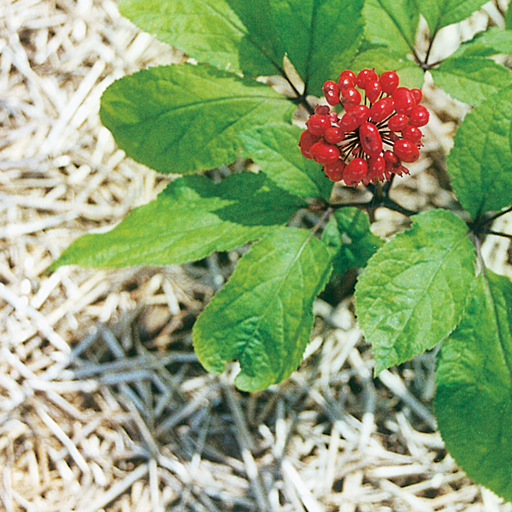
Plant Overview
Known as the "King of Herbs," Panax ginseng has been revered for millennia in East Asian medicine as a literal "panacea" for vitality. Its common name, Ginseng, comes from the Chinese word rénshēn, meaning "man-root," a nod to its fleshy, fork-shaped roots that often look like a human body with arms and legs. This slow-growing perennial is a true treasure of the forest, often taking over five years to reach its full medicinal potential.
🔍 How to Identify
- 🌿 Leaf Pattern: It features "palmately" compound leaves, meaning the leaflets radiate like fingers from a palm. Usually, a mature plant has five serrated leaflets.
- 🔴 The Berries: In mid-to-late summer, the plant produces a striking cluster of bright, crimson-red berries that sit atop a central stalk.
- 🥕 The Root: Beneath the soil lies the prize—a thick, pale-yellow, or brownish-white root that is highly aromatic and becomes more "human-like" as it ages.
🏡 In Your Garden
- ☁️ Shadow Seeker: Unlike most garden plants, Ginseng thrives in deep shade. In the wild, it lives under the canopy of deciduous trees; in a garden, it requires 70% to 90% shade to prevent its delicate leaves from scorching.
- ⏳ The Long Game: This is not a plant for the impatient. It can take up to 6 or 7 years for the root to reach harvestable size. It requires well-drained, "humus-rich" soil that mimics the decaying leaf litter of an ancient forest.
- ❄️ Winter Sleep: It is a hardy perennial that requires a cold dormancy period. It dies back completely in the winter, only to emerge again in the spring, often more robust than the year before.
⚠️ Safety & Toxicity
- ✅ Status: Generally non-toxic and widely consumed as a supplement.
- 💊 Human Sensitivity: While the root is medicinal, over-consumption can cause "Ginseng abuse syndrome," leading to insomnia, high blood pressure, or jitteriness.
- 🐾 Pets & Kids: It is not considered toxic to cats or dogs, but it is not a forage plant. Ingesting large amounts of the berries or roots can cause digestive upset in small children or pets.
✨ Fun Fact
The genus name Panax is derived from the same Greek root as the word "Panacea," meaning "all-healing." For centuries, it was so highly valued in China that only the Emperor was permitted to harvest the most "human-shaped" roots!

Detailed Care Instructions
| Humidity | High |
| Lighting | Shade |
| Toxicity | Poisonous |
| Difficulty | Medium |
| Hibernation | Cold Period |
| Temperature | 18°C - 21°C |
| Hardiness Zones | 5 - 9 |
Growing Panax Ginseng plants can be quite challenging, as they have specific soil and climatic requirements. However, if you are determined to grow them, here are some general steps to follow:
- Choose a suitable location: Panax Ginseng plants prefer partially shaded areas with moist and well-draining soil. The soil should be rich in organic matter, have a pH between 5.5 and 6.5, and should not be excessively compacted or sandy.
- Select high-quality seeds or seedlings: Ginseng seeds may take some time to germinate, usually around 18 months or longer. You can purchase fresh seeds from reputable nurseries or obtain them through online sources. Alternatively, you can also try using ginseng seedlings if available, as they provide a quicker start.
- Prepare the soil: Ginseng plants prefer loose, friable soil. Break up the soil in the planting area, remove any rocks or debris, and add organic matter such as compost or well-rotted manure to improve the soil quality.
- Plant the seeds or seedlings: Ginseng seeds should be sown in the fall, while the soil is still warm but the air temperature is cooler, which triggers stratification that aids in germination. Plant them about 0.5 to 1 inch deep and space them around 2 to 3 inches apart. Cover the seeds with a thin layer of straw or leaf mulch for protection.
- Provide consistent moisture: Ginseng plants require consistent moisture, so water them regularly, ensuring the soil remains evenly moist but not waterlogged. Mulching around the plants can help retain moisture and suppress weeds.
- Protect from pests: Ginseng plants are susceptible to various pests, including deer, rodents, and insects. Install a fence or use other physical barriers to keep deer and other animals away. Consider using organic pest control methods to deal with insects or consult a local nursery for suitable options.
- Practice patience and maintenance: Ginseng plants are slow-growing, usually taking several years to reach maturity. Carefully monitor the plants for signs of diseases or nutrient deficiencies. Regularly remove weeds and maintain a clean environment around the plants.
- Harvesting: Ginseng roots are typically harvested after 5-6 years of growth. Carefully dig up the roots, wash them, and dry them properly before use.
It is crucial to note that growing ginseng can be highly regulated in some regions, so ensure you are aware of any legal requirements or permits needed before you begin cultivation. Additionally, consider seeking guidance from local experts or agricultural extension services to adapt these general instructions to your specific region and climate.

Place in a window with dappled sun or a spot in the middle of a room. Or directly in a window facing west or east.

Watering this plant requires you to keep the soil consistently moist but not waterlogged. You should aim to water the plant deeply once a week, making sure the water reaches the entire root system. During hot and dry periods, it may require more frequent watering. It's crucial to avoid allowing the soil to dry out completely as this can lead to root damage and the plant's death. Additionally, it's best to use room temperature or lukewarm water and avoid getting water on the leaves, as this can cause them to yellow and drop.
The recommended fertilizing instructions for the plant is to use a balanced fertilizer with equal parts nitrogen, phosphorus, and potassium. It is important not to over-fertilize or use a fertilizer that is too high in nitrogen, as this can result in leafy growth at the expense of root development. Fertilize the plant once a month during the growing season and water thoroughly after applying the fertilizer.
The ideal soil for a certain species of plant in the Araliaceae family, which is commonly known as Panax Ginseng, should be rich in organic matter and well-draining. The pH level should be slightly acidic to neutral, ranging between 5.5 to 7.0. The soil texture should be loam to sandy loam, with good water retention capacity to ensure adequate moisture supply to the roots. It is important to avoid soil that is heavy in clay, as it can retain too much water and lead to root rot. Additionally, providing a layer of mulch on top of the soil can help to maintain moisture and regulate soil temperature. Overall, selecting the appropriate soil for this plant will promote healthy root growth and support optimal growth and development.
First, select a healthy and mature plant that is at least two years old. It is important to choose a plant that has not been propagated before.
Next, carefully dig up the plant and remove as much soil from the roots as possible without damaging them. Cut the roots into sections, making sure each section has at least one bud or shoot.
Fill a pot with well-draining soil and plant the cuttings, making sure each cutting is planted at a depth of about 3cm. Water the soil thoroughly.
Place the pot in a warm and humid location, such as a greenhouse or a sunny windowsill. Water the soil regularly to keep it moist, but not waterlogged.
After a few weeks, new growth should appear from the cuttings. Once the new growth has reached a height of at least 5cm, the young plants can be transplanted into their permanent growing location, such as a garden or a larger pot.
With proper care and maintenance, the new plants should grow into mature Panax Ginseng plants in a few years.








