Plant Overview
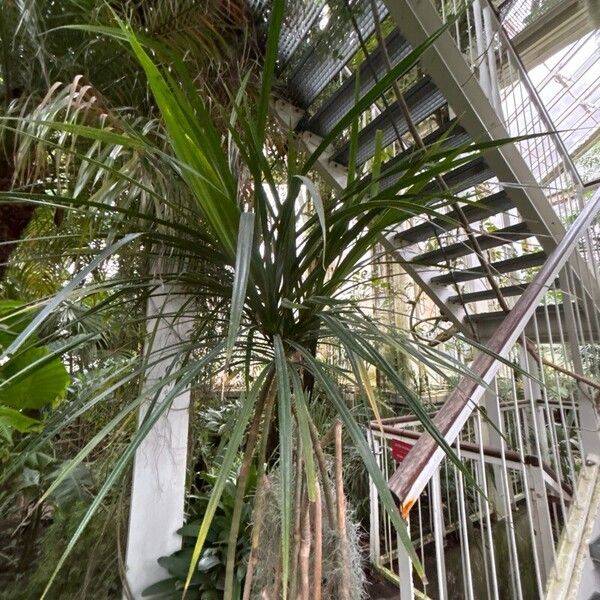
Often called the Slender Screw Pine, Pandanus caricosus is a structural marvel native to the tropical wetlands of Southeast Asia. It earns its "Screw Pine" nickname from the way its long, sword-like leaves emerge from the stem in a perfect spiral, resembling a giant green corkscrew. While its cousins often grow into massive trees, this species remains more compact and shrub-like, making it a favorite for architectural landscaping.
🔍 How to Identify
- 🌀 Spiral Arrangement: The leaves grow in a distinct three-ranked spiral pattern around the central stem, creating a striking geometric look.
- ⚔️ Leaf Texture: The leaves are narrow, leathery, and dark green, often reaching several feet in length while remaining quite slender.
- 🪚 Serrated Edges: If you look closely (or feel carefully), the leaf margins are lined with tiny, sharp prickles or "teeth" that point toward the tip.
- 🎋 Prop Roots: Even in this smaller species, you may notice small aerial "stilt roots" emerging from the base of the stem to help anchor it in soft soil.
🏡 In Your Garden
- 💧 Thirst for Humidity: This plant is a child of the tropics; it thrives in high humidity and moist, well-draining soil. It is particularly happy near ponds or water features where the air stays damp.
- ☀️ Light & Space: It prefers bright, filtered light rather than harsh, direct midday sun, which can scorch the tips of its elegant ribbons. Because it grows in dense clumps, give it plenty of room to spread its "fountain" shape.
- 🌱 Root Sensitivity: Like most Pandanus species, it develops a strong anchoring system. It dislikes being moved once established, so choose its permanent "forever home" carefully to avoid transplant shock.
⚠️ Safety & Toxicity
- ✅ Toxicity Status: Generally considered non-toxic to humans and common household pets if nibbled.
- ⚔️ Physical Hazard: The primary danger is not poison, but the leaves themselves. The serrated edges are surprisingly sharp and can cause painful "paper cuts" or skin irritation. It is best planted away from walkways where skin might brush against it.
✨ Fun Fact
In its native regions, the tough, fibrous leaves of the Pandanus family are harvested and dried to be woven into intricate mats, baskets, and even sails! Its sister species, Pandanus amaryllifolius, is the famous "Vanilla of the East" used to flavor Southeast Asian desserts.

Detailed Care Instructions







