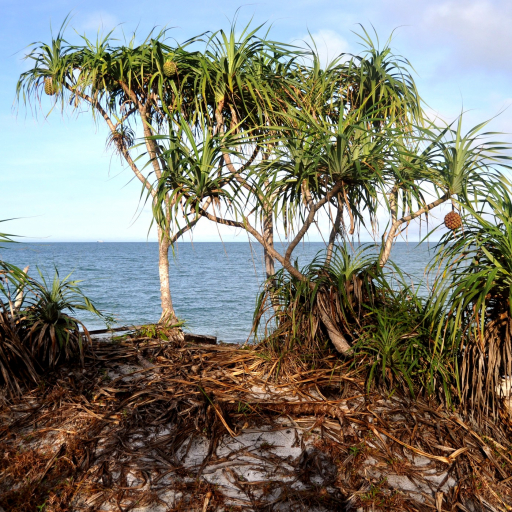
Plant Overview
Known as the Fragrant Screwpine or Kewra, Pandanus odorifer is a coastal icon of the tropical East. Its most famous feature isn't its looks, but its intoxicating scent—a floral, honey-like aroma that has flavored Indian sweets and scented royal perfumes for centuries. In local folklore, the fragrance is so powerful it is said to lure cobras, though in reality, the snakes are simply seeking the cool, humid shade provided by its dense thickets.
🔍 How to Identify
- 🌀 Spiral Foliage: The long, sword-shaped leaves grow in a distinct, dramatic corkscrew pattern around the central stem, which is how it earned the nickname "Screwpine."
- 🦵 Stilt Roots: This plant looks like it’s walking! It is supported by thick, woody "prop roots" that emerge from the trunk and dive into the ground to provide stability against heavy coastal winds.
- ⚔️ Spiny Margins: The edges and midribs of the leaves are lined with small, incredibly sharp serrated teeth that can easily snag clothing or skin.
- 🍍 Pineapple-like Fruit: It produces a large, heavy, compound fruit that closely resembles a woody pineapple, transitioning from green to a vibrant orange-red when mature.
🏡 In Your Garden
- 🏝️ Coastal Warrior: This is a specialist of the shoreline. It is exceptionally salt-tolerant and thrives in sandy, well-draining soils where most other plants would struggle to survive the salt spray.
- 💧 Humidity over Watering: While it is surprisingly drought-tolerant once established, it craves atmospheric moisture. If grown indoors or in dry climates, the leaf tips will turn brown and brittle without regular misting or a humidifier.
- 🧱 Space Conscious: Due to its "walking" roots and prickly nature, it needs a wide berth. Avoid planting it near narrow walkways or areas where children play to prevent accidental scratches from the serrated leaves.
⚠️ Safety & Toxicity
- 🧤 Physical Hazard: The main danger of the Kewra plant is physical rather than chemical. The spines on the leaves are sharp and can cause painful scratches or skin irritation. Always wear thick gloves when pruning.
- 🐾 Pet Safety: While not specifically listed as highly toxic to pets, the sharp leaf edges pose a significant risk for eye injuries or mouth irritation if a curious pet tries to chew on the foliage.
- 🍽️ Culinary Caution: While the essential oil (Kewra water) is a famous flavoring, the raw fruit contains calcium oxalate crystals which can cause intense stinging in the mouth if consumed without proper traditional processing.
✨ Fun Fact
- 🧵 The Living Loom: Beyond its scent, the leaves are a vital resource in tropical craft. Once the thorns are stripped away, the fibrous leaves are dried and woven into incredibly durable, water-resistant mats, hats, and even sails for traditional boats.

Detailed Care Instructions
Growing Pandanus odorifer, also known as the fragrant screwpine, follows general guidelines similar to other tropical plants. Here are some detailed steps to help you successfully grow this plant:
Step-by-Step Guide:
- Choosing the Location:
- Sunlight: Select a spot that receives full to partial sunlight. These plants thrive in bright light conditions.
- Space: Make sure there is sufficient space for the plant to grow since it can reach a significant size.
- Sunlight: Select a spot that receives full to partial sunlight. These plants thrive in bright light conditions.
- Planting:
- Soil: Use well-draining soil rich in organic matter. A sandy or loamy soil mix works well. You can amend the soil with compost for added nutrients.
- Watering: Pandanus odorifer prefers consistently moist soil but not waterlogged. Ensure good drainage to prevent root rot.
- Soil: Use well-draining soil rich in organic matter. A sandy or loamy soil mix works well. You can amend the soil with compost for added nutrients.
- Propagation:
- Seeds: You can propagate by seeds. Plant seeds in a seed-starting mix and keep them moist until they germinate. It may take several weeks.
- Offshoots: A more common method is to use offshoots or suckers that grow from the base of the plant. Carefully cut off the offshoot with a sharp, sterilized knife and plant it in a suitable soil mix.
- Rooting: If you're using offshoots, they should have some roots. Plant them in a pot or directly in the ground and keep them well-watered until established.
- Seeds: You can propagate by seeds. Plant seeds in a seed-starting mix and keep them moist until they germinate. It may take several weeks.
- Watering:
- Keep the soil consistently moist but not soggy, especially during the growing season. Reduce watering during the winter months if growth slows down.
- Mist the leaves occasionally to maintain humidity, especially if you're growing the plant indoors or in a less humid environment.
- Keep the soil consistently moist but not soggy, especially during the growing season. Reduce watering during the winter months if growth slows down.
- Fertilizing:
- Fertilize the plant every 4-6 weeks during the growing season (spring through early fall) with a balanced liquid fertilizer or slow-release granular fertilizer.
- Avoid over-fertilizing, as excessive nutrients can damage the plant.
- Fertilize the plant every 4-6 weeks during the growing season (spring through early fall) with a balanced liquid fertilizer or slow-release granular fertilizer.
- Pruning:
- Prune to remove dead or yellowing leaves and to shape the plant as needed.
- Be careful with the sharp edges of the leaves when handling and pruning.
- Prune to remove dead or yellowing leaves and to shape the plant as needed.
- Pests and Diseases:
- Watch out for common pests like spider mites, mealybugs, and aphids. Treat infestations with appropriate insecticidal soap or neem oil.
- Ensure good air circulation around the plant to prevent fungal diseases.
- Watch out for common pests like spider mites, mealybugs, and aphids. Treat infestations with appropriate insecticidal soap or neem oil.
- Winter Care:
- If you're in a region with cold winters, consider growing Pandanus odorifer in a pot so that you can bring it indoors when temperatures drop below 50°F (10°C).
- Provide adequate light and humidity indoors to mimic its natural environment.
Tips:
- If you're in a region with cold winters, consider growing Pandanus odorifer in a pot so that you can bring it indoors when temperatures drop below 50°F (10°C).
- Use gloves when handling the plant due to the spiny edges of the leaves.
- Monitor the plant regularly to ensure it’s getting the appropriate care and adjust as needed.
- Be patient; Pandanus odorifer can take some time to establish and grow.
By following these guidelines, you can enjoy the beauty and fragrance of the Pandanus odorifer plant in your garden or home.

Place in a bright room that is sun drenched almost all day. Or directly in a south-facing window.

To water Pandanus odorifer, follow these guidelines for the best results:
### Watering Frequency
- Consistency: It thrives with consistent moisture. Water the plant regularly, but ensure the soil is well-draining.
- Seasonal Adjustments: During the growing season (spring and summer), water more frequently as the plant actively absorbs more moisture. In the dormant season (fall and winter), reduce the frequency.
### Watering Method
- Soil Moisture: Check the top inch of soil to ensure it’s dry before watering again. Incorporate a finger test or use a soil moisture meter for accuracy.
- Thorough Soak: Provide a deep watering session, allowing the water to penetrate the root zone. Ensure the excess water drains out to avoid stagnation. The soil should be evenly moist but not waterlogged.
### Optimal Conditions
- Drainage: Utilize well-draining soil with elements like sand or perlite to prevent waterlogging.
- Container Choice: If potted, ensure the container has drainage holes to facilitate excess water escape.
- Humidity: This plant benefits from higher humidity. If the ambient air is dry, consider misting the leaves or using a humidity tray to provide additional moisture.
### Environmental Considerations
- Light Exposure: Position in partial to full sunlight, as appropriate light impacts its water needs. More light can increase the watering frequency due to higher evaporation rates.
- Temperature: Maintain moderate temperatures. Extremely high temperatures may necessitate more frequent watering, while cooler conditions will reduce the need.
### Special Tips
- Water Quality: Use distilled or rainwater if possible, as this plant is sensitive to chlorine and fluoride commonly found in tap water.
- Mulching: Applying mulch around the plant can help retain soil moisture and reduce evaporation.
By observing these guidelines, you can ensure your Pandanus odorifer remains healthy and robust.
Here are some fertilizing instructions for Pandanus Odorifer:
- Frequency: Fertilize your plant once every two to three months during the growing season, which typically spans from spring to early fall.
- Type of Fertilizer: Use a balanced, water-soluble fertilizer (e.g., 10-10-10 or 20-20-20) to provide essential nutrients such as nitrogen, phosphorus, and potassium. You can also opt for a slow-release granular fertilizer if you prefer less frequent applications.
- Dilution: For water-soluble fertilizer, dilute it to half the recommended strength on the package. Over-fertilizing can harm the plant, so it's better to under-fertilize than to over-fertilize.
- Application: Apply the diluted fertilizer evenly around the base of the plant, avoiding direct contact with the leaves to prevent burning. Water the plant thoroughly after applying fertilizer to help distribute the nutrients through the soil.
- Organic Options: If you prefer organic fertilizers, compost tea, fish emulsion, or well-rotted manure can be excellent choices. These provide a range of nutrients in a more natural form.
- Soil and Monitoring: Ensure the soil is well-draining and keep an eye on your plant’s response to the fertilization. If you notice yellowing leaves or stunted growth, you may need to adjust your fertilization schedule or consult with a local garden expert.
Remember, too much fertilization can cause salt buildup in the soil, leading to root burn, so always follow the recommended guidelines and monitor your plant's health regularly.
Pandanus odorifer is a tropical plant that thrives in well-draining soil. When preparing the soil for this plant, consider the following factors:
- Soil Composition:
- Loamy Soil: A balanced mix of sand, silt, and clay ensures adequate drainage while retaining necessary nutrients and moisture.
- Sandy Soil: Enhances drainage and prevents waterlogging, which is important for the plant's root health.
- Organic Matter: Incorporate organic matter such as compost or well-rotted manure to improve soil fertility and structure. This organic matter provides essential nutrients and promotes beneficial soil microorganisms.
- Loamy Soil: A balanced mix of sand, silt, and clay ensures adequate drainage while retaining necessary nutrients and moisture.
- pH Level:
- Aim for a slightly acidic to neutral pH range, typically between 6.0 and 7.5. This pH range is ideal for nutrient availability and overall plant health.
- Periodically test the soil pH and adjust using amendments like lime to raise pH or sulfur to lower it, based on test results.
- Aim for a slightly acidic to neutral pH range, typically between 6.0 and 7.5. This pH range is ideal for nutrient availability and overall plant health.
- Drainage:
- Excellent drainage is crucial to prevent root rot. Ensure the planting site or container has good drainage capabilities.
- Amend heavy clay soils with sand or perlite to enhance drainage, or consider raised beds if natural soil drainage is poor.
- Excellent drainage is crucial to prevent root rot. Ensure the planting site or container has good drainage capabilities.
- Moisture Retention:
- While drainage is important, the soil should retain some moisture. Use organic mulches around the base of the plant to conserve soil moisture and regulate temperature.
- While drainage is important, the soil should retain some moisture. Use organic mulches around the base of the plant to conserve soil moisture and regulate temperature.
- Soil Aeration:
- Ensure the soil is well-aerated to facilitate root growth. Overly compact soils can limit oxygen availability to the roots, negatively impacting plant health.
- Regularly till or aerate the soil to maintain its structure, especially in areas with heavy foot traffic or compaction.
By focusing on these aspects of soil preparation, you can create an optimal growing environment for Pandanus odorifer, ensuring healthy growth and development.
- Ensure the soil is well-aerated to facilitate root growth. Overly compact soils can limit oxygen availability to the roots, negatively impacting plant health.
Propagating Pandanus odorifer involves several steps to ensure the successful growth of new plants. Here’s a detailed guide on how to do it:
Materials Needed:
- Healthy mother plant
- Sharp knife or pruning shears
- Rooting hormone (optional)
- Pots or suitable planting containers
- Well-draining soil mix
- Water
Steps for Propagation:
1. Select a Healthy Mother Plant:
Choose a mature and robust mother plant for propagation. Ensure that it’s free from diseases and pests.
2. Choose the Propagation Method:
Offshoot Division: This is the most common method for propagating Pandanus odorifer. Look for offshoots (also known as pups) that grow at the base of the mother plant.
3. Preparing for Propagation:
- Timing: The best time to propagate is during the growing season, typically in spring or early summer.
- Tool Preparation: Sterilize your knife or pruning shears to prevent any potential infections.
4. Separating the Offshoots:
- Gently dig around the base of the mother plant, exposing the offshoot you wish to separate.
- Carefully cut the offshoot away from the mother plant, making sure to include some roots with the offshoot. A sharp, sterilized knife or pruning shears will help make a clean cut.
5. Optional Step - Rooting Hormone:
- Dip the cut end of the offshoot in rooting hormone. This can help encourage root growth, though it is not strictly necessary.
6. Planting the Offshoot:
- Prepare the Container: Fill the pot or container with a well-draining soil mix. A mix designed for cacti or succulents can work well.
- Plant the Offshoot: Create a hole in the soil and place the offshoot’s roots into the soil, burying it just deep enough to stabilize it.
- Firm the Soil: Gently press the soil around the base of the offshoot to ensure it is secure.
7. Watering:
- Water the newly planted offshoot thoroughly, ensuring the soil is evenly moist but not waterlogged.
- Continue to water regularly, keeping the soil consistently moist during the initial rooting period.
8. Placement and Care:
- Place the pot in a location that receives bright, indirect light.
- Avoid direct sunlight, which can stress the young plant.
Post-Propagation Care:
- Timing: The best time to propagate is during the growing season, typically in spring or early summer.
- Monitoring: Regularly check the moisture level of the soil and water as needed.
- Humidity: Maintain moderate humidity levels. Misting can help keep the humidity high around the plant.
- Fertilization: Once the offshoot shows signs of new growth, you can start feeding it with a balanced, diluted liquid fertilizer every few weeks.
Signs of Successful Propagation:
- New Growth: Leaves will start to develop, indicating that the offshoot has established roots.
- Increased Size: The offshoot will begin to grow in size as it stabilizes and becomes more robust.
By following these detailed steps, you can effectively propagate Pandanus odorifer and enjoy the growth of new plants.








