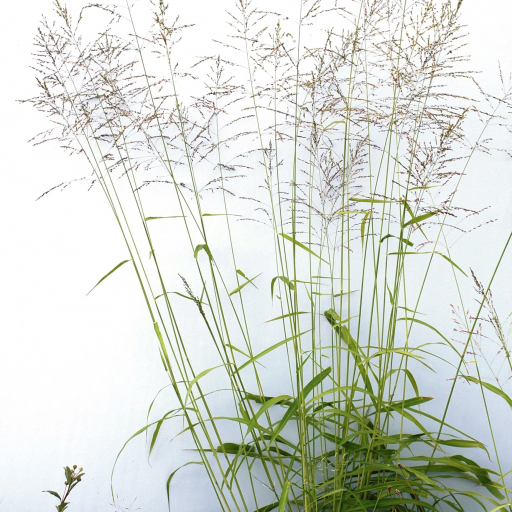
Plant Overview
Known as the "King of Forage," Guinea Grass is a towering perennial that has traveled from the African savannahs to tropical landscapes across the globe. Whether admired as a lush, architectural giant or battled as a stubborn garden invader, its sheer resilience is legendary. In many parts of the world, it is the backbone of cattle ranching, but in a backyard setting, it is a fast-growing force of nature.
🔍 How to Identify
- 🌿 Stature: It forms massive, dense clumps (tussocks) that can skyrocket to over 10 feet tall if left unmanaged.
- 🍃 Leaf Texture: The blades are long and strap-like with a very prominent, light-colored midrib running down the center.
- 🌾 The "Spray" Bloom: It produces large, open, pyramid-shaped seed clusters (panicles) that look like delicate green or purple fireworks at the top of the stalks.
- 🪶 Hairy Nodes: If you look closely at the "joints" (nodes) along the stem, you will often see a distinct ring of fine, soft hairs.
🏡 In Your Garden
- ☀️ Aggressive Vitality: Guinea Grass is a "sun worshipper" that uses a specific type of photosynthesis (C4) to grow incredibly fast during hot, humid months. It can easily outcompete smaller ornamental plants.
- 💪 Deep Roots: It develops a remarkably deep and tenacious root system. This makes it drought-proof but also means that "just pulling it up" by hand is nearly impossible once the clump has matured.
- ✂️ Maintenance Needs: If kept as an ornamental, it requires heavy hacking back once a year to prevent it from becoming a messy, dry fire hazard in the winter.
⚠️ Safety & Toxicity
- 🩹 Skin Irritation: The edges of the leaves are lined with microscopic silica "teeth." Walking through a patch with bare legs can result in itchy, red "grass cuts."
- 🐾 Livestock Warning: While generally safe for common pets, this grass can accumulate high levels of nitrates or oxalates in specific soil conditions, which can be toxic to grazing horses or sheep if eaten in massive quantities.
- 🔥 Fire Risk: In dry seasons, the large amount of dead biomass it produces becomes highly flammable, often fueling intense bushfires.
✨ Fun Fact
Guinea Grass was originally introduced to the Americas in the 1700s as a byproduct of the slave trade—the dried grass was used as bedding for birds and livestock on ships, and the seeds sprouted almost as soon as they touched new soil!

Detailed Care Instructions
To grow Panicum Maximum plant, also known as Guinea grass or elephant grass, follow these steps:
- Choose a planting location: Panicum Maximum requires full sun and well-drained soil. Select a site with at least six hours of direct sunlight per day.
- Prepare the soil: Clear the planting area from weeds, rocks, and debris. Loosen the soil by tilling or digging it to a depth of about 6-8 inches.
- Test and amend the soil: Conduct a soil test to determine its pH level and nutrient content. Panicum Maximum prefers slightly acidic soil with a pH of 5.5-6.5. If necessary, adjust the pH level by adding lime to raise it or sulfur to lower it. Also, consider adding organic matter like compost to enrich the soil.
- Plant the seeds or seedlings: There are two ways to propagate Panicum Maximum – through seeds or through seedlings. If using seeds, sow them directly into the soil at a depth of ¼ to ½ inch. If using seedlings, transplant them carefully into the prepared soil, ensuring the crown is level with the soil surface.
- Water regularly: After planting, water the soil thoroughly to ensure good seed germination or establishment of the seedlings. Panicum Maximum requires regular watering, especially during dry periods. However, avoid overwatering as it may lead to fungal diseases or root rot.
- Provide proper care: Fertilize the plants regularly with a balanced fertilizer to promote healthy growth. Follow the instructions on the fertilizer packaging for proper application. Keep the area around the plants weed-free to prevent competition for nutrients and water. If necessary, use mulch to suppress weeds and retain soil moisture.
- Prune and maintain: Panicum Maximum can grow quite tall, so it may sometimes require pruning or cutting back. Trim the grass to your desired height or use it for hay production. Regularly monitor the plants for pests and diseases and take appropriate measures, such as using organic insecticides or fungicides, if necessary.
- Harvest: Panicum Maximum can be harvested for hay when it reaches the desired height and has green foliage. Cut the grass close to the ground and dry it in the sun until it reaches the desired moisture content for storage.
By following these steps, you can successfully grow Panicum Maximum plants.

Place in a bright room that is sun drenched almost all day. Or directly in a south-facing window.
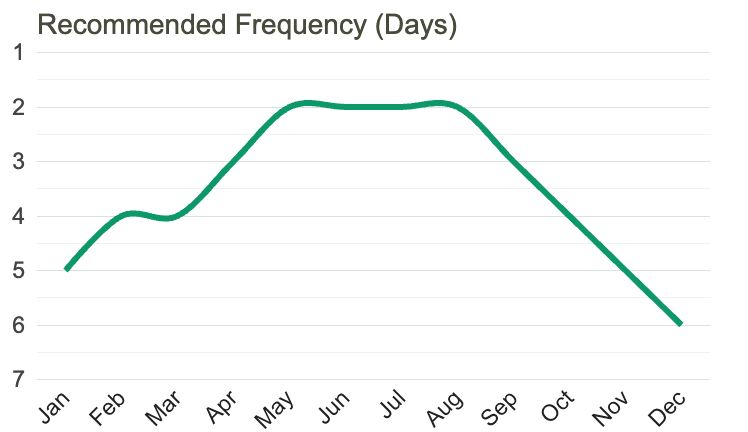
Panicum Maximum is a plant that requires frequent watering for healthy growth. It should be watered deeply and regularly, making sure the soil is moist throughout the root zone. The frequency of watering will depend on various factors, such as the temperature, humidity, and soil type, but generally, Panicum Maximum requires frequent watering during the summer months.
When watering, it is important to avoid getting water on the leaves or foliage of the plant, as this can lead to fungal diseases. Instead, water the soil directly at the base of the plant. The best time to water is in the early morning or evening, when the sun is not as intense and the water will have a chance to soak in before it evaporates.
If growing Panicum Maximum in containers, make sure the pot has drainage holes to allow excess water to escape, preventing waterlogged soil. It may be necessary to water more frequently in containers, as they tend to dry out faster than plants grown in the ground.
Overall, providing Panicum Maximum with consistent, deep watering will help ensure healthy growth and a thriving plant.
To fertilize this plant, it is recommended to apply a balanced fertilizer with equal amounts of nitrogen, phosphorus, and potassium. An application rate of 2-3 pounds per 1000 square feet is suitable. Fertilizer should be applied in early spring, before the growing season begins. It is also recommended to apply a light application of fertilizer in mid-summer to maintain growth. Avoid over-fertilization as it may cause excessive growth and damage the plant.
The soil type that is suitable for growing this particular plant should be well-draining, deep, and rich in nutrients. The ideal soil pH range should be between 5.5 to 7.5. It needs a sandy loam or loamy soil texture with sufficient organic matter content and good water retention capacity. The soil should also have adequate fertility to support the plant's growth and development. Addition of organic matter and slow-release fertilizers can enhance the soil fertility and the plant's productivity. Soil that can retain moisture well but not waterlogged is also essential for the plant's optimal growth. The soil should be free of any pathogens, salts, or heavy metals that may harm the plant. Therefore, a proper soil test should be conducted before planting the Panicum Maximum to ensure suitable soil conditions.
Panicum Maximum is a popular plant species that can be propagated using several methods including stem cuttings, seedlings, and division.
To propagate using stem cuttings, select a healthy, mature stem and cut a 6-8 inch section from it. Trim the leaves from the bottom half of the stem and dip the cut end in rooting hormone. Plant the cutting in a pot or directly in the soil, keeping it moist and in a warm, well-lit area until roots develop and new growth appears.
To propagate using seedlings, sow seeds in a seed tray filled with moist soil. Cover the tray with a plastic cover or place in a plastic bag to retain moisture and place in a warm, well-lit area. Once the seedlings have developed, transplant them to pots or directly in the soil.
To propagate using division, dig up an established plant and carefully separate the roots into smaller sections, making sure each section has sufficient roots and shoots. Transplant the divided sections into their new location and water regularly until they are established.
Regardless of the propagation method used, it is important to keep the plants well-watered and in a warm, well-lit area until they have established themselves in their new location.








