Plant Overview
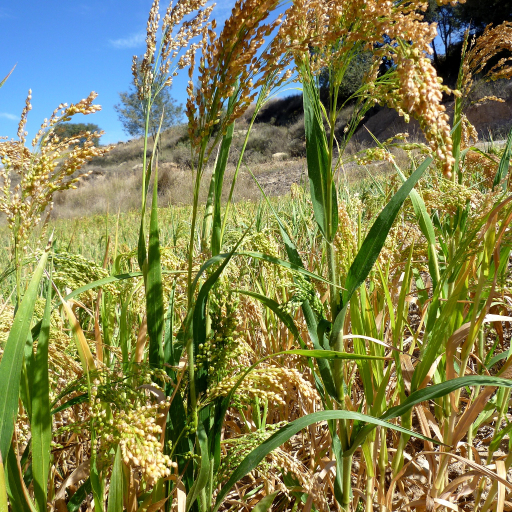
Often called "Proso Millet" or "Broomcorn Millet," this resilient grass has been a staple of human history since the Neolithic era. Long before wheat became the global standard, this "forgotten grain" fueled ancient civilizations along the Silk Road. In the modern landscape, its graceful, drooping seed heads look like miniature weeping willows made of shimmering gold.
🔍 How to Identify
- 🌾 The Seed Head: It produces a loose, branching cluster called a "panicle." These clusters often droop or "nod" elegantly under the weight of the small, round, shiny seeds.
- 🌿 The Hairy Stem: If you look closely at the leaf sheaths and stems, you’ll notice they are covered in fine, stiff hairs, giving the plant a slightly fuzzy texture.
- 🎋 Growth Habit: This is an upright, clump-forming grass. Depending on the soil quality, it can reach anywhere from 1 to 4 feet in height, standing tall until the seeds fully ripen.
🏡 In Your Garden
- ⏳ A Fast Finisher: Proso Millet is famous for having one of the shortest life cycles of any cereal grain. It can race from a tiny seed to a full harvest in as little as 60 to 90 days, making it great for short growing seasons.
- 🏜️ Drought Warrior: This plant is an expert at water conservation. It thrives in poor, sandy soils and can produce grain with far less water than corn or wheat, making it an excellent choice for eco-conscious or "neglected" garden corners.
- 🐦 Wildlife Magnet: If you enjoy birdwatching, this is the plant for you. It is a primary ingredient in high-quality birdseed, and leaving the stalks standing through autumn will turn your garden into a buffet for finches, sparrows, and buntings.
⚠️ Safety & Toxicity
- ✅ Safe Status: Panicum miliaceum is non-toxic and entirely edible. It is a major gluten-free food source for millions of people worldwide.
- 🐾 Pet Friendly: It is safe for cats, dogs, and horses. However, if your pet grazes on the leaves, they might experience mild tummy upset simply from the rough fiber, but the plant itself contains no toxins.
✨ Fun Fact
- 🍜 The Original Noodle: While we associate noodles with wheat today, archaeologists in China discovered a 4,000-year-old bowl of overturned noodles preserved in sediment—they were made entirely from Millet!

Detailed Care Instructions
To grow Panicum miliaceum, also known as millet, follow these steps:
- Choose the right variety: There are several varieties of Panicum miliaceum, so select the one that suits your climate and purpose. Common types include proso millet, pearl millet, and foxtail millet.
- Prepare the soil: Panicum miliaceum prefers well-drained soil with a pH level between 6.5 and 8.0. Add organic matter like compost to improve soil fertility and drainage.
- Sow the seeds: Millet seeds can be sown directly in the ground after the threat of frost has passed and the soil has warmed up. Alternatively, you can start them indoors 4-6 weeks before the last frost date and later transplant them.
- Spacing: Plant seeds or seedlings 1 to 2 inches deep in rows that are 12-18 inches apart. Space the seeds or seedlings 4-6 inches apart within the rows.
- Watering: Panicum miliaceum requires regular and consistent watering, especially during dry periods. Water the plants deeply, but avoid overwatering, as it may cause root rot.
- Fertilization: Millet usually does not require excessive fertilization, but you can apply a balanced organic fertilizer at the time of planting and again after the plants have been growing for a few weeks. Follow the instructions on the fertilizer package for application rates.
- Weed control: Keep the planting area free from weeds, as they can compete with Panicum miliaceum for nutrients and water. Regularly remove any weeds that appear.
- Harvesting: Harvest the mature millet plants when the seeds have turned golden or dry. Cut the seed heads and hang them upside down in a well-ventilated area to dry further. Once dry, you can remove the seeds by beating the seed heads or using your hands.
- Storage: Store the harvested millet seeds in a cool, dry place in airtight containers to prevent moisture and pests from damaging them. Properly stored, millet can last for several months.
Remember to check the specific growing requirements for the variety of Panicum miliaceum you are planting, as they may have slight variations.

Place in a bright room that is sun drenched almost all day. Or directly in a south-facing window.

To water this plant, ensure that the soil is dry to the touch before watering. Use a watering can or hose with a gentle spray nozzle to avoid damaging the plant. Water at the base of the plant, avoiding the leaves and stems. Allow the water to soak in and drain out any excess water from the saucer or tray underneath the pot. Be careful not to overwater as this can cause root rot.
To fertilize this plant, wait until it has reached a height of at least 6 inches. Apply a well-balanced fertilizer with equal amounts of nitrogen, phosphorus, and potassium. Scatter the fertilizer evenly around the plant and water thoroughly. Repeat this process every four to six weeks during the growing season. Avoid over-fertilizing, as this can cause the plant to become too lush and prone to disease or pests.
The ideal soil for Panicum Miliaceum plants is a well-draining soil with moderate fertility. It prefers soils that are slightly acidic to neutral in pH. Sandy loam or loamy soils with good drainage are ideal for this plant. It needs regular watering so that the soil is always moist, but not waterlogged. It does not tolerate oversaturated soils well. The soil nutrients should be balanced and the soil should be rich in organic matter. Before planting, add a balanced slow-release fertilizer like 10-10-10 to the soil and mix it thoroughly. The soil should be tilled or loosened to a depth of at least 6 inches to ensure proper root growth. In areas with heavy clay soils, add compost or sand to improve drainage and break up compaction. Proper soil preparation is essential for healthy Panicum Miliaceum plant growth and development.
To propagate this plant, you can collect mature seeds that have dropped from the plant or cuttings from the stem. For seed propagation, scatter the seeds on the soil and cover with a thin layer of soil. Keep the soil moist and wait for the seeds to germinate in a few days.
For stem cuttings, select a healthy stem with at least one node. Cut the stem at a 45-degree angle just below the node and remove any leaves from the bottom half of the stem. Dip the cut end in a rooting hormone and plant it in moist soil. Keep the soil moist and in a warm, bright location until roots have formed and the cutting has established.
Propagation can also be done through division. Dig up the plant and separate the clumps into smaller sections, each with their own set of roots and shoots. Replant the sections in their new location and water well.
Whichever method you choose, be sure to keep the soil moist and provide plenty of light and warmth for the best chance of success.








