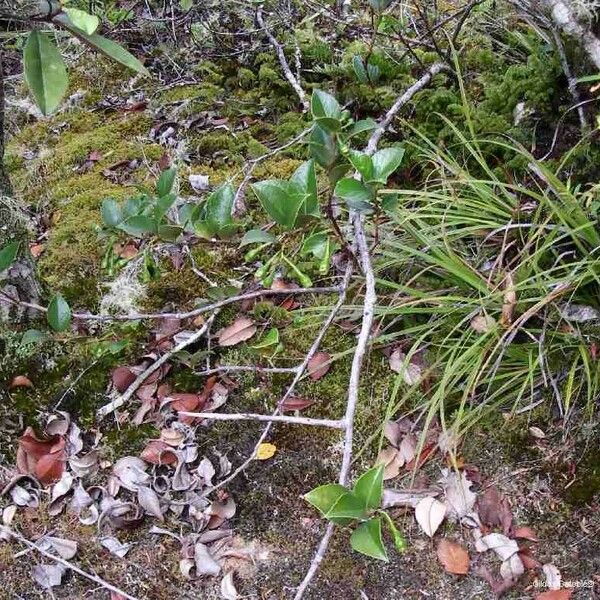
Plant Overview
Hailing from the mist-shrouded peaks of New Caledonia, Paphia neocaledonica is a botanical treasure rarely seen in average collections. Often referred to as a "South Pacific Heath," this woody shrub captures the imagination with its waxy, bell-like blooms that look as though they were carved from polished marble. It represents a specialized lineage of the blueberry family, perfectly adapted to the unique, mineral-rich soils of its island home.
🔍 How to Identify
- 🌺 The Flowers: Produces striking, tubular, or bell-shaped blossoms, typically appearing in shades of vibrant pink to deep crimson with a distinctively waxy, stiff texture.
- 🍃 Leaf Structure: Features small, oval-to-lanceolate leaves that are extremely leathery (coriaceous), a survival trait designed to retain moisture in windy highland environments.
- 🌿 Growth Habit: A scrambling or semi-climbing woody shrub that may grow as an epiphyte (clinging to trees) or nestled among mossy rocks in the wild.
🏡 In Your Garden
- ☁️ Atmospheric Needs: This plant thrives on "mountain air"—it craves high humidity and cool nights. It can be finicky in hot, dry indoor environments, often requiring a greenhouse or a dedicated humidification system to mimic its tropical highland home.
- 🪴 Substrate Secrets: Because it often grows as an epiphyte in nature, it despises heavy, compact potting soil. It requires an airy, acidic medium—think orchid bark, chopped sphagnum moss, and perlite—to ensure its delicate roots never sit in stagnant water.
⚠️ Safety & Toxicity
- 🐾 Pet Sensitivity: While not widely documented as a high-risk plant, it belongs to the Ericaceae family, many members of which contain grayanotoxins. It is best to keep it out of reach of curious cats and dogs.
- 🚫 General Caution: The plant is ornamental and not for consumption. Touching the foliage is generally safe, but the sap may cause mild irritation to those with highly sensitive skin.
✨ Fun Fact
New Caledonia is often called a "living laboratory" of evolution. Paphia neocaledonica is endemic to the island, meaning it is found nowhere else on Earth naturally, having evolved in isolation since the time of the dinosaurs!

Detailed Care Instructions








