Plant Overview
Commonly known as the Waterfall Hebe, Parahebe catarractae is a spirited little evergreen from the rugged mountains of New Zealand. It gets its name from its favorite wild haunt: the misty, rocky ledges alongside rushing waterfalls. Despite its delicate, "fairy-like" appearance, this plant is a tough alpine survivor that brings a touch of wild, cool-climate elegance to any garden border or rockery.
🔍 How to Identify
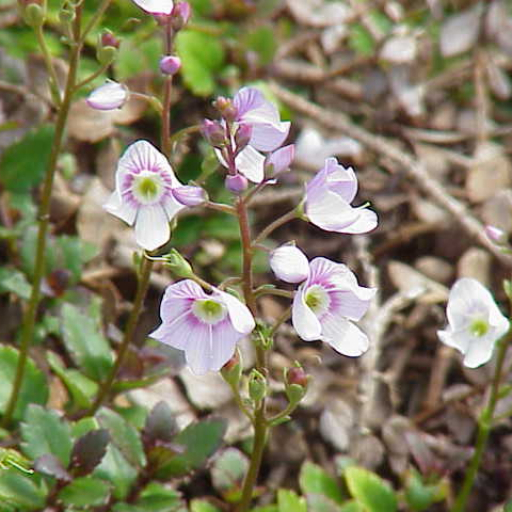
- 🍃 The Foliage: Small, lance-shaped leaves that are a deep, glossy green with sharply serrated (toothed) edges, giving the plant a textured, crisp look even when not in bloom.
- 🌸 The Blooms: Dainty, four-petaled flowers that appear in loose sprays. They are typically white or pale lavender, marked with distinct purple or pink "honey guides" (veins) radiating from the center.
- 🌿 Growth Habit: A low-growing, mounding sub-shrub that tends to spill over edges. It features slender, dark stems that become slightly woody at the base over time.
🏡 In Your Garden
- 💧 The "Waterfall" Spirit: Because it originates near splashing water, it craves "cool feet." It thrives in moist but exceptionally well-drained soil. If its roots sit in stagnant water, it will decline quickly, but it also dislikes baking in bone-dry dirt.
- ✂️ Post-Flower Grooming: To keep it from looking "leggy" or sparse, give it a light haircut after the flowers fade. This encourages a dense, bushy shape and might even trigger a second flush of blooms in late summer.
- 🧗 Versatile Placements: It is the perfect candidate for "crevice gardening." Tuck it into gaps in stone walls or along the edges of a garden path where its stems can tumble naturally.
⚠️ Safety & Toxicity
- ✅ Status: Generally Non-Toxic.
- 🐾 Details: This plant is considered safe and is not known to be poisonous to humans, dogs, or cats. It’s a worry-free choice for family gardens and households with curious pets.
✨ Fun Fact
The species name catarractae is Latin for "of the waterfall." In its native New Zealand, it is often found clinging to vertical rock faces where the air is perpetually humid and cool from the spray of nearby cascades!

Detailed Care Instructions
To grow Parahebe Catarractae (Buddlejaceae family) successfully, follow these guidelines:
- Climate: Parahebe Catarractae thrives in temperate climates, such as those found in USDA hardiness zones 7-10. It prefers full sun to partial shade, so choose a location with adequate sunlight exposure.
- Soil: These plants prefer well-draining soil that is slightly acidic to neutral. Amend heavy clay or sandy soil by adding organic matter like compost to improve drainage and fertility.
- Planting: Dig a hole slightly larger than the root ball of your Parahebe Catarractae. Place the plant in the hole, ensuring the top of the root ball is level with or slightly above the soil surface. Backfill with soil, firming gently around the plant.
- Watering: Provide regular watering, particularly during dry periods or the first growing season. Avoid overwatering, as Parahebe Catarractae is susceptible to root rot in waterlogged conditions.
- Mulching: Apply a layer of organic mulch around the base of the plant to help conserve moisture, suppress weeds, and regulate soil temperature.
- Pruning: Prune lightly after flowering to maintain a compact shape and encourage bushiness. Remove any dead or damaged stems to promote healthy growth.
- Fertilization: Parahebe Catarractae generally doesn't require excessive fertilization. However, you can apply a balanced, slow-release fertilizer in early spring to provide necessary nutrients.
- Protection: Protect young plants from extreme cold or frost with a layer of garden fleece or straw during winter.
- Propagation: Propagate Parahebe Catarractae by taking softwood or semi-hardwood stem cuttings in spring or early summer. Use rooting hormone and place the cuttings in a moist, well-draining soil mix until they establish roots.
- Pests and diseases: Parahebe Catarractae is relatively resistant to pests and diseases. However, watch out for aphids, spider mites, and powdery mildew. Regular monitoring and the use of organic insecticides or fungicides can help control these issues if they arise.
Remember to research and select the appropriate variety of Parahebe Catarractae that suits your specific climate and growing conditions. Following these steps should help you successfully grow and enjoy this beautiful plant.
To properly water this particular plant, it is important to take into consideration the environmental conditions and individual needs of the plant. Begin by checking the soil moisture level regularly, ensuring that it remains evenly moist but not waterlogged. It is recommended to water deeply and infrequently, allowing the soil to dry out slightly in between watering sessions. During the growing season, water more frequently, typically once a week, and decrease watering during periods of dormancy or cooler temperatures. Additionally, ensure adequate drainage and avoid wetting the foliage to prevent the risk of disease.
To fertilize the plant, first choose a balanced fertilizer with equal amounts of nitrogen, phosphorus, and potassium. Make sure to follow the package instructions for mixing the fertilizer.
Apply the fertilizer to the soil around the base of the plant, being careful not to get any on the leaves or stems. Water the plant immediately after fertilizing to help distribute the nutrients.
For best results, fertilize the plant once a month during the growing season (spring and summer), and reduce or stop fertilizing during the dormant season (fall and winter). Always monitor the plant's growth and adjust the fertilizing schedule as needed.
Parahebe Catarractae plant prefers a well-draining soil. It is best to use a soil mix that has a balanced pH and is rich in organic matter. The ideal soil should be loose and airy, with good water retention capacity and sufficient nutrients for optimal plant growth. Avoid using heavy or clay-like soils, as they do not drain well and can suffocate the plant's roots. You can mix the soil with compost or sand to improve drainage and aeration, which will help the plant grow better. Additionally, it is essential to ensure that the plant's soil is moist but not waterlogged, as this can cause root rot.
To propagate this plant, you will need to take stem cuttings from a mature, healthy plant in early summer. Cut a 4-6 inch piece of stem just below a node, making sure to use a sharp, sterile knife or scissors.
Remove the lower leaves from the stem cutting and dip the cut end in rooting hormone powder. Place the cutting in a pot filled with moist potting soil and cover it with a plastic bag to create a greenhouse effect.
Place the pot in a bright, warm location, but out of direct sunlight, and keep the soil moist but not waterlogged. After a few weeks, the cutting should start to develop new growth, indicating that it has successfully rooted.
Once the new plant has established roots and a few sets of leaves, it can be transplanted into a larger pot or into the garden. Make sure the plant is placed in well-draining soil in a sunny or partly shaded location. Water the plant regularly, but avoid overwatering, as this can cause root rot.








