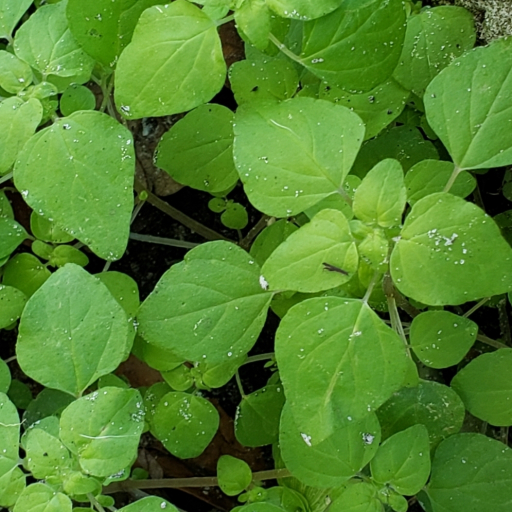
Plant Overview
Often called the Florida Pellitory or "Cucumber-weed," this delicate, emerald-green native is a master of the shadows. While many gardeners mistake it for a common weed, it carries a refreshing secret—a crisp aroma of sliced cucumbers that fills the air whenever the plant is bruised or crushed.
🔍 How to Identify
- 🍃 Delicate Foliage: The leaves are small, thin, and alternate along the stem, typically shaped like a diamond or a rounded heart with smooth edges.
- 🌿 Translucent Stems: The stems are pale green, almost "see-through," and very brittle. They are covered in tiny, non-stinging hairs that give the plant a slightly sticky feel.
- 🌸 Hidden Blooms: Unlike garden flowers, its blooms are tiny, greenish clusters tucked snugly in the leaf axils (where the leaf meets the stem), making them nearly invisible at a glance.
🏡 In Your Garden
- 🌥️ The Shade Seeker: This plant thrives in "neglected" spots where other plants might struggle—think damp, shady corners, limestone cracks, or the cool soil beneath a porch.
- 🦋 A Butterfly Nursery: Before you pull it out, remember it is a vital host plant! It provides essential food for the caterpillars of the Red Admiral butterfly, turning your "weeds" into a pollinator sanctuary.
- 💧 Moisture Indicator: It acts as a natural hygrometer; if you see this plant wilting, it’s a sign that the surrounding soil in your shady beds has become dangerously dry.
⚠️ Safety & Toxicity
- 🤧 Allergy Alert: While it doesn't sting like its cousin the Nettle, its pollen is a notorious trigger for hay fever. If you are prone to seasonal allergies, you may want to remove it before it flowers.
- 🐾 Pet & Human Safety: It is generally considered non-toxic to cats, dogs, and humans. In fact, some foragers use the cucumber-scented leaves in salads, though the "sticky" texture isn't for everyone.
✨ Fun Fact
The genus name Parietaria comes from the Latin word "paries," meaning wall. This is because its relatives are famous for their ability to grow directly out of the mortar of ancient ruins and stone walls throughout Europe.

Detailed Care Instructions
To grow Parietaria Floridana, also known as Florida pellitory, you can follow these steps:
- Choose the right location: Parietaria Floridana is a native plant of Florida, so it thrives in warm and humid climates. Make sure to plant it in a location that receives partial to full sun.
- Prepare the soil: The plant prefers well-draining soil. Before planting, amend the soil with organic matter like compost or well-decomposed manure to improve fertility and drainage.
- Planting: Dig a hole slightly larger than the root ball of the plant. Place the root ball gently into the hole and backfill with the soil mixture, pressing down gently to eliminate air pockets. Water thoroughly after planting.
- Watering: Parietaria Floridana prefers regular waterings, especially during dry spells. Keep the soil consistently moist but not waterlogged. The plant can tolerate short periods of drought, but excessively dry conditions can lead to stunted growth.
- Mulching: Apply a layer of organic mulch around the base of the plant to help retain moisture, suppress weed growth, and maintain a cool root zone.
- Fertilizing: Parietaria Floridana does not require excessive amounts of fertilizer. However, you can apply a slow-release, balanced fertilizer once or twice a year in spring and late summer to provide essential nutrients.
- Pruning: Trim back any dead or diseased growth and prune lightly to shape the plant. Parietaria Floridana is a low-maintenance plant that generally does not require much pruning.
- Pest and disease control: This plant is relatively pest-free and disease-resistant. However, keep an eye out for aphids or spider mites. If necessary, you can control them with insecticidal soap or by spraying them off with a strong stream of water.
Remember to check for local regulations or restrictions on planting Parietaria Floridana before starting. Happy gardening!

Place in a bright room that is sun drenched almost all day. Or directly in a south-facing window.

To properly water this particular plant, one should first take into consideration the specific needs of the plant and the environment it is growing in. It is important to ensure that the soil is moist but not oversaturated, as this can cause root rot. The frequency and amount of watering will depend on various factors such as the size of the plant, the humidity in the air, and the type of soil it is growing in. One should also pay attention to the weather conditions and adjust watering accordingly, such as increasing watering during hot and dry periods. The best way to water this plant is to use a watering can or hose with a gentle flow, aiming for the base of the plant and avoiding getting water on the leaves. It is also recommended to water in the morning or evening to prevent evaporation and reduce water waste.
To fertilize this plant, use a balanced fertilizer with equal amounts of nitrogen, phosphorus, and potassium. Apply the fertilizer around the base of the plant in the early spring and again in late summer. Water the plant thoroughly after fertilizing. Avoid over-fertilizing, as this can cause harm to the plant.
Parietaria Floridana requires a well-draining soil that is rich in organic matter. The soil should be composed of a mixture of sand, loam, and peat moss. A pH level of 6.5 to 7.5 is optimal for this plant. It is important to avoid using heavy and clay soils as they can suffocate the roots of the plant and cause waterlogging. It is also recommended to add a slow-release fertilizer to the soil before planting to ensure that the plant receives enough nutrients.
Parietaria Floridana plant can be propagated through stem cuttings. The best time to take cuttings is during the spring or summer when the plant is actively growing. Select a healthy stem that is about 4-6 inches long and has several leaves attached to it. Cut the stem with a sharp, clean pair of scissors or pruning shears just below a node (where the leaves attach to the stem).
Remove the bottom set of leaves, leaving only a few on the top. Dip the cut end of the stem in rooting hormone powder and place it in a pot filled with moist potting soil. Cover the pot with a plastic bag to create a humid environment for the cutting.
Place the pot in a bright, indirect light but avoid direct sunlight as this can damage the cutting. Keep the soil moist but not waterlogged. In about 4-6 weeks, the cutting should have developed roots and can be transplanted into a larger pot or outdoors if the weather conditions are suitable.








