Plant Overview
Often called the Green Ball Cactus, Parodia crassigibba is a solitary charmer from the rocky grasslands of Southern Brazil and Uruguay. It is highly prized by collectors for its symmetrical, deeply-ribbed body and its surprisingly large, satiny flowers that often look far too big for its compact frame. Unlike many sprawling cacti, this species stays neat and globose, making it a perfect companion for a sunny desktop or a curated succulent shelf.
🔍 How to Identify
- 🟢 Glossy Body: A solitary, spherical cactus with a smooth, dark green skin that takes on a glossy appearance when healthy.
- 📐 Chunky Ribs: It features 10 to 15 distinct, rounded ribs that are divided by horizontal grooves, giving it a "swollen" or segmented look.
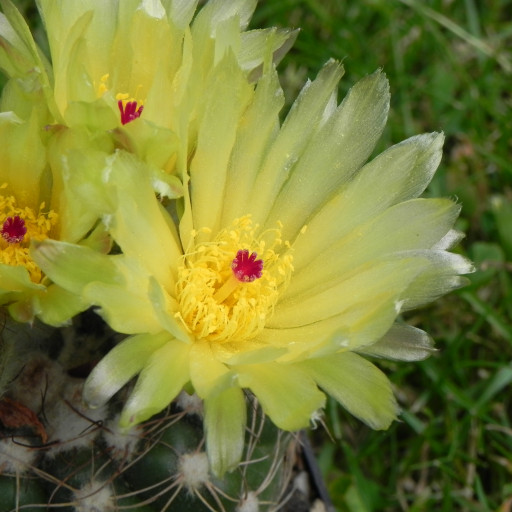
- 🌼 Apex Blooms: The flowers emerge from the very top (the crown) and are typically a pale lemon yellow or a unique greenish-white, with a satiny texture and multiple layers of petals.
🏡 In Your Garden
- ☀️ Light Nuance: While it craves bright light to produce its famous flowers, it can be sensitive to "sunburn" in extreme afternoon heat. It prefers the gentler morning sun or bright, filtered light through a sheer curtain.
- 💧 The "Dry" Sleep: This plant requires a strict dry dormancy during the winter. Withholding water almost entirely during the cold months mimics its natural environment and is the secret trigger that tells the plant to prepare its spring flower buds.
- 🏜️ Drainage First: It has a relatively delicate root system that is prone to rot. Always use a mineral-heavy soil mix (lots of pumice or perlite) to ensure water passes through the pot instantly.
⚠️ Safety & Toxicity
- 🌵 Physical Warning: While it lacks the "jumping" spines of some desert cacti, its spines are still sharp and can easily puncture skin or snag on fabric. Always handle with tongs or thick gloves.
- 🐾 Pet Safety: The plant is generally considered non-toxic to cats and dogs. However, the spines pose a significant physical hazard to curious noses and paws, and could cause internal injury if any part of the plant is chewed.
✨ Fun Fact
- ✨ A Name Game: This plant was originally part of the genus Notocactus. While botanists moved it to Parodia years ago, many veteran cactus enthusiasts refuse to change their labels, leading to a friendly, long-standing "identity crisis" in the succulent community!

Detailed Care Instructions
To grow Parodia crassigibba, also known as the balloon cactus, follow these steps:
- Climate: Parodia crassigibba is native to the desert regions of Argentina, so it thrives in warm and arid conditions. Ensure you provide it with a temperature range of 70-80°F (21-27°C) during the day and slightly lower temperatures at night.
- Sunlight: This plant requires direct sunlight for at least 6 hours per day. Place it near a south or west-facing window where it can receive ample sunlight. However, if you live in an extremely hot region, it is best to provide some shade during the hottest part of the day to avoid scorching the plant.
- Soil: Parodia crassigibba prefers well-draining soil. You can use a cactus or succulent mix, or create your own by combining potting soil, coarse sand, and perlite in equal parts. This soil mixture will allow water to drain easily and prevent the roots from sitting in stagnant water.
- Watering: Like most cacti, Parodia crassigibba is drought-tolerant and requires infrequent watering. Water deeply, allowing the soil to dry out completely between waterings. During the growing season (spring and summer), water approximately once every 1-2 weeks, and reduce watering during the winter months to prevent overwatering.
- Fertilizer: Apply a balanced cactus fertilizer diluted to half strength during the growing season (spring and summer) approximately once per month. However, avoid fertilizing during winter as the plant will be dormant.
- Potting: Use a well-draining clay or terracotta pot with drainage holes to ensure excess water can escape. Repot the plant every 2-3 years or when it outgrows its current pot. Spring is usually the best time for repotting.
- Propagation: Parodia crassigibba can be propagated through seeds or offsets. Seeds can be sown in a well-draining cactus soil mix during spring. Offsets, or pups, can be gently separated from the parent plant and planted in their own pot after they have developed some roots.
- Maintenance: Use gloves or a soft cloth when handling the plant due to its spines. Regularly inspect the plant for pests like mealybugs or spider mites and take appropriate measures if any are found.
Remember, cacti require patience as they grow slowly. With proper care and attention to its needs, Parodia crassigibba can thrive and add beauty to your indoor or outdoor space.

Place in a window with dappled sun or a spot in the middle of a room. Or directly in a window facing west or east.

Parodia Crassigibba plant is a type of succulent that requires careful watering to thrive. This plant should be watered only when it is completely dry. When watering, it is important to pour water slowly and carefully around the base of the plant, avoiding the leaves and stem, to avoid causing damage or rot.
To determine if the plant needs watering, gently press a finger into the soil to check for moisture. If the soil is completely dry, it is time to water. In general, Parodia Crassigibba plants should be watered once a week during the growing season (spring and summer) and once every two weeks during the winter months.
It is also important to ensure proper drainage by using well-draining soil and a pot with drainage holes. Excess water should be allowed to drain away from the plant to prevent waterlogged soil, which can lead to root rot.
In summary, Parodia Crassigibba plant should be watered only when the soil is completely dry, using a slow and careful watering method to avoid damage to the plant. Proper drainage is also important to prevent waterlogged soil.
To fertilize this plant, you will need to use a balanced water-soluble fertilizer. Dilute the fertilizer according to the package instructions and apply it to the soil around the base of the plant during the growing season, which is typically in the spring and summer. Be careful not to over-fertilize as this can damage the plant. It is also important to water the plant thoroughly after fertilizing to help the nutrients absorb into the soil.
Parodia Crassigibba plant requires well-draining soil with porous texture to allow air circulation, retain moisture, and prevent waterlogging. The soil should have a balanced pH level between 6 to 7.5. It is recommended to use a combination of sand, perlite, and loam or sandy loam soil with a good amount of organic matter such as compost. Avoid using heavy clay soils or soils that are rich in nitrogen as they can cause root rot and hinder plant growth. The soil should be replaced or refreshed every 2-3 years to maintain its nutrients and structure.
Parodia Crassigibba plant can be propagated through various methods such as seeds, offsets, and stem cuttings.
Seeds: Seeds can be harvested from the mature plant and sown in well-draining soil. Keep the soil moist but not waterlogged and place the pot in a warm, bright spot. The seeds should germinate within a few weeks.
Offsets: Parodia Crassigibba plant produces offsets, also known as pups or babies, around the base of the mature plant. Carefully remove the offsets using a sharp, sterile knife and plant them in a small pot with well-draining soil. Place the pot in a bright, warm spot and keep the soil moist but not waterlogged.
Stem Cuttings: Using a sharp, sterile knife, cut a stem from the mature plant. Allow the cut end to callus over for a few days before planting it in well-draining soil. Keep the soil moist but not waterlogged and place the pot in a bright, warm spot. Within a few weeks, the stem cutting should develop roots and start growing new shoots.
Regardless of the method chosen, it is important to monitor the new plant closely and adjust watering and lighting accordingly. Parodia Crassigibba plant prefers bright, indirect light and well-draining soil, and can be sensitive to overwatering.
Common pests of the green tomato cactus include Scale insect, mealybugs, spider mites. Make a habit of checking your green tomato cactus frequently for pests so that any infestations can be caught and managed early.








