Plant Overview
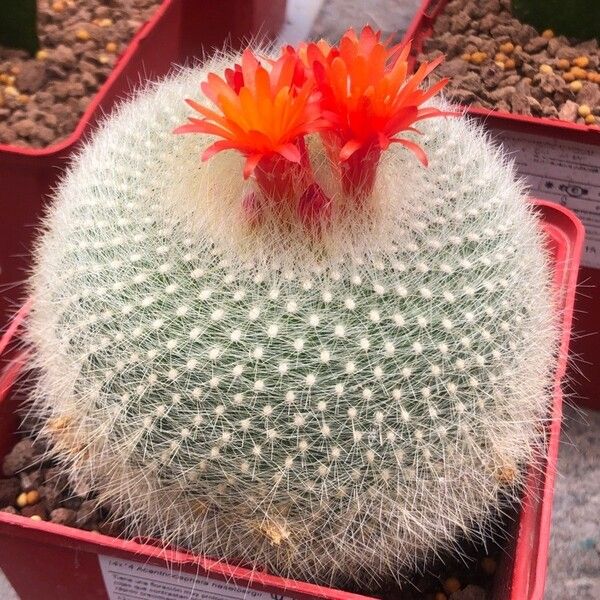
Commonly known as the Scarlet Ball Cactus, this Brazilian gem is a favorite among succulent collectors for its stunning contrast of snowy white spines and fiery blossoms. Its perfectly symmetrical, spherical shape makes it look like a frosted ornament sitting in a desert landscape. In the wild, it is a resilient specialist, often found clinging to rocky cliffs and crevices in Rio Grande do Sul.
🔍 How to Identify
- 🌵 The Body: A globose (ball-shaped) stem that is slightly flattened at the top, typically staying under 6 inches in diameter.
- ❄️ The Spines: It is densely cloaked in soft, needle-like white spines that give the cactus a silvery, "fuzzy" appearance from a distance.
- 🔥 The Flowers: It produces a vibrant crown of funnel-shaped flowers at the apex, ranging from brilliant orange to deep scarlet red.
🏡 In Your Garden
- ☀️ Sunlight Nuance: While it loves brightness, the Scarlet Ball prefers filtered light over punishing, direct midday sun. Too much intensity can "sunburn" its white coat, leading to permanent yellow scarring.
- 🪨 Drainage Needs: Because its natural habitat is rocky slopes, it is highly sensitive to "wet feet." It requires a very gritty, porous soil mix to prevent root rot, especially during the cool winter dormancy period.
⚠️ Safety & Toxicity
- 🟢 Status: Non-toxic but physically defensive.
- 🐾 Details: This cactus is not poisonous to cats, dogs, or humans. However, its dense spines are sharp and can easily puncture skin or get stuck in curious paws. It is best placed in a location where it won't be accidentally bumped.
✨ Fun Fact
Unlike many desert cacti whose flowers last only a day or two, the Scarlet Ball is a marathon bloomer; its individual flowers can remain open and vibrant for several weeks at a time!

Detailed Care Instructions
| Soil Ph | Acidic |
| Humidity | Dry |
| Lighting | Full Sun |
| Soil Type | Sandy, Well-Drained |
| Bloom Time | Summer |
| Difficulty | Easy |
| Plant Type | Cactus |
| Mature Size | Up To 4 In. Tall |
| Native Area | South America |
| Sun Exposure | Full Sun, Partial Shade |
| Hardiness Zones | 9-12 |
To successfully grow Parodia haselbergii (commonly known as the ball cactus), follow these steps:
- Location: Choose a well-lit spot for your cactus, preferably near a window that receives bright, indirect sunlight. Avoid placing it in direct sunlight as it can cause burning.
- Potting: Use a well-draining soil mix specifically formulated for cacti and succulents. Add some gravel or sand to improve drainage. Choose a pot with drainage holes to prevent waterlogging.
- Watering: Water your Parodia haselbergii sparingly, as overwatering can cause root rot. Allow the soil to dry out completely between waterings. Water only when the top inch of soil feels dry to the touch, and thoroughly moisten the soil, ensuring excess water drains away.
- Temperature and Humidity: Parodia haselbergii thrives in room temperatures between 60-80°F (15-27°C). It can tolerate higher temperatures, but avoid extreme temperature fluctuations. The plant prefers low humidity, so it is not necessary to mist it.
- Fertilization: Feed your Parodia haselbergii with a balanced cactus fertilizer during its growing season (spring and summer). Follow the instructions on the fertilizer package and avoid over-fertilizing, as it can harm the plant.
- Repotting: Repot the Parodia haselbergii every 2-3 years, preferably in the spring. Choose a slightly larger pot and gently remove the cactus from its current container. Ensure the roots are intact and repot it into the new container with fresh soil mix. Avoid watering for a week after repotting to allow the roots to heal.
- Pruning: Parodia haselbergii rarely requires pruning. However, if any dead or damaged parts appear, use sterilized scissors or pruning shears to carefully remove them.
- Pests and Diseases: Keep an eye out for common cactus pests like mealybugs and scale insects. If you notice signs of infestation, wipe the affected areas with a cotton swab dipped in rubbing alcohol. Ensure good air circulation around the plant to prevent fungal diseases.
Remember, Parodia haselbergii is a slow-growing cactus, so be patient. With proper care, it will gradually grow and thrive in your home.

Place in a bright room that is sun drenched almost all day. Or directly in a south-facing window.

Watering Parodia Haselbergii plants can be done by following a few important guidelines:
1. Soil Moisture: It is essential to ensure that the soil remains evenly moist but never waterlogged. Before watering, check the top inch (2.5 cm) of the soil; if it feels dry, it's time to water.
2. Water Quality: Use water that is free from chemicals or additives such as chlorine, fluoride, or salts. These substances can harm the plant's roots. If tap water is the only option, allow it to sit out overnight so that any chlorine can dissipate.
3. Watering Technique: When watering, use a gentle stream or a can with a narrow spout to avoid excessive water pouring. Water the soil directly around the base of the plant, avoiding getting water on the body or spines of the plant. Allow the water to soak in, and then water again until it begins to escape from the drainage holes.
4. Frequency: The frequency of watering depends on various factors such as the climate, temperature, and humidity levels. Generally, in the growing season (spring and summer), water the plant deeply once a week. Reduce watering frequency in the dormant season (fall and winter), allowing the soil to dry out more between waterings.
5. Drainage: Providing proper drainage is crucial to prevent waterlogging, which can cause root rot. Ensure that the pot has drainage holes at the bottom and that the soil mixture is porous and well-draining. This can be achieved by using a cactus or succulent potting mix combined with perlite or coarse sand.
6. Rainwater and Humidity: If available, using collected rainwater is beneficial for Parodia Haselbergii, as it is pure and free from chemicals. Additionally, maintaining moderate humidity levels around the plant can help, as it replicates their natural habitat.
7. Observation: Pay close attention to the plant's response to watering. Over time, you will be able to gauge the right amount and frequency of watering based on any signs of underwatering or overwatering, such as wrinkled or discolored stems, or a mushy texture in the roots.
Remember, it's always better to water less frequently than to overwater. This cactus plant is adapted to arid conditions, and excess moisture can be harmful.
- Begin fertilizing your Parodia Haselbergii plant in early spring when the plant is actively growing.
- Choose a balanced, water-soluble fertilizer that is specifically formulated for cacti and succulents. Avoid using fertilizers high in nitrogen, as these can lead to excessive vegetative growth and reduced flowering.
- Follow the fertilizer package instructions for dilution rates. Generally, it is best to apply a half-strength solution to prevent over-fertilization.
- Water your plant thoroughly before applying fertilizer. This ensures that the soil is moist and helps prevent fertilizer burn.
- Apply the diluted fertilizer solution slowly and evenly around the base of the plant, avoiding foliage contact. Be careful not to pour too much fertilizer directly onto the roots as this can harm the plant.
- Only fertilize during the growing season, which is usually spring and summer. Reduce or stop fertilizing in fall and winter when the plant is dormant.
- Monitor the plant for any signs of fertilizer burn, such as discolored or wilting leaves. If this occurs, flush the soil thoroughly with water to remove any excess fertilizer.
- Adjust the fertilization frequency based on the plant's needs and growth rate. If the plant is not growing as expected, you can increase the frequency slightly, but always follow the package instructions to avoid over-fertilizing.
- Regularly remove any accumulated salt residues on the pot or container to prevent buildup, which can negatively affect the plant's health. Rinse the pot thoroughly, allowing water to flow through the drainage holes.
- It is recommended to alternate between fertilizer and a plain water application every few weeks to prevent salt buildup and promote overall plant health.
Remember to regularly observe your Parodia Haselbergii plant for any signs of nutrient deficiencies or excesses. Adjust fertilizer applications accordingly and always prioritize following the specific instructions mentioned on the fertilizer packaging.
Parodia Haselbergii requires a well-draining soil mixture that is low in organic matter to prevent its roots from rotting. A recommended soil mix would include a mixture of coarse sand, perlite, and a small amount of gritty soil. The soil mix should be slightly acidic with a pH range between 6.0 to 7.0. Additionally, adding small amounts of dolomite or limestone to the soil mix can aid in maintaining the soil's pH level. Calcium should also be added to the soil mix to prevent calcium deficiency, which can lead to deformations in the plant.
Parodia haselbergii is a cactus plant that can be propagated through various methods. Here is a detailed guide on how to propagate Parodia haselbergii:
- Propagation by seeds:
- Collect ripe seeds from the fruit of a mature Parodia haselbergii plant.
- Prepare a well-draining soil mix suitable for cactus propagation. A mixture of sand, perlite, and cactus soil is recommended.
- Plant the seeds on the soil surface and cover them lightly with a thin layer of the soil mix.
- Mist the soil with water until it is evenly moist but not waterlogged.
- Place the container in a warm, well-lit area with indirect sunlight.
- Keep the soil consistently moist until the seeds germinate. This can take anywhere from a few days to a few weeks.
- Once the seedlings have developed, provide them with indirect sunlight and gradually reduce watering to promote root growth.
- Collect ripe seeds from the fruit of a mature Parodia haselbergii plant.
- Propagation by offsets:
- Identify mature Parodia haselbergii plants that produce offsets, also known as pups or baby plants.
- Carefully remove the offsets with a clean, sharp knife or by gently twisting them off the parent plant.
- Allow the offsets to dry and callus for a day or two. This helps prevent rot during rooting.
- Prepare a Cactus soil mix that drains well and has good airflow.
- Plant the offsets in individual pots, burying them partially in the soil.
- Water the soil lightly and avoid overwatering to prevent root rot.
- Place the pots in a warm, bright location with indirect sunlight.
- Water the offsets sparingly, allowing the soil to dry between waterings.
- The offsets should root within a few weeks to a few months, depending on environmental conditions.
- Identify mature Parodia haselbergii plants that produce offsets, also known as pups or baby plants.
- Propagation by cuttings:
- Select a healthy stem from a mature Parodia haselbergii plant.
- Using a clean, sharp knife, make a clean cut on the stem, preferably at a joint.
- Allow the cutting to dry and callus for a few days or up to a week.
- Prepare a well-draining, sandy soil mix suitable for cacti.
- Plant the cutting in the soil mix, burying it partially and ensuring it stands upright.
- Water the cutting lightly, ensuring that the soil is adequately moist.
- Place the pot in a warm, bright location with indirect sunlight.
- Maintain a consistent level of humidity around the cutting to prevent excessive moisture loss.
- Over time, new roots will grow from the base of the cutting. Once roots are established, reduce watering to encourage the growth of the cutting into a new plant.
Remember that proper care and attention are crucial for successful propagation. Monitor the environmental conditions, maintain appropriate watering, and provide ample light for the newly propagated Parodia haselbergii plants to thrive.
- Select a healthy stem from a mature Parodia haselbergii plant.
Common pests of the scarlet ball cactus include Scale insect, mealybugs, spider mites. Make a habit of checking your scarlet ball cactus frequently for pests so that any infestations can be caught and managed early.








