Plant Overview
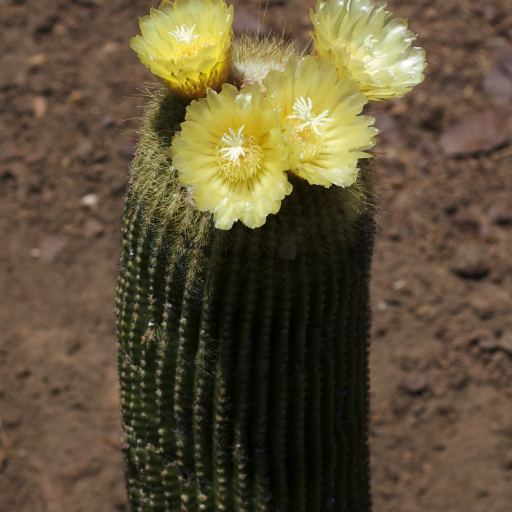
Known as the Golden Ball or Yellow Tower, Parodia lenninghausii is a Brazilian beauty that glows like a sunbeam on a windowsill. Unlike many "vicious" cacti, this species is often praised for its relatively soft, hair-like spines that give it a fuzzy, approachable appearance. It is a favorite for beginners because it is surprisingly forgiving and matures into a magnificent, leaning column of gold.
🔍 How to Identify
- 🌵 Shape & Growth: It begins its life as a perfect, squat sphere, but as it matures over the years, it stretches into a tall, columnar tower that can reach up to three feet in height.
- ☀️ Golden Spines: The body is densely covered in fine, golden-yellow bristles. These are much softer than the rigid thorns of a Barrel Cactus, giving the plant a shimmering, metallic luster.
- 🌼 Crown of Flowers: It produces silky, lemon-yellow blossoms up to two inches wide. Interestingly, these flowers only appear at the very top (the apex) once the plant has reached a certain maturity.
🏡 In Your Garden
- 🧗 The "Leaning" Habit: As this cactus grows taller, it has a natural tendency to lean toward the strongest light source or even sprawl slightly. If yours starts to tilt, it’s not necessarily "falling over"—it is simply following the sun, a trait common in its native cliff-side habitats.
- 💧 A Thirstier Desert Resident: While it is a succulent, this species originates from the Rio Grande do Sul region of Brazil, which is more humid than a typical desert. It appreciates slightly more frequent watering during the summer growing season compared to its pricklier cousins.
⚠️ Safety & Toxicity
- 🐾 Non-Toxic Status: Parodia lenninghausii is generally considered non-toxic to cats, dogs, and humans, making it a safe choice for household display.
- 🧤 Handle with Care: Although the spines are "soft" compared to other cacti, they are still thin bristles that can easily lodge in the skin or irritate the eyes. It is always best to use tongs or thick gloves when repotting to avoid "prickly" fingers.
✨ Fun Fact
In the wild, these cacti are "social" plants! They are rarely found alone and usually grow in large, huddling colonies on steep, rocky outcrops, where their golden spines help reflect intense UV rays to prevent the plant from sunburn.

Detailed Care Instructions
To grow a Parodia Lenninghausii plant, also known as the Lemon Ball Cactus or Golden Ball Cactus, you can follow these steps:
- Choose a suitable pot: Select a well-draining pot that is slightly larger than the cactus. A clay or terracotta pot will work well as it allows excess moisture to evaporate.
- Soil mix: Use a cactus or succulent mix that provides good drainage. Often, a mix of perlite, sand, and potting soil in equal parts works well.
- Planting: Gently remove the Parodia Lenninghausii from its nursery pot and place it in the center of the new pot. Fill in the gaps around the cactus with the potting mix, ensuring the plant is stable and upright.
- Proper sunlight: Place the cactus in an area that receives bright, indirect sunlight for at least 4-6 hours a day. Inadequate sunlight can lead to elongated and unhealthy growth.
- Watering: Allow the soil to completely dry out between waterings. Overwatering is a common issue with cacti, so it's crucial to avoid excessive moisture. When watering, thoroughly soak the soil and then let it drain completely.
- Temperature and humidity: Parodia Lenninghausii thrives in temperatures between 60-85°F (15-29°C). It prefers low humidity levels, making it well-suited for drier conditions or indoor environments.
- Fertilizer: During the growing season (spring and summer), you can provide a diluted cactus fertilizer once every 4-6 weeks. Be cautious not to over-fertilize, as this can cause damage to the roots.
- Handling and care: Remember to use gloves or a cloth when handling the cactus to protect yourself from its spines. In addition, avoid placing the Parodia Lenninghausii near drafts or cold areas, as it is sensitive to extreme temperature changes.
- Repotting: As the cactus grows, you may need to repot it into a larger container. Repotting is usually done every 2-3 years, preferably in spring. Ensure you use fresh potting mix and handle the cactus with care while transferring it.
- Pest control: Monitor your Parodia Lenninghausii for signs of pests such as mealybugs or scale insects. If detected, treat them with a suitable organic pest control method or mild insecticide.
By following these guidelines, you can successfully grow and care for a Parodia Lenninghausii plant.

Place in a bright room that is sun drenched almost all day. Or directly in a south-facing window.

To provide proper watering for Parodia Lenninghausii plants, it's important to consider the following guidelines:
1. Observe the soil moisture: Check the moisture level of the soil regularly to ensure it doesn't become waterlogged or excessively dry. Stick your finger about an inch into the soil to test its moisture.
2. Watering frequency: Water your Parodia Lenninghausii plant deeply but infrequently. Allow the soil to dry out completely between waterings to prevent root rot. The frequency will depend on various factors such as temperature, humidity, and the size of the plant.
3. Seasonal watering: Adjust the watering routine based on the seasons. During summer or warmer months, the plant may require more frequent watering due to increased evaporation. In contrast, in winter or cooler months, reduce watering as the plant's growth slows down.
4. Watering technique: When watering, ensure that water reaches the plant's roots and doesn't just wet the topsoil. Add water slowly and evenly around the base of the plant, allowing it to soak in rather than pooling on the surface. Avoid wetting the central crown of the plant, as this can lead to rot.
5. Water quality: Use room temperature or lukewarm water to avoid shocking the roots and causing damage. Additionally, it's advisable to use filtered or distilled water to prevent the accumulation of minerals, which can be harmful to the plant.
6. Drainage: Proper drainage is crucial for Parodia Lenninghausii plants. Ensure the pot has drainage holes to allow excess water to escape. If the plant is in a tray or saucer, remove any excess water after 15-30 minutes to avoid waterlogging.
7. Rainwater and humidity: If possible, collect rainwater to use for watering, as it is free of chlorine and additives present in tap water. Parodia Lenninghausii plants also appreciate slightly higher humidity levels, so misting the plant occasionally can be beneficial.
Remember, these guidelines can vary depending on the specific environment and the health of the plant. Monitor your Parodia Lenninghausii closely and adjust the watering routine accordingly to promote its growth and overall well-being.
- Choose a suitable fertilizer: Select a balanced fertilizer specifically formulated for cacti and succulents. Look for one with a nutrient ratio of around 10-10-10 or 14-14-14.
- Dilute the fertilizer: Follow the manufacturer's instructions to mix the fertilizer with water at the recommended concentration.
- Water the plant thoroughly: Before applying fertilizer, moisten the soil by watering the plant. Ensure that excess water drains out completely.
- Apply fertilizer: Pour the diluted fertilizer solution gently and evenly over the soil surface around the base of the Parodia Lenninghausii plant. Take care to avoid getting the fertilizer on the plant's spines or crown.
- Avoid over-fertilizing: It's better to under-fertilize than to over-fertilize, as too much fertilizer can harm the plant. Follow the recommended dosage and frequency mentioned on the fertilizer packaging.
- Apply only during the growing season: Fertilize the Parodia Lenninghausii plant only during its active growing season, which is typically from spring to early fall.
- Monitor the plant: Keep an eye on the plant for any signs of discoloration, wilting, or other adverse effects. If the plant shows any negative reactions after fertilizing, stop fertilizing temporarily and adjust the dosage or frequency accordingly.
- Rinse with plain water occasionally: Every few months, give the plant a thorough watering with plain water to flush out any accumulated salts from the soil.
- Store fertilizer properly: Ensure that you store fertilizers securely, away from children and pets, in a cool, dry place as instructed on the packaging.
To ensure optimal growth for Parodia Lenninghausii plants, it is important to use a well-draining soil mix. A suitable soil mix can be created by combining basic potting soil with perlite or pumice. This combination helps prevent waterlogging and allows excess water to drain away.
It is recommended to use a potting soil that is specifically formulated for cacti and succulent plants. Such soil mixes typically have a gritty texture and provide good aeration to the roots. This helps mimic the natural habitat of the Parodia Lenninghausii plant, which is usually found growing in rocky or sandy soils.
Adding perlite or pumice to the potting soil improves drainage even further by creating air pockets within the soil. This ensures that excess water doesn't accumulate around the roots, which can lead to root rot or other moisture-related issues.
The soil mix should also have a slightly acidic to neutral pH level, ideally ranging from 6.0 to 7.0. This pH range is suitable for Parodia Lenninghausii plants and promotes healthy root growth and nutrient absorption.
When potting or repotting a Parodia Lenninghausii plant, it is important to select a pot with drainage holes at the bottom to prevent water from sitting in the soil. This allows any excess water to escape and ensures the roots are not constantly exposed to moisture.
Overall, using a well-draining soil mix that replicates the natural habitat of Parodia Lenninghausii plants and provides good aeration is key to their successful growth and vitality.
Parodia lenninghausii is a type of cactus plant that belongs to the Cactaceae family. Propagating this plant can be done through various methods, including seed propagation, offsets, and stem cuttings. Here's a detailed guide on how to propagate Parodia lenninghausii:
- Seed propagation:
- Obtain fresh seeds from a reliable source.
- Prepare a well-draining potting mix suitable for cacti, which usually consists of a mix of sandy soil, perlite, and peat moss.
- Moisten the potting mix slightly and fill the seed trays or small pots with it.
- Spread the seeds evenly on the surface of the potting mix, ensuring they are not too close together.
- Lightly press the seeds into the soil to ensure good contact.
- Cover the trays or pots with a clear plastic cover or a transparent plastic bag to create a humid environment.
- Place the tray or pots in a warm and bright location, but avoid direct sunlight.
- Keep the soil consistently moist but not soggy, using a spray bottle to water the seeds gently.
- Germination usually takes 2-4 weeks. Once the seedlings develop two to three true leaves, they can be transplanted into individual pots.
- Obtain fresh seeds from a reliable source.
- Offset propagation:
- Identify offsets, which are small, baby plants that grow around the base of the parent plant.
- Gently remove the offsets from the parent plant using a clean, sharp knife or scissors.
- Allow the offsets to dry for a day or two, which helps to prevent rotting.
- Prepare a well-draining cactus potting mix as described earlier.
- Place the offsets on top of the potting mix, ensuring they make proper contact with the soil.
- Water the soil lightly, avoiding excessive moisture.
- Keep the newly planted offsets in a warm and bright location, but protect them from direct sunlight.
- Water the offsets sparingly until they establish roots, which usually takes a few weeks. At that point, regular watering can be resumed.
- Identify offsets, which are small, baby plants that grow around the base of the parent plant.
- Stem cutting propagation:
- Select a healthy stem from the parent cactus plant, ensuring it is free from any diseases or pests.
- Allow the cut end of the stem to dry for a week or two, which helps to prevent rotting.
- Prepare a well-draining cactus potting mix as described earlier.
- Insert the dried end of the stem into the potting mix, burying it up to a few inches deep.
- Firmly press the soil around the stem to provide support.
- Place the pot in a warm and bright location, away from direct sunlight.
- Water the soil sparingly, avoiding excessive moisture that could lead to rotting.
- After a few weeks, new roots should start forming. At that point, the plant can be treated like a mature Parodia lenninghausii specimen.
Remember, propagating plants requires patience and care. Ensure you provide the right environmental conditions, such as appropriate light, temperature, and moisture levels, to increase the chances of successful propagation.
- Select a healthy stem from the parent cactus plant, ensuring it is free from any diseases or pests.
Common pests of the golden ball cactus include Scale insect, mealybugs, spider mites. Make a habit of checking your golden ball cactus frequently for pests so that any infestations can be caught and managed early.








