Plant Overview
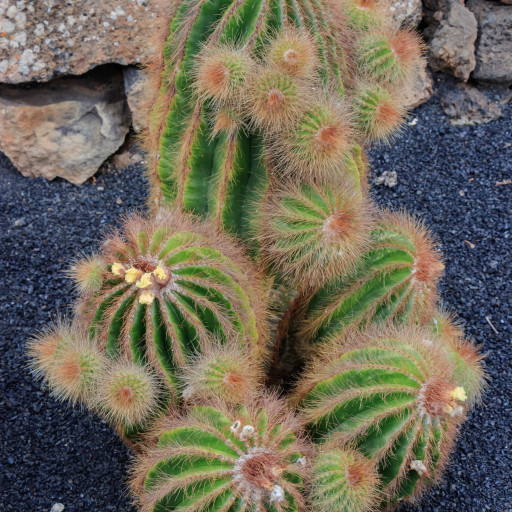
Known as the Balloon Cactus or the Blue Ball Cactus, Parodia magnifica is a geometric masterpiece from the grasslands of Brazil. Its perfectly spherical shape and vibrant blue-green skin make it look like a piece of living architecture. As it matures, it often shifts from a solitary globe into a clustered "family" of balloons, leaning slightly toward the sun as if greeting the day.
🔍 How to Identify
- 🌵 The Shape: It starts as a perfect sphere but can become more columnar or barrel-shaped as it reaches its full height of about 6 to 8 inches.
- 📏 The Ribs: Features 11 to 15 deep, straight vertical ridges (ribs) that give the plant its characteristic "accordion" texture.
- ✨ The Spines: Instead of harsh spikes, it is covered in dense, soft, golden-yellow bristles that line the edges of the ribs, creating a hazy, glowing aura when caught in the light.
- 🌼 The Bloom: In the summer, large, satiny lemon-yellow flowers emerge from the fuzzy "crown" at the top of the cactus.
🏡 In Your Garden
- ☀️ The Sun-Seeker: This cactus has a unique habit of leaning toward the strongest light source. To keep it growing straight and symmetrical, you should rotate the pot every week or two.
- 💧 Winter Rest: While it loves occasional deep watering during the hot summer months, it is highly sensitive to damp feet in the winter. It prefers to stay almost entirely dry during its cold-weather dormancy to prevent root rot.
- 🪨 Mineral Rich Soil: Unlike some tropical plants, the Balloon Cactus hates heavy peat. It thrives in a "gritty" mix—think plenty of pumice, lava rock, or coarse sand to mimic the rocky slopes of its Brazilian home.
⚠️ Safety & Toxicity
- ✅ Status: Non-toxic to humans and pets.
- 🧤 Details: While it doesn't have the "hooked" dangerous spines of some other cacti, the golden bristles are still sharp. They can easily lodge in the skin or paws, causing minor irritation, so it is best kept on a high shelf away from curious cats or toddlers.
✨ Fun Fact
The Parodia magnifica is so aesthetically pleasing and reliable that it has earned the prestigious Award of Garden Merit from the Royal Horticultural Society. In the wild, these plants are often found growing on steep, rocky cliffs, clinging to the stone in massive, ancient clusters.

Detailed Care Instructions
It could take about three years for a cactus to begin producing flowers. Sometimes you can be surprised by a huge bloom on top of the cactus that seems larger than the plant's body.
Is the ball cactus an endangered species?
According to The IUCN Red List of Threatened Species, Parodia magnifica is still listed as endangered. However, that may mean that growers are pushing to increase the numbers of this cactus. The good news: You can still find and buy this cactus without a problem.
Is ball cactus a cold-hardy plant?
Though it can withstand some freezing weather, ball cactus is not a cold-hardy plant like the Eastern prickly pear which can thrive in zone 7. The ball cactus should only be planted in the ground in USDA zones 9 through 12.
Is Parodia magnifica the same as Notocactus magnificus and Eriocactus magnificus?
Yes, all three names refer to Parodia magnifica. The ball cactus was once referred to by other scientific names but the plant's botanical nomenclature shifted.
Will the ball cactus stay perfectly round as it ages?
This cactus can turn a bit oval, barrel-shaped, or tubular as it gets older. It depends on the plant.
| Color | Yellow, Pink, Red, Orange |
| Soil Ph | Acidic |
| Soil Type | Sandy, Well-Drained |
| Bloom Time | Summer |
| Plant Type | Cactus |
| Mature Size | 3–12 In. Tall, 3–18 In. Wide |
| Native Area | South America |
| Sun Exposure | Full Sun, Partial Shade |
| Hardiness Zones | 9-12 |
Here are some tips on how to grow a Parodia magnifica plant:
- Planting: Start by selecting a well-draining soil mix specially formulated for cacti and succulents. Choose a shallow pot with drainage holes.
- Light: Parodia magnifica requires bright light to thrive. Place the plant in a location where it can receive at least 4 to 6 hours of direct sunlight each day. If growing indoors, place it near a south-facing window or provide artificial grow lights.
- Temperature: These plants prefer warm temperatures between 70-85°F (21-29°C) during the growing season. Protect them from freezing temperatures as they are not cold-hardy.
- Watering: Parodia magnifica is a desert plant, so it has low water requirements. Water the plant thoroughly but infrequently. Allow the soil to dry out completely between waterings, and make sure excess water drains from the pot.
- Fertilizer: Feed the plant with a diluted cactus fertilizer or a balanced, slow-release fertilizer during the active growing months in spring and summer. Follow the instructions on the fertilizer's packaging for proper application and dosage.
- Pruning: Prune any dead or yellowing stems to maintain the plant's overall health and appearance. Use clean pruning shears or scissors to avoid spreading diseases.
- Propagation: Parodia magnifica can be propagated by offsets or seeds. To propagate through offsets, carefully remove the offsets from the mother plant and allow them to dry for a few days. Pot them in a new container using cactus soil mix, and follow the same care instructions mentioned earlier. For seed propagation, carefully collect the seeds and sow them in a well-draining soil mix. Provide warmth and moisture until germination occurs.
- Pest and disease control: Keep an eye out for common cacti pests such as mealybugs, scale insects, and spider mites. If detected, treat the affected areas with an appropriate insecticidal soap or neem oil solution.
Remember that growing Parodia magnifica requires patience as it can take several years for the plant to reach maturity and produce flowers.

Place in a bright room that is sun drenched almost all day. Or directly in a south-facing window.

To properly water this plant, one should first make sure that the soil is completely dry before proceeding. When the soil is dry, the plant should be given a thorough watering, making sure that the water reaches the roots. After watering, any excess water should be drained out from the pot or container. This plant should not be overwatered as it can lead to root rot and other issues. In addition, it is important to avoid getting the spines of the plant wet during watering as they can cause injury.
To fertilize this plant, use a balanced fertilizer with equal parts of nitrogen, phosphorus, and potassium. Apply the fertilizer once every month during the growing season, which is typically from March to September. Mix the fertilizer with water at the recommended dosage and water the plant with the mixture. Be careful not to over-fertilize, as this can damage the plant's roots. During the dormant season, do not fertilize the plant.
The ideal soil to use with this plant is a well-draining mix that is composed of sand, perlite, and a small amount of organic matter. This will allow water to flow freely through the soil, preventing waterlogging and root rot. It is important that the soil is not too rich in nutrients, as this can cause the plant to grow excessively and become top-heavy. A pH between 6 and 7 is suitable for this plant. It is also recommended to ensure that the pot has drainage holes to allow excess water to escape.
Parodia Magnifica plant can be propagated through both seeds and offsets.
Propagation through Seeds:
- Collect the mature fruits of the plant.
- Extract the seeds from the fruit and let them dry out for a few days.
- Sow the seeds in a potting mix with good drainage and keep the soil moist but not waterlogged.
- Place the pot in a warm and bright location but sheltered from direct sunlight.
- The seeds should germinate within 2-4 weeks.
Propagation through Offsets: - Wait until the plant produces offsets or pups, which are small plantlets that grow around the base of the parent plant.
- Gently remove the offset from the parent plant using a clean, sharp blade.
- Allow the offset to callus over for a few days before planting it in a well-draining potting mix.
- Water the offset sparingly until it establishes itself and begins to produce new growth.
Propagation through both methods can result in healthy new plants that will grow and thrive given the right conditions.
Common pests of the balloon cactus include Scale insect, mealybugs, spider mites. Make a habit of checking your balloon cactus frequently for pests so that any infestations can be caught and managed early.








