Plant Overview
Known for its geometric perfection and golden glow, Parodia mueller-melchersii is a crown jewel of the South American pampas. Native to the rocky grasslands of Uruguay and Brazil, this cactus is a favorite among collectors for its uniform spines and "sunny" disposition. Often called the "Melchers’ Ball Cactus," it remains a solitary, slow-growing plant that brings a touch of the wild highlands to your windowsill.
🔍 How to Identify
- 🌵 Body Shape: It typically grows as a solitary, globe-shaped plant that eventually elongates into a short cylinder. It features about 20 to 24 distinct, vertical ribs that give it a pleated appearance.
- ✨ Spination: The plant is densely covered in needle-like spines. These range in color from a pale, translucent yellow to a deep golden brown, creating a shimmering metallic halo around the green body.
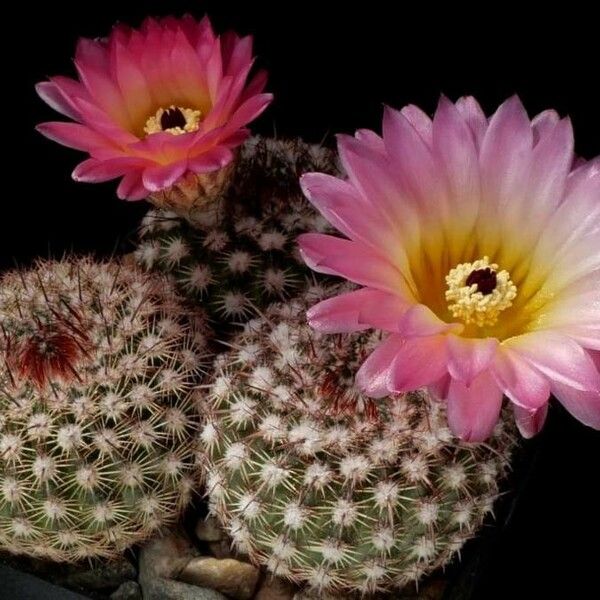
- 🌼 The Bloom: During the warmer months, it produces large, satiny flowers at the crown. The petals are a brilliant lemon-yellow, but the real showstopper is the center, where a bright red or purple stigma stands out in sharp contrast.
🏡 In Your Garden
- ☀️ Light & Exposure: While it loves brightness, this species is sensitive to intense, direct afternoon sun which can cause "scorching" or permanent scarring. It thrives best in "bright-indirect" light or morning sun.
- 🪨 Mineral Substrate: In the wild, it grows among rocks and grasses. It requires a very porous, gritty soil mix. Because it has a relatively sensitive root system, it is prone to rot if the soil stays damp for more than a couple of days.
- 💤 Winter Rest: This cactus appreciates a dry, cool winter "nap." Stopping water entirely during the coldest months helps encourage the spectacular yellow blooms to form in the spring.
⚠️ Safety & Toxicity
- 🟢 Non-Toxic Status: Parodia mueller-melchersii is considered non-toxic to humans, cats, and dogs. There are no known poisonous alkaloids within the plant.
- 🌵 Mechanical Injury: Though not chemically dangerous, the spines are stiff and sharp. They can easily puncture skin or paws, so it is best kept on a high shelf away from curious toddlers or pets who might mistake it for a toy ball.
✨ Fun Fact
The genus Parodia was named in honor of Lorenzo Raimundo Parodi, a famous Argentinian botanist. This specific species is a classic "Notocactus"—a group of cacti famous for their fuzzy tops and colorful stigmas—before they were reclassified into the broader Parodia family!

Detailed Care Instructions

Place in a bright room that is sun drenched almost all day. Or directly in a south-facing window.

To water this type of plant, you should first make sure that the soil is completely dry before watering. When it's time to water, thoroughly saturate the soil with room temperature water, making sure to soak all areas evenly. Allow any excess water to drain away from the soil and never let the plant sit in standing water as this can lead to root rot. Watering frequency will vary depending on the environment, but wait until the soil has completely dried out before watering again.
These plants can thrive without taking help from any fertilizer. However, if the medium of growth is something other than soil for instance sand then you may need to add little fertilizer. The best way to know if your plants need fertilizer or not is to check for yellowing of leaves. If the leaves start to turn yellow it’s fertilizing time.
You may use All Purpose Plant Food or Cactus Fertilizer for your Parodia Mueller-melchersii
When potting Parodia Mueller-melchersii plants, it is important to choose soil that is well-draining. A mix of garden soil, coarse sand, and perlite can be used to create a suitable mixture. The soil should contain high levels of organic matter to promote healthy growth. It is important to avoid using heavy or clay-like soils, as this can lead to waterlogging and root rot. A pH range of 6.5-7.5 is ideal for these plants, and adding lime to the soil can help to adjust the pH if necessary. Additionally, it is important to ensure that the soil is kept moist but not too wet, as overwatering can also lead to root rot. Regular fertilization with a balanced fertilizer can help to promote healthy growth and flowering in these plants.
Common pests of the parodia mueller-melchersii include Scale insect, mealybugs, spider mites, thrips. Make a habit of checking your parodia mueller-melchersii frequently for pests so that any infestations can be caught and managed early.








