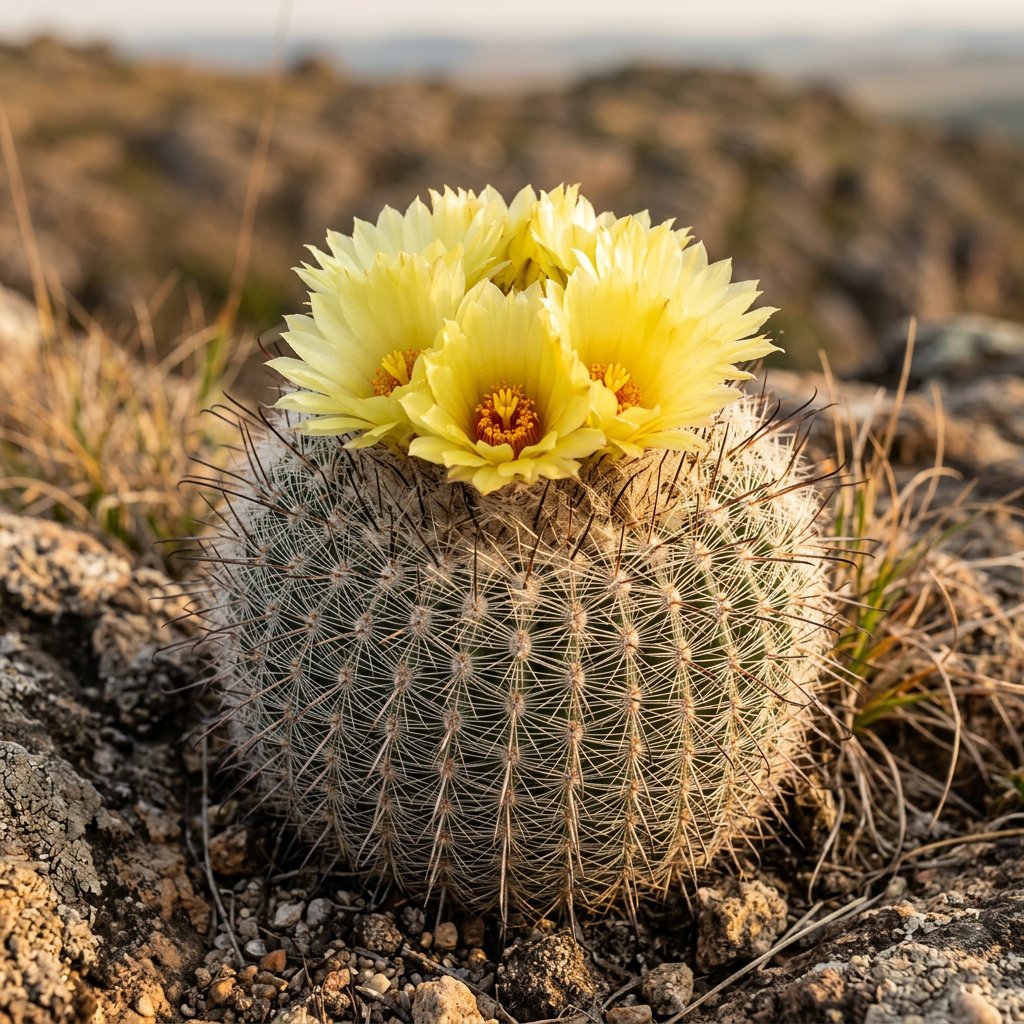
Plant Overview
Known affectionately as the Silver Ball Cactus or Snowball Cactus, this South American native is a showstopper for any sunny windowsill. Its name scopa comes from the Latin word for "broom," referring to its incredibly dense, brush-like spines that obscure the green body of the plant. In its natural habitat of Southern Brazil and Uruguay, it clings to rocky outcrops, looking like a shimmering pearl tucked between the stones.
🔍 How to Identify
- ⚪ The Body: It begins its life as a perfect, silver-white globe, eventually stretching into a column as it matures, reaching up to 12 inches in height.
- 🖌️ The Spines: It is densely wrapped in fine, white radial spines that look soft from a distance but feel like a stiff brush. Often, a few darker, reddish-brown central spines peek through the white.
- 🟡 The Bloom: In late spring, it wears a "crown" of satiny, lemon-yellow flowers. These blooms are surprisingly large and feature a distinct, deep red center (the stigma).
🏡 In Your Garden
- 🏜️ Drainage is Key: The Silver Ball is highly sensitive to "wet feet." It requires a very gritty potting mix—ideally 50% pumice or perlite—to ensure water moves through the roots quickly.
- 🌤️ Light Nuance: Unlike desert cacti that crave punishing heat, this species prefers bright, filtered light. Too much direct, midday summer sun can actually scorch its skin, causing permanent brown scarring.
- 💤 The Winter Chill: To trigger those beautiful yellow flowers, the plant needs a "dry sleep" in winter. Keep it in a cool room (around 50°F/10°C) and withhold almost all water until spring arrives.
⚠️ Safety & Toxicity
- 🌵 Mechanical Hazard: The Silver Ball is non-toxic if nibbled, but its spines are its primary defense. They are stiff and sharp, capable of piercing skin or causing irritation to curious pets.
- 🐾 Pet Placement: Because it looks "fuzzy" and inviting, keep it on a high shelf where cats or dogs won't be tempted to bat at it, as the spines are difficult to remove from paws.
✨ Fun Fact
The Parodia scopa is a master of disguise! When it is young, its spines are so dense that they act as a natural "sunscreen," reflecting UV rays to keep the plant's internal temperature cool during hot South American afternoons.

Detailed Care Instructions
| Humidity | Dry |
| Difficulty | Medium |
| Temperature | 20°C - 30°C |
| Hardiness Zones | 9B - 11B |
Here are some steps to help you grow Parodia Scopa plants:
- Purchase a healthy Parodia Scopa plant from a reputable nursery or online seller. Look for a plant with healthy green stems and no signs of damage or disease.
- Choose a suitable pot with drainage holes to plant the Parodia Scopa. Use a well-draining cactus or succulent soil mix.
- Place the plant in a sunny location where it can receive at least six hours of direct sunlight per day. Parodia Scopa plants thrive in bright light conditions.
- Water the plant thoroughly when the top inch of soil feels dry. However, make sure not to overwater as Parodia Scopa plants are susceptible to rot. Allow the soil to dry out between watering.
- Fertilize the plant during the growing season (spring and summer) with a balanced cactus or succulent fertilizer. Follow the instructions on the fertilizer package for proper dosage and application.
- Protect the plant from extremely high or low temperatures. Parodia Scopa plants prefer temperatures between 65-85°F (18-29°C). Protect them from frost during winter months.
- Repot the plant every two to three years or when it becomes root-bound. Use a slightly larger pot to accommodate the growing roots.
- Watch out for common pests like mealybugs and scale insects. If you notice any infestation, treat the plant with an appropriate insecticidal soap or horticultural oil.
- Provide adequate airflow around the plant to prevent fungal diseases. Avoid overcrowding or placing the plant in a humid environment.
- Enjoy the beauty of your Parodia Scopa plant as it grows and blooms. It typically produces bright yellow flowers in the spring.
Remember to always research the specific needs of Parodia Scopa plants and adjust the care accordingly.

Place in a bright room that is sun drenched almost all day. Or directly in a south-facing window.

Parodia Scopa is a type of cactus that requires a specific watering technique to maintain its health. It is important to water this plant only when the soil has completely dried out. When it is time to water, slowly and evenly pour water onto the soil until it starts to seep out of the drainage holes at the bottom of the pot. It is crucial to avoid getting water on the plant's body or spines, as this can lead to rot or damage. Additionally, it is recommended to use room temperature or lukewarm water when watering, as cold water can shock the plant. In the winter, it is important to reduce watering frequency to once every 2-3 months to avoid overwatering and allow the plant to enter a dormant period.
To properly fertilize this cactus plant, use a well-balanced fertilizer with equal parts nitrogen, phosphorus, and potassium. Fertilize during the growing season (spring and summer), but avoid fertilizing during the dormant period (fall and winter). Dilute the fertilizer to half strength and apply it to moist soil every two to four weeks. Be careful not to over-fertilize, as it can harm the plant.
Parodia Scopa requires well-draining soil. It is recommended to use a mixture of sand, gravel, and perlite to ensure proper drainage. The soil should not be overly nutrient-rich, as this can lead to overly rapid growth which can damage the plant. It is best to use a cactus or succulent specific soil mix, or create your own by mixing potting soil with coarse sand, perlite, and small rocks. The soil should be dry before watering, but not completely bone-dry, to prevent root damage.
To propagate this plant, first select a healthy and mature specimen with no signs of disease or damage. Using a sterile, sharp blade, carefully cut a healthy stem segment of at least 2-3 inches in length.
Allow the cut end to callus over for several days to reduce the risk of fungal infection, then plant the stem segment in a well-draining soil mixture. Water sparingly until new growth appears, and gradually increase watering as the new plant establishes.
Alternatively, this plant can also be propagated through seeds. Collect ripe seeds and plant them in a suitable potting mix, keeping the soil lightly moist and in indirect light until germination occurs. Once established, the new plants can be moved to their permanent location.
Common pests of the silver ball cactus include Scale insect, mealybugs, spider mites. Make a habit of checking your silver ball cactus frequently for pests so that any infestations can be caught and managed early.








