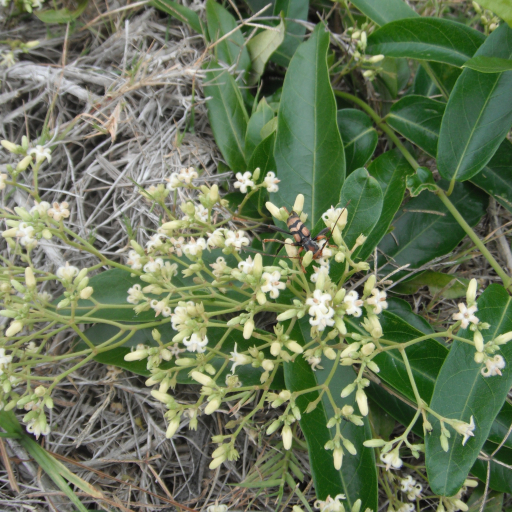
Plant Overview
Often called the "Monkey Rope" because of its thick, woody stems that hang from the forest canopy like jungle vines, Parsonsia straminea is a quintessential Australian native. It is a vigorous climber that transforms from a delicate seedling into a massive, twisting liana over time. While it can be a bit of a "garden bully" if left unchecked, it is highly prized by nature lovers for its sweet fragrance and its role as a vital sanctuary for local butterflies.
🔍 How to Identify
- 🌿 Versatile Foliage: The leaves are leathery and dark green. Interestingly, juvenile leaves are often small and heart-shaped, while adult leaves become much longer, narrower, and tougher to handle the sun.
- 🌼 Scented Blooms: It produces dense clusters of tiny, star-shaped flowers that range from creamy white to pale yellow. They emit a delicate, jasmine-like perfume that is especially noticeable on warm afternoons.
- ☁️ The "Silk" Pods: After flowering, it develops long, slender pods. When these dry and crack open, they release hundreds of seeds attached to long, silky silver hairs that float through the air like tiny parachutes.
🏡 In Your Garden
- 🧗 Structural Support: True to its nickname, this plant needs a sturdy fence, a large pergola, or a mature tree to climb. It uses its stems to twine tightly around structures, making it an excellent choice for creating a thick, evergreen privacy screen.
- 🦋 The Butterfly Buffet: This is a primary host plant for the Common Crow butterfly. If you see caterpillars munching on the leaves, celebrate! Your garden is officially a nursery for one of Australia’s most iconic black-and-white butterflies.
- 💧 Resilient Roots: Once established, the Common Silkpod is incredibly hardy. It can handle periods of dry weather and poor soil, though it will grow much faster and produce more flowers if given a bit of extra mulch and moisture.
⚠️ Safety & Toxicity
- 💧 Milky Latex: Like many members of the Apocynaceae family, the stems and leaves contain a white, milky sap. This sap can cause mild skin irritation for some people and should be kept away from the eyes.
- 🐾 Pet Watch: While not considered highly toxic, the sap can cause an upset stomach if pets chew on the vines. It’s best to plant it in areas where it can grow upward and out of reach of curious puppies.
✨ Fun Fact
In the early days of Australian settlement, the silky down from the seed pods was sometimes collected and used as a soft, luxurious stuffing for small pillows or cushions—literally sleeping on "silk" from the bush!

Detailed Care Instructions
Growing Parsonsia straminea, commonly known as the Common Silkpod or simply Silkpod, can be a rewarding endeavor. This hardy, twining climber is native to Australia and features attractive flowers and distinctive, silky seed pods. Here are steps to help you successfully grow Parsonsia straminea:
Site Selection
- Climate: Parsonsia straminea is adaptable to a variety of climates but thrives best in regions that mimic its native environment, such as temperate to subtropical zones.
- Light: Choose a site with full sun to partial shade. Silkpod can tolerate a range of light conditions but performs best with ample sunlight.
- Soil: Ensure the soil is well-draining. Silkpod is not overly fussy about soil types and can tolerate both acidic and alkaline conditions, but it prefers fertile soil enriched with organic matter.
Planting
- Propagation: Parsonsia straminea can be grown from seeds or cuttings.
- Seeds: Collect seeds from mature pods. Sow the seeds in late winter to early spring in a seed-raising mix. Keep the soil moist and warm to encourage germination.
- Cuttings: Take semi-hardwood cuttings in late spring to early summer. Dip the cut end in rooting hormone and plant in a well-draining propagating mix. Keep the cuttings moist and warm until roots develop.
- Seeds: Collect seeds from mature pods. Sow the seeds in late winter to early spring in a seed-raising mix. Keep the soil moist and warm to encourage germination.
- Transplanting: Once seedlings or cuttings have established roots and are a manageable size, they can be transplanted outdoors. Plant them at the base of a supporting structure like a trellis, fence, or arbor since they are climbing plants.
Care & Maintenance
- Watering: Water regularly, especially during the first growing season to establish a deep, extensive root system. Once established, Silkpod is relatively drought-tolerant.
- Fertilizing: Apply a balanced, slow-release fertilizer during the growing season (spring and summer) to encourage healthy growth and flowering.
- Pruning: Prune lightly after flowering to shape the plant and encourage bushier growth. Remove any dead or damaged stems to maintain a healthy plant.
- Mulching: Apply a layer of mulch around the base of the plant to retain moisture, regulate soil temperature, and suppress weeds.
Pest and Disease Management
Parsonsia straminea is generally resistant to pests and diseases. However, keep an eye out for common issues such as aphids or scale insects. Treat infestations with appropriate organic or chemical controls if necessary.
Support and Training
Since Parsonsia straminea is a twining climber, it will need support to grow upwards. Gently train the stems onto your chosen structure, ensuring they have adequate support as they grow.
By following these steps, you can successfully grow Parsonsia straminea and enjoy its lush foliage and unique seed pods.

Place in a window with dappled sun or a spot in the middle of a room. Or directly in a window facing west or east.

Watering Parsonsia straminea requires attention to both the frequency and method to ensure healthy growth:
1. Soil Moisture: Ensure the soil remains consistently moist but not waterlogged. This species prefers well-drained soil, so avoid letting the plant sit in water.
2. Watering Frequency:
- During the Growing Season: (spring and summer) you should water more frequently. Aim for watering once a week, but this can vary depending on your local climate.
- Dormant Season: (fall and winter) water less frequently, possibly once every two to three weeks, to prevent root rot.
3. Watering Method:
- It's best to water deeply to encourage deep root growth. This can be achieved by watering slowly to ensure the water reaches several inches into the soil.
- Use a watering can with a fine rose or a drip irrigation system to avoid washing away soil or causing damage to the plant.
4. Environmental Considerations:
- Humidity: Although the plant is generally adaptable, it benefits from higher humidity levels. If you're in a dry area, consider misting the plant occasionally.
- Heat: In hot weather, you may need to increase the watering frequency to compensate for increased evaporation and plant transpiration.
By carefully monitoring soil moisture and adjusting based on seasonal changes and environmental conditions, you can ensure healthy growth of Parsonsia straminea.
Parsonsia straminea benefits from a balanced fertilization regimen. Here are some guidelines for fertilizing:
- Type of Fertilizer: Use a balanced, slow-release granular fertilizer with an NPK (nitrogen-phosphorus-potassium) ratio like 10-10-10 or 14-14-14. Alternatively, a well-composted organic fertilizer can also be effective.
- Frequency: Fertilize in early spring when new growth begins and again in early summer. This biannual schedule should suffice for most growing conditions.
- Application Amount: Follow the instructions on the fertilizer package regarding the quantity. Generally, for granular fertilizers, you can sprinkle about one to two tablespoons per square foot around the base of the plant. For organic fertilizers, use an equivalent measure as per the product guidelines.
- Application Method: Distribute the fertilizer evenly around the base of the plant, but avoid direct contact with the stem to prevent burning. Work the fertilizer lightly into the topsoil with a hand rake or gently with your fingers.
- Watering: After applying the fertilizer, water the plant thoroughly. This helps dissolve the nutrients into the soil, making them more available to the plant roots.
- Mulching: Adding a layer of mulch (e.g., compost, leaf litter, or straw) around the base of the plant after fertilizing can help retain moisture and provide additional organic matter as it decomposes.
By following these guidelines, you’ll help ensure that your Parsonsia straminea has the nutrients it needs to grow vigorously and healthily.
Parsonsia straminea is a climber that flourishes well in a variety of soil types, but optimal growth is achieved with well-draining, fertile soil. Here are the key aspects to consider:
Soil Characteristics:
- Drainage: Ensure good drainage to prevent waterlogging, which can cause root rot. Sandy loam or loamy soil types work exceptionally well.
- Fertility: Incorporate organic matter like compost or well-rotted manure to enhance fertility and soil structure. This helps provide the necessary nutrients.
- pH Level: Slightly acidic to neutral soil (pH 6.0-7.5) is ideal. Conduct a soil test to determine the pH level and amend it as needed.
- Texture: A mix that retains moisture without becoming compacted is desirable. Light, crumbly soil that allows easy root penetration supports robust growth.
Preparation:
- Amendments: If your soil is heavy clay, improve texture and drainage by adding coarse sand, organic matter, or gypsum. For sandy soils, increase water retention by blending in organic materials like peat moss, compost, or well-rotted manure.
- Organic Matter: Consistently mix organic matter into the top 6-12 inches of soil to provide ongoing benefits as it decomposes, including nutrient supply and improved soil structure.
- Mulching: Apply a layer of mulch around the plant to help retain moisture, regulate soil temperature, and suppress weeds.
Planting Site:
- Choose a location that provides the right conditions, such as partial shade to full sun.
- Ensure good air circulation to prevent diseases.
By adhering to these guidelines, you can create an optimal growing environment for Parsonsia straminea, promoting healthy, vigorous growth.
Propagating Parsonsia straminea, a climbing plant in the Apocynaceae family native to Australia, can be an engaging and rewarding horticultural activity. Here are the steps to propagate this plant:
Seed Propagation:
- Seed Collection:
- Wait for the seed pods to mature and dry on the plant.
- Once the pods are dry, collect them and allow them to split open naturally.
- Extract the seeds from the pods carefully.
- Wait for the seed pods to mature and dry on the plant.
- Seed Preparation:
- Clean the seeds to remove any residue.
- Optionally, you can soak the seeds in warm water for 24 hours to help soften the seed coat and improve germination rates.
- Clean the seeds to remove any residue.
- Sowing Seeds:
- Fill a seed tray or small pots with a well-draining seed-starting mix.
- Sow the seeds on the surface of the soil and lightly cover them with a thin layer of the mix or vermiculite.
- Lightly water the soil to keep it moist but not waterlogged.
- Fill a seed tray or small pots with a well-draining seed-starting mix.
- Germination Conditions:
- Place the seed trays or pots in a warm, bright location with indirect sunlight.
- Maintain consistent moisture levels by misting the soil surface as needed.
- Germination can take several weeks, so be patient.
Cutting Propagation:
- Place the seed trays or pots in a warm, bright location with indirect sunlight.
- Selection of Cuttings:
- Choose healthy, vigorous stems from the plant during the growing season (spring or early summer is best).
- Select semi-hardwood cuttings, which are partially matured stems that are neither too soft nor too hard.
- Choose healthy, vigorous stems from the plant during the growing season (spring or early summer is best).
- Preparation of Cuttings:
- Cut a 4-6 inch section of stem just below a node, where the leaf joins the stem.
- Remove the lower leaves, leaving the top two or three pairs of leaves intact.
- Optionally, dip the cut end in a rooting hormone to encourage root development.
- Cut a 4-6 inch section of stem just below a node, where the leaf joins the stem.
- Planting Cuttings:
- Fill small pots with a well-draining rooting mix, such as a combination of perlite and peat moss or a commercial seed-starting mix.
- Insert the cut end of the cutting into the soil, burying it about halfway.
- Firm the soil around the base of the cutting to ensure good contact.
- Fill small pots with a well-draining rooting mix, such as a combination of perlite and peat moss or a commercial seed-starting mix.
- Rooting Conditions:
- Water the cuttings lightly to moisten the soil.
- Cover the pots with a plastic bag or place them in a propagator to create a humid environment.
- Place the pots in a warm, bright location with indirect sunlight.
- Keep the soil consistently moist but not soggy.
- Water the cuttings lightly to moisten the soil.
- Care and Transplanting:
- Check the cuttings periodically for signs of rooting, which can take several weeks.
- Once roots have developed and the cuttings show new growth, they can be gradually acclimatized to normal humidity conditions.
- After sufficient root growth, transplant the new plants into larger pots or their final outdoor location.
Layering (Optional):
- Check the cuttings periodically for signs of rooting, which can take several weeks.
- Layering Technique:
- Identify a low-growing stem that can be easily bent to the ground.
- Wound the stem slightly at the point where it will touch the soil to encourage rooting.
- Bury the wounded section of the stem in the soil, securing it in place with a small U-shaped wire or a rock.
- Ensure the tip of the stem remains above the soil.
- Identify a low-growing stem that can be easily bent to the ground.
- Rooting and Transplantation:
- Keep the soil around the layered stem consistently moist.
- Once roots have formed (which can take a few months), sever the new plant from the parent and transplant it to its desired location.
Propagation methods can vary in success, and environmental conditions play a significant role, so it may take some experimentation and patience to achieve the best results.
- Keep the soil around the layered stem consistently moist.








