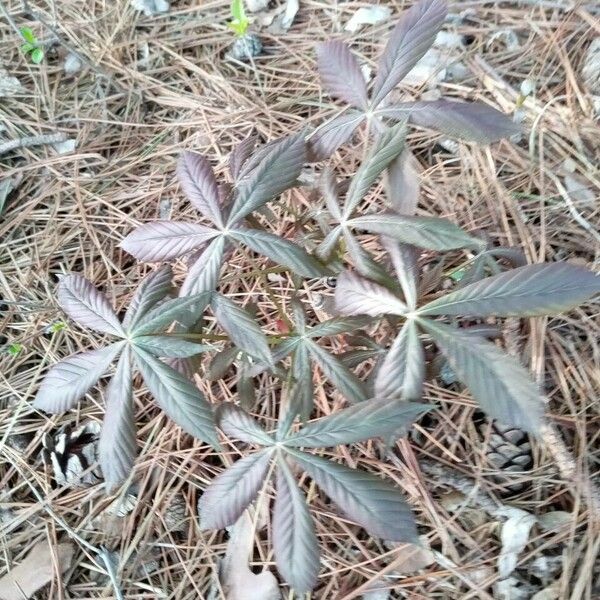
Plant Overview
Known as the Sevenleaf Creeper, this woody vine is a rare and refined gem native primarily to the limestone hills of Central Texas. While it belongs to the same family as the common Virginia Creeper, it is much more localized and prized by native plant enthusiasts for its delicate texture. It is a master of vertical transformation, turning drab fences into lush, living tapestries.
🔍 How to Identify
- 🖐️ Leaflet Count: Unlike its five-leafed cousins, this plant typically boasts seven distinct leaflets arranged like the fingers of a hand (palmately compound).
- 🌿 Leaf Texture: The leaflets are smaller, narrower, and more deeply serrated than other creepers, giving the vine a lacy, "fern-like" appearance from a distance.
- 🍇 Fruit & Stems: In late summer, it produces clusters of small, bluish-black berries held on bright red stalks, providing a striking color contrast.
🏡 In Your Garden
- 🧗 Climbing Style: It climbs using slender, twining tendrils rather than aggressive "suction cup" pads. This means it is much gentler on your home's siding or stone walls, preferring to wrap around wire fences or trellises.
- 🌵 Drought Specialist: Evolution in the Texas Hill Country has made this plant incredibly tough. It loves well-drained, rocky soil and is far more heat-tolerant and drought-resistant than most ornamental vines.
- 🍂 Autumn Brilliance: If you want a "fireworks show" in the fall, this is your plant. The foliage transitions from a deep summer green to a spectacular, glowing burgundy or crimson as temperatures drop.
⚠️ Safety & Toxicity
- 🚫 Non-Edible Berries: While birds love them, the berries contain calcium oxalate crystals which are toxic to humans, dogs, and cats. Ingestion can cause severe mouth irritation and digestive upset.
- 🧤 Skin Irritation: The sap contains raphides (tiny needle-like crystals) that can cause a localized rash or "burning" sensation for people with sensitive skin. It is best to wear gloves when pruning.
✨ Fun Fact
- 🦋 A Moth's Haven: The Sevenleaf Creeper serves as a primary host plant for several species of Sphinx Moths. If you find large, colorful caterpillars on the vine, leave them be! They eventually transform into "Hummingbird Moths," which are spectacular, hover-capable pollinators that visit flowers at dusk.

Detailed Care Instructions
Parthenocissus Heptaphylla, also known as Sevenleaf creeper, is a fast-growing climbing vine that is easy to grow. Here are some tips on how to grow this plant successfully:
- Choose a suitable location: Parthenocissus Heptaphylla thrives in full sun to partial shade. Choose a spot that receives at least 6 hours of sunlight a day.
- Soil: Plant the vine in well-draining soil with a pH level of 5.5 to 7.5. The soil should be rich in organic matter.
- Watering: Keep the soil consistently moist but not waterlogged. Water the plant deeply once a week, especially during the hot summer months.
- Fertilizing: Fertilize the vine with a balanced, slow-release fertilizer in the spring. Avoid using high nitrogen fertilizers, as they can promote excessive foliage growth at the expense of flowers.
- Pruning: Prune the vine in the late winter or early spring to control its size and shape. Remove any dead or damaged branches and trim back overgrown growth.
- Support: Parthenocissus Heptaphylla is a climbing vine and will need a support structure to grow on. Provide a trellis, fence, or other support for the vine to cling to.
- Propagation: The vine can be propagated through stem cuttings or layering. Take a 6-8 inch cutting from a healthy plant, strip the lower leaves, and plant it in a pot filled with a well-draining potting mix. Keep the cutting moist and warm until roots develop.
By following these tips, you can successfully grow and enjoy the beauty of Parthenocissus Heptaphylla in your garden.

Place in a window with dappled sun or a spot in the middle of a room. Or directly in a window facing west or east.

Parthenocissus Heptaphylla plants should be watered consistently to keep the soil evenly moist, but not waterlogged. It is best to water the plant at the base to ensure that the roots receive sufficient moisture. Allow the top inch of soil to dry out slightly between watering to prevent overwatering. In the growing season, typically spring and summer, the plant may require more frequent watering. During the dormant season, reduce watering to prevent root rot. It is important to monitor the plant closely and adjust the watering schedule as needed based on environmental conditions and the plant's individual needs.
To fertilize the Parthenocissus Heptaphylla plant, apply a balanced, water-soluble fertilizer with a ratio of 10-10-10 or similar in the spring before new growth appears. Follow the instructions on the fertilizer package for the appropriate amount to use based on the size of the plant. Avoid over-fertilizing, as this can lead to nutrient imbalances and potential harm to the plant. Water the plant thoroughly after fertilizing to help the nutrients penetrate the soil and reach the plant's root system. Repeat this fertilizing process once or twice during the growing season, but avoid fertilizing in late summer or fall, as this can stimulate new growth that may not have enough time to harden off before winter.
Parthenocissus heptaphylla plants thrive in well-draining soil that is rich in organic matter. A mixture of loamy soil and compost is ideal for these plants, as it provides the necessary nutrients and moisture retention to support healthy growth. Avoid using heavy clay or sandy soils, as they may not provide the optimal conditions for Parthenocissus heptaphylla plants to thrive. It is also recommended to ensure that the pH level of the soil is slightly acidic to neutral, as alkaline soil can hinder the plant's ability to absorb nutrients. Adding a layer of mulch around the base of the plant can help retain soil moisture and regulate soil temperature, promoting optimal growth and development.
- Propagation of Parthenocissus Heptaphylla can be done through stem cuttings. Choose a healthy stem from the parent plant, preferably one that is young and vigorous.
- Using a clean, sharp pair of scissors or pruning shears, cut a 4-6 inch section of the stem just below a leaf node. Remove any leaves from the bottom half of the cutting.
- Fill a small pot with well-draining potting soil and moisten it slightly. Make a small hole in the soil and gently insert the cutting into the hole, making sure at least one leaf node is buried in the soil.
- Place the pot in a warm, bright location with indirect sunlight. Keep the soil consistently moist, but not waterlogged.
- You can also dip the cut end of the stem cutting in rooting hormone to promote faster root growth, although this is not necessary.
- After a few weeks, roots should begin to form on the cutting. You can gently tug on the cutting to see if it has anchored itself in the soil.
- Once roots have formed, you can transplant the cutting into a larger pot or into the garden. Make sure to acclimate the new plant to outdoor conditions gradually to prevent transplant shock.
- With proper care and maintenance, your propagated Parthenocissus Heptaphylla plant should grow into a healthy and vibrant specimen in no time.








