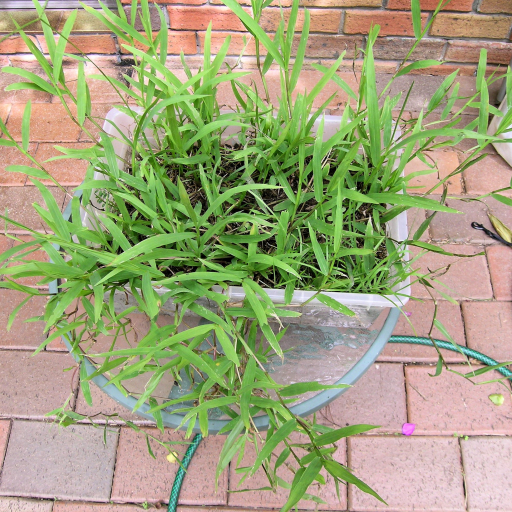
Plant Overview
Known as Buffalo Grass, Sour Grass, or Carabao Grass, Paspalum conjugatum is the ultimate survivor of the tropical lawn. Often seen forming a lush, lime-green carpet where other grasses struggle, this resilient traveler has moved from the Americas to decorate riverbanks and damp gardens worldwide. It is a favorite for those who need a groundcover that can handle a bit of a "tropical mood swing" without fading away.
🔍 How to Identify
- 🌿 The Twin Spikes: The easiest way to spot this grass is by its flower head, which usually branches into exactly two identical spikes, forming a perfect "V" or "Y" shape at the top of the stem.
- 🏃 Creeping Stolons: It spreads via long, often reddish-tinted runners called stolons. These runners root at every node they touch, knitting together a dense, springy mat over the soil.
- 🍃 Wide Leaf Blades: The bright green leaves are relatively short and wide compared to common turf grass, often featuring tiny, soft hairs along the edges that feel slightly velvety to the touch.
🏡 In Your Garden
- 🌧️ Moisture Lover: Unlike many lawn grasses that turn brown during a rainy spell, this plant thrives in boggy, poorly drained areas. It actually prefers "wet feet" and is often found near ponds or drainage dips.
- 🌓 Shade Tolerance: It is famous for its ability to stay vibrant under the canopy of large trees or in the shadow of tall fences, making it a "problem solver" for the dim corners of a backyard.
- ✂️ Vigorous Competitor: Because it roots as it crawls, it can be quite aggressive. If you don't edge your garden beds, it will quickly "jump" from the lawn into your flower pots and mulch.
⚠️ Safety & Toxicity
- ✅ Non-Toxic: Paspalum conjugatum is considered safe for humans and is a primary food source for livestock like water buffalo and cattle in tropical regions.
- 🐾 Pet Friendly: It is generally safe for dogs and cats. While cats might occasionally chew on the blades to aid digestion, the plant contains no known toxins that would harm common household pets.
✨ Fun Fact
The species name conjugatum comes from the Latin word for "joined together." This refers to the plant's unique flowering habit where the two seed spikes are joined at a single point, looking like a pair of green antennae!

Detailed Care Instructions
To grow Paspalum Conjugatum plants, follow these steps:
- Choose a suitable location: Paspalum Conjugatum prefers partial shade to full sun conditions. Ensure the area has well-draining soil.
- Prepare the soil: Loosen the soil, removing any weeds or debris. Add organic matter, such as compost, to improve the soil's quality and drainage.
- Planting: Dig a hole slightly larger than the plant's root ball. Place the plant in the hole, ensuring that it is planted at the same depth as it was in the nursery pot. Gently fill the hole with soil, firming it around the plant.
- Watering: Give the plant a thorough watering immediately after planting. Afterward, water regularly to keep the soil consistently moist but not waterlogged. Adjust the frequency based on rainfall and weather conditions.
- Mulching: Apply a layer of organic mulch around the base of the plant to help retain moisture, suppress weeds, and maintain a consistent temperature.
- Fertilizing: Apply a balanced, slow-release fertilizer during the growing season, following the instructions on the packaging. This will provide nutrients for the plant's healthy growth.
- Pruning: Paspalum Conjugatum plants generally do not require pruning. However, if there are any damaged or dead parts, remove them to maintain the plant's overall health and appearance.
- Pests and Diseases: Monitor the plant for any signs of pests or diseases such as aphids, mealybugs, or fungal infections. Treat any issues promptly using appropriate methods, such as organic insecticides or fungicides.
- Maintenance: Regularly inspect the plant for any signs of stress, disease, or nutrient deficiencies. Maintain a consistent watering schedule and address any issues promptly to ensure the plant's overall health and growth.
- Propagation: Paspalum Conjugatum plants can be propagated through division. Dig up the plant and carefully separate the sections with roots intact. Replant the divisions in suitable locations and follow the same care instructions mentioned above.
Remember to research the specific growing conditions and requirements of Paspalum Conjugatum, as its cultivation may vary slightly depending on your location and climate.

Place in a bright room that is sun drenched almost all day. Or directly in a south-facing window.

To properly water the Paspalum Conjugatum plant, it is essential to take note of various factors such as the soil type and drainage, the environmental conditions, and the plant's growth stage. Start by ensuring the soil is moist, but not waterlogged. This will help the roots absorb water and nutrients easily. The plant should be watered deeply to ensure the water penetrates the root zone of the plant, but care should be taken to avoid over-watering which can lead to root rot.
Check the soil regularly to ensure it is not drying out. In hot or dry weather, the plant may require additional water. When watering, try to avoid getting water on the leaves and instead water the base of the plant.
It is recommended to water the Paspalum Conjugatum plant early in the morning or late in the afternoon when temperatures are cooler. This helps prevent water evaporation and ensures the water can be absorbed by the plant.
During the plant's growth stage, the watering frequency and amount of water applied may need to be adjusted. It is best to monitor the plant regularly to ensure it is receiving the right amount of water for its growth.
Overall, proper watering techniques are essential to maintain the health and growth of the Paspalum Conjugatum plant.
To fertilize Paspalum Conjugatum, use a balanced fertilizer with equal parts nitrogen, phosphorus, and potassium. Apply the fertilizer three times per year, in early spring, late spring, and early fall. Use a slow-release fertilizer and apply at a rate of 1 pound per 1,000 square feet of plant bed. Water thoroughly after fertilizing to ensure the fertilizer penetrates the soil and reaches the plant roots. Avoid over-fertilizing, as this can cause the plant to become too lush and susceptible to disease.
Paspalum Conjugatum plant is a tropical grass that requires a well-draining soil that is rich in nutrients. The soil should be slightly acidic with a pH level between 6.0 and 6.5. A soil mix that contains sand, peat moss, and perlite is ideal for this plant. The sand helps with drainage while the peat moss and perlite help retain moisture. Additionally, the soil should not be compacted, as this can lead to poor root growth. It is also important to ensure that the soil is not too wet, as this can cause the roots to rot. Regularly checking the moisture level of the soil and allowing it to dry out slightly before watering can help prevent issues with overwatering.
To propagate this plant, you will need to take stem cuttings from a healthy parent plant. Choose a stem that has at least two or three leaves and is about three to four inches long. Using a sharp, sterile knife or scissors, make a clean cut just below a leaf node.
Next, remove the leaves from the bottom one-third of the cutting and dip the cut end in rooting hormone powder. Place the cutting in a pot filled with well-draining soil mix and water it thoroughly. Cover the pot with a clear plastic bag to create a greenhouse effect and keep the humidity high.
Place the pot in a bright, warm location but out of direct sunlight. Keep the soil moist and mist the cutting regularly to prevent it from drying out. After a few weeks, you should see new growth emerging from the cutting, indicating that roots have formed.
Once the cutting has established roots, you can remove the plastic bag and start to acclimate it to normal room conditions. Gradually increase the amount of sunlight and reduce watering frequency. In a few months, the cutting will have grown into a new plant, ready to be potted up or planted outside in suitable growing conditions.








