Plant Overview
Known colloquially as Dallisgrass or sometimes "Golden Crown Grass," this robust perennial traveler originally hailed from the moist prairies of South America. While it was initially introduced to other continents as a high-quality forage crop for livestock, it has since earned a reputation as a formidable "lawn warrior" that many gardeners find nearly impossible to evict. Its ability to thrive in heavy clay soils where other grasses fail makes it both a survivor and a stubborn squatter.
🔍 How to Identify
- 🌿 The Leaf Blades: Look for wide, deep-green leaves that have a prominent midrib. They are typically smooth on the surface but may have a few long hairs near the base where the leaf meets the stem.
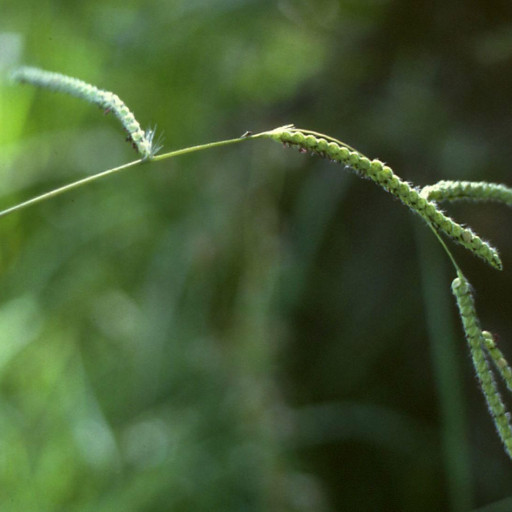
- 🌾 Seed Head Structure: The most recognizable feature is its "candelabra" seed arrangement. It produces 3 to 7 drooping spikes (racemes) that are lined with two rows of fuzzy, oval seeds.
- ⚫ Black Speckles: Upon close inspection, the seeds often appear to have tiny black dots or a "velvety" texture due to microscopic hairs, which distinguishes it from many common lawn grasses.
🏡 In Your Garden
- 🌱 Root Resilience: This plant is notoriously difficult to pull by hand because it grows from short, thick rhizomes. Even if you remove the top, the underground "storage tanks" allow it to resprout quickly, making it a persistent foe in manicured turf.
- 💧 The Moisture Lover: It thrives in low-lying areas or spots with poor drainage. If you see Dallisgrass flourishing, it is often a sign that your soil is compacted or holds onto water longer than it should.
- ✂️ Mowing Mimicry: Unlike taller field grasses, Dallisgrass can adapt to low mowing heights by spreading its leaves horizontally, allowing it to survive right under the blades of your lawnmower.
⚠️ Safety & Toxicity
- 🐾 Potential Risk: While the grass itself is generally non-toxic, it is highly susceptible to an ergot-like fungus called Claviceps paspali.
- 🤢 The "Staggers": If the seed heads are infected with this fungus (which looks like sticky, dark sap), it can cause "Dallisgrass Staggers" in grazing animals or curious pets, leading to trembling and loss of muscular coordination. It is best to keep seed heads mowed down if you have pets.
✨ Fun Fact
Dallisgrass was named after A.T. Dallis of LaGrange, Georgia, who was a passionate advocate for the plant in the 19th century, believing it was the ultimate solution for Southern pastures due to its incredible drought resistance and nutritional value!

Detailed Care Instructions
To grow Paspalum Dilatatum, also known as dallisgrass or Argentine bahiagrass, you can follow these steps:
- Climate: Ensure that your region has a suitable climate for growing Paspalum Dilatatum. It thrives in warm to hot climates and can tolerate moderate frosts.
- Soil preparation: Paspalum Dilatatum prefers fertile, well-draining soil. Prepare the soil by removing any weeds or grasses, and then loosen it by tilling or digging it up.
- Seeding or planting: Paspalum Dilatatum can be grown from seeds or vegetatively from sprigs or plugs. If using seeds, spread them evenly over the prepared soil and lightly rake them in. If using sprigs or plugs, place them about 12-18 inches apart to allow for spread.
- Watering: Keep the soil moist but not waterlogged during the germination period. Water regularly until the grass becomes established, then adjust watering to the needs of the plant and local climate.
- Fertilizer: Apply a balanced, slow-release fertilizer according to the manufacturer's instructions. Fertilize the grass every 4-8 weeks during the active growing season (spring to fall).
- Mowing: Once the grass has reached a height of about 4-6 inches, begin regular mowing. Maintain a cutting height of 2-3 inches to encourage dense growth and discourage weed competition.
- Weed control: Regularly inspect the grass for any weeds or invasive plants. Hand-pull or use herbicides specifically labeled for use with Paspalum Dilatatum to control unwanted vegetation.
- Disease and pest control: Monitor the grass for signs of disease or pest infestation. Follow recommended practices for prevention or treat as needed, using appropriate fungicides or insecticides.
- Maintenance: Regularly check the grass for any signs of stress, nutrient deficiency, or other issues. Address problems promptly to ensure the plant's health and growth.
- Winter care: If you live in an area with cold winters, apply a winterizer fertilizer in the fall to help the grass withstand the season. Reduce watering during the winter months.
Remember that Paspalum Dilatatum is a highly invasive species in some regions, so check with local authorities or agricultural extension offices regarding its legality and any potential negative impacts on the environment before planting.

Place in a bright room that is sun drenched almost all day. Or directly in a south-facing window.

To water this plant, it is important to keep the soil consistently moist but not waterlogged. The best way to achieve this is to water deeply and infrequently, allowing the soil to dry out slightly between waterings. It is also important to avoid getting water on the leaves and to water directly at the base of the plant. Additionally, this plant prefers well-draining soil, so be sure to avoid overwatering and potential root rot.
To fertilize this plant, first test the soil to determine its nutrient levels. Choose a fertilizer with a balanced NPK ratio, such as a 10-10-10 or 20-20-20. Apply the fertilizer in early spring before new growth appears and then again in early summer. Use a broadcast spreader to apply evenly across the desired area. Water the area thoroughly after application. Avoid over-fertilizing as it can lead to excessive growth and potential burning of the plant.
For optimal growth and health, the plant requires well-draining soil with a slightly acidic pH level. The soil should be rich in nutrients, such as nitrogen, phosphorus, and potassium, to support vigorous growth and lush foliage. A combination of organic and inorganic fertilizers can be applied to the soil to enrich it and provide the necessary nutrients. Additionally, it is essential to ensure that the soil does not become waterlogged, as this can lead to root rot and other diseases. Adequate drainage and proper watering practices are crucial to maintaining healthy soil conditions for the plant.
To propagate this plant, you will need to collect seeds or vegetative cuttings.
For seeds, wait until the plant has fully matured and the seed heads have turned brown. Collect the seeds and plant them in a well-draining soil mix. Keep the soil consistently moist but not waterlogged. Germination should occur within 7-14 days.
For vegetative cuttings, select healthy stems and cut them at a 45-degree angle just below a node. Remove the lower leaves from the cutting, leaving only a few at the top. Dip the cut end in rooting hormone and plant it in a well-draining soil mix. Keep the soil consistently moist and provide bright, indirect light. The cutting should root within 2-3 weeks and can be transplanted to a larger pot or directly planted in the ground.








