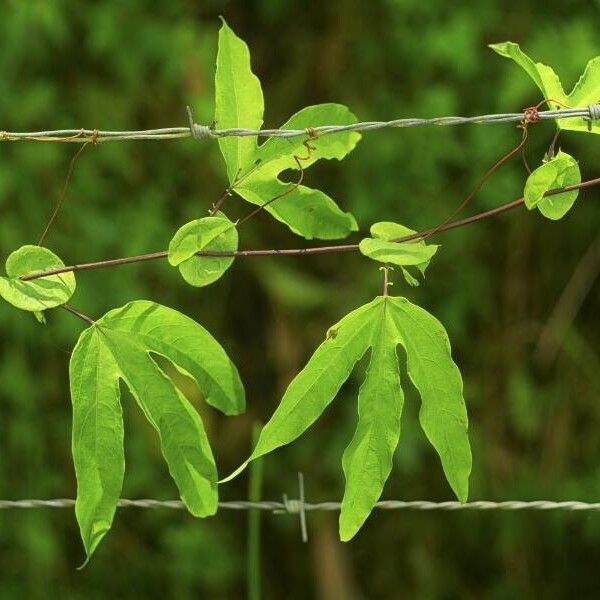
Plant Overview
Known as the Bracted Passionflower, this understated beauty is a native gem of the American Southwest and Mexico. While it lacks the neon purple flare of its more common cousins, its intricate, lace-like flowers offer a sophisticated, ethereal look for any garden trellis. It is a vital player in local ecosystems, acting as a high-energy nursery for some of the most beautiful butterflies in the world.
🔍 How to Identify
- 🌸 The Blooms: Features cream-colored or pale greenish-yellow flowers with delicate, thread-like filaments radiating from the center. They are smaller and more subtle than the tropical varieties.
- 🍃 Leaf Shape: The leaves are distinctly three-lobed with rounded tips, often resembling a broad "W" or a duck’s footprint. They have a smooth, matte texture.
- 🧶 Climbing Tendrils: It produces thin, spring-like curly tendrils that emerge from the leaf stalks, allowing the vine to "lace" itself through fences or neighboring shrubs.
🏡 In Your Garden
- 🦋 Butterfly Buffet: This plant is a primary larval host for the Gulf Fritillary and Zebra Longwing butterflies. If you see orange caterpillars munching on the leaves, celebrate! It means your garden is supporting the next generation of pollinators.
- ☀️ Heat & Soil: Unlike delicate tropical vines, Passiflora affinis is quite rugged. It thrives in well-drained, limestone-heavy soils and is much more drought-tolerant once established than its moisture-loving relatives.
⚠️ Safety & Toxicity
- 🐾 Pet Warning: Most parts of the passionflower vine, especially the leaves and unripe fruit, contain cyanogenic glycosides which can be toxic to dogs, cats, and horses if ingested in large quantities.
- 👶 Human Safety: While some passionfruit species are delicious, the small, dark berries of the Affinis variety are generally not considered edible for humans and can cause stomach upset or worse. Stick to admiring the flowers!
✨ Fun Fact
✝️ Living Symbology: The name "Passionflower" was coined by 15th-century Spanish missionaries who used the flower's anatomy to teach the "Passion of Christ." They saw the ten petals and sepals as the faithful apostles, the fringed filaments as the crown of thorns, and the three central styles as the nails of the cross.

Detailed Care Instructions
To grow Passiflora Affinis, also known as the Bracted Passionflower, you can follow these steps:
- Obtain seeds or a young Passiflora Affinis plant from a reputable nursery or online supplier.
- Choose a suitable location: Passiflora Affinis prefers full sun to partial shade. Ensure the soil is well-draining and fertile.
- Prepare the planting area: Remove any weeds or grass and loosen the soil to allow for proper root growth.
- Plant the seeds or young plant: If using seeds, sow them in the prepared soil, following the instructions on the packet. If using a young plant, dig a hole slightly larger than the root ball and place it in the hole, making sure the soil level remains the same as in the pot.
- Water thoroughly: After planting, water the Passiflora Affinis plant deeply to ensure the roots are adequately moistened. Maintain regular watering, especially during hot and dry periods.
- Provide support: As the Passiflora Affinis vine grows, it will need support to climb. Install a trellis, arbor, or fence near the plant to give it something to cling onto.
- Prune as needed: Passiflora Affinis can be pruned to maintain its shape or control its growth. Pruning is typically done in late winter or early spring before new growth begins.
- Monitor for pests and diseases: Watch out for common garden pests, such as aphids or spider mites. Treat any infestations promptly and use organic or chemical insecticides if necessary. Monitor for signs of diseases like root rot or fungal infections and take appropriate action if needed.
- Harvest the fruit (optional): Passiflora Affinis produces small edible fruits. Wait until the fruits turn yellow and fall off the vine before harvesting. They can be eaten fresh or used in culinary preparations.
- Enjoy the beautiful flowers: Passiflora Affinis produces stunning, intricate flowers that can attract pollinators like butterflies and bees to your garden. Take time to appreciate their beauty and fragrance.
Remember to research the specific care requirements of Passiflora Affinis to ensure optimal growth and health.

Place in a bright room that is sun drenched almost all day. Or directly in a south-facing window.

To provide adequate hydration to the Passiflora affinis plant, it is important to follow certain guidelines:
1. Observe the soil moisture: Before watering, check the soil moisture by inserting your finger about an inch deep into the soil. If it feels dry, it indicates that watering is required.
2. Watering frequency: The frequency of watering may vary depending on factors such as temperature, humidity, and the plant's growth stage. Generally, it is recommended to water Passiflora affinis about once a week during the growing season.
3. Watering technique: To water the plant, use a watering can or a hose with a nozzle attachment to ensure a gentle stream of water. Apply water directly to the base of the plant, avoiding wetting the leaves as this can promote fungal growth.
4. Slow and deep watering: When watering, ensure that the water penetrates deep into the root zone. Slowly apply water until you see it start to run off from the drainage holes at the bottom of the pot or until the soil feels moist to a depth of about 6-8 inches.
5. Avoid waterlogging: Prevent overwatering or waterlogging, as excessive moisture can lead to root rot or other fungal diseases. Make sure the soil has proper drainage to allow excess water to escape, and never let the plant sit in a water-filled saucer or container.
6. Adjusting water needs: Adjust the frequency and amount of watering based on the plant's specific needs. During periods of dormancy or cooler temperatures, the plant may require less frequent watering, whereas during hotter or drier periods it may need more water.
Remember, although adequate watering is crucial, it is equally important to allow the soil to dry out slightly between waterings to prevent waterlogged conditions. Always monitor the plant's response to watering and adjust accordingly to promote healthy growth.
To fertilize your Passiflora Affinis plant, follow these instructions:
- Choose a balanced, water-soluble fertilizer specifically formulated for flowering plants or tropical climbers.
- Dilute the fertilizer according to the instructions on the package. Generally, a ratio of 1 tablespoon of fertilizer per gallon of water is suitable.
- Apply the diluted fertilizer to the soil around the base of the Passiflora Affinis plant, avoiding direct contact with the leaves or stems.
- Water the plant thoroughly after fertilizing to ensure the nutrients reach the root zone.
- Fertilize the plant once every two to four weeks during the growing season (spring and summer). Reduce the frequency to once per month during the dormant period (fall and winter) when the plant's growth slows down.
- Monitor the plant closely for any signs of nutrient deficiencies or excesses. Adjust the fertilization schedule or dosage accordingly.
Remember, too much fertilizer can be harmful to the plant, so always follow the instructions and recommendations provided by the manufacturer.
Passiflora affinis plants thrive in a specific type of soil that meets their specific needs. The ideal soil for Passiflora affinis is well-draining and fertile. It should possess a balanced texture that allows for adequate moisture retention while preventing waterlogging.
The soil should preferably have a slightly acidic to neutral pH level, ranging from 6.0 to 7.0, as this is the range in which Passiflora affinis plants typically flourish. This pH level ensures optimal nutrient availability to the plant.
Furthermore, incorporating organic matter into the soil is beneficial for Passiflora affinis, as it aids in retaining moisture while promoting proper aeration. Adding compost or well-rotted manure to the soil can enhance its fertility and overall structure, promoting healthier growth.
When choosing soil for Passiflora affinis, it is essential to ensure it has good drainage to prevent waterlogging, which can lead to root rot and other issues. While the plant requires adequate moisture, it must not be left sitting in overly moist or waterlogged soil for extended periods.
Consider using a potting mix specifically formulated for tropical plants and ensuring it includes components like perlite or vermiculite, which enhance drainage. This mix will mimic the natural habitat of Passiflora affinis, providing an optimal growing medium for the plant.
Regularly monitoring the moisture levels of the soil and adjusting watering practices accordingly is crucial for maintaining the health and vibrancy of Passiflora affinis. Achieving a balance between delivering sufficient water to the roots while ensuring excess moisture drains away is paramount for the plant's overall well-being.
In summary, Passiflora affinis thrives in well-draining, fertile soil with a slightly acidic to neutral pH level. Incorporating organic matter and using a potting mix suitable for tropical plants can promote healthy growth and vibrant blooming. Regularly monitoring and adjusting watering practices is important to maintain optimal soil moisture levels.
Passiflora Affinis can be propagated through various methods such as seed propagation, stem cuttings, layering, and grafting. Here are the details on each propagation method:
- Seed Propagation:
- Collect seeds from ripe fruits of Passiflora Affinis.
- Clean the seeds and remove any remaining pulp from them.
- Soak the seeds in warm water for a few hours to soften the seed coat.
- Sow the seeds in a well-draining potting mix, lightly covering them with soil.
- Keep the soil moist and place the pot in a warm location with indirect light.
- Germination can take up to several weeks. Once the seedlings develop a few true leaves, they can be transplanted into separate pots.
- Collect seeds from ripe fruits of Passiflora Affinis.
- Stem Cuttings:
- Select a healthy stem from an established Passiflora Affinis plant.
- Cut a 6-8 inch long section of the stem just below a leaf node (where the leaf meets the stem).
- Remove the lower leaves to expose the nodes.
- Dip the cut end of the stem in a rooting hormone powder to stimulate root growth (optional).
- Plant the cuttings in a well-draining potting mix, burying at least one or two nodes in the soil.
- Place the pot in a warm, humid location with bright, indirect light.
- Mist the cuttings regularly to maintain moisture levels.
- Roots should develop within a few weeks. Once rooted, the cuttings can be transplanted into separate pots.
- Select a healthy stem from an established Passiflora Affinis plant.
- Layering:
- Identify a low-growing, flexible stem near the base of an existing Passiflora Affinis plant.
- Gently bend the selected stem down to the ground and make a small incision or scrape the underside where it will touch the soil.
- Bury the wounded section of the stem in a shallow trench or pot filled with soil, leaving the tip above the ground.
- Secure the stem in place using a small stake or wire.
- Keep the soil moist and provide indirect light.
- After a few weeks, new roots should form at the wounded section. Once roots are established, the new plant can be separated from the parent plant and potted.
- Identify a low-growing, flexible stem near the base of an existing Passiflora Affinis plant.
- Grafting (advanced method):
- Select a healthy rootstock plant, preferably a Passiflora species with strong root system and disease resistance.
- Take a stem cutting from a desired Passiflora Affinis plant and make a 45-degree diagonal cut at the base to maximize surface contact area.
- Make a corresponding diagonal cut on the rootstock plant stem.
- Join the two cut surfaces together and bind them tightly using grafting tape or a rubber band.
- Keep the graft union covered with a plastic bag or humidity dome to maintain moisture.
- Place the grafted plant in a warm, well-lit area.
- After a few weeks, the graft union should heal and new growth will begin to emerge.
- Once the graft has successfully taken, the plastic cover can be removed and the plant can be cared for as usual.
Following these propagation methods, you can increase the number of Passiflora Affinis plants and enjoy their unique beauty in your garden or indoor space.
- Select a healthy rootstock plant, preferably a Passiflora species with strong root system and disease resistance.








