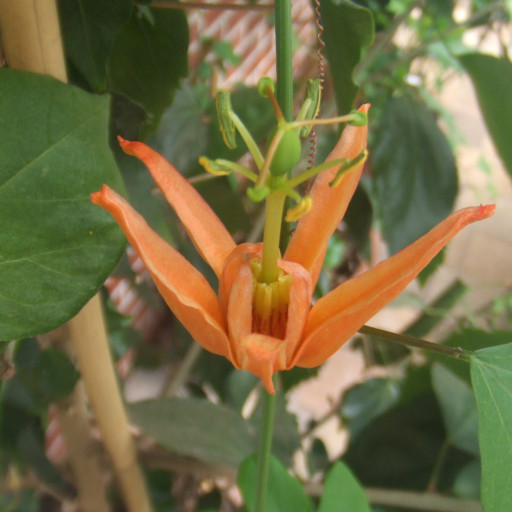
Plant Overview
Commonly known as the Orange Passion Flower or Blunt-leaved Passion Fruit, this striking vine is a native treasure of Australia and the Pacific Islands. It is beloved by gardeners for its "living sunset" effect, where the flowers undergo a dramatic color transformation as they age. It’s the perfect choice for anyone looking to turn a boring fence or trellis into a vertical masterpiece of tropical color.
🔍 How to Identify
- 🌸 The Color Shift: The most unique feature is the flower's lifecycle; blooms emerge as a pale creamy-yellow or soft orange and deepen into a rich, burnt red over several days.
- 🍃 Blunt Leaves: Unlike the pointed leaves of many passionflowers, these are three-lobed with distinctly rounded, "blunt" tips and a smooth, waxy texture.
- 🌀 Spring-Like Tendrils: The plant produces delicate, wiry green tendrils that act like biological springs, coiling tightly around any support they can find to pull the vine upward.
🏡 In Your Garden
- 🧗 Vertical Ambition: This vine is a natural climber that thrives when given a sturdy trellis or chain-link fence. It prefers "reaching for the sky," so providing vertical height will result in a much denser wall of foliage than letting it sprawl on the ground.
- ☀️ Sun-Drenched Blooms: To get the most intense red hues, place this plant in a spot with full sun. While it can tolerate partial shade, the flower production will be sparse, and the colors will remain muted.
- 🦋 Butterfly Nursery: In its native habitat, it is a primary host plant for the Australian Glasswing butterfly. Don't be alarmed if you see a few nibbled leaves; it's a sign your garden is supporting local biodiversity!
⚠️ Safety & Toxicity
- 🐾 Toxic to Pets: Like many members of the Passiflora family, the leaves and stems contain cyanogenic glycosides. If ingested by curious dogs or cats, it can cause vomiting and distress.
- 👶 Ornamental Only: While some passion fruit species are world-famous snacks, the fruit of Passiflora aurantia is generally considered unpalatable and potentially toxic when unripe. It is best to keep this plant strictly for its visual beauty and away from small children.
✨ Fun Fact
The color change isn't just for decoration—it's a sophisticated communication system! By turning red as they age, the flowers signal to pollinators that they have already been "serviced" and are low on nectar, directing bees and butterflies toward the younger, paler flowers that still need pollinating.

Detailed Care Instructions
To grow Passiflora aurantia (Orange Passionflower) plant, you can follow these steps:
- Choose a suitable location: Passiflora aurantia prefers full sun to partial shade. Select a spot in your garden that receives at least 6-8 hours of sunlight. Ensure the soil is well-drained and fertile.
- Prepare the soil: Loosen the soil to a depth of about 12-18 inches. Remove any weeds or rocks and add organic matter like compost or well-rotted manure to improve fertility and drainage.
- Planting time: Plant the Passiflora aurantia vine in spring or early summer after the last frost has passed. Dig a hole twice as wide and as deep as the root ball. Place the plant in the hole, backfill with soil, and gently tamp down around the base.
- Watering: Water the plant thoroughly after planting, and keep the soil moist but not waterlogged. Deep watering once or twice a week is generally sufficient, but adjust based on the weather conditions and soil moisture levels.
- Mulching: Apply a layer of organic mulch around the base of the plant to retain moisture, suppress weed growth, and regulate soil temperature. Maintain a gap between the mulch and the stem to prevent rotting.
- Provide support: Passiflora aurantia is a climbing vine and requires support to grow. Install a trellis, arbor, or fence for the plant to climb upon. Attach the tendrils to the support structure using soft ties or twine.
- Fertilizing: Feed the Passiflora aurantia plant with a balanced fertilizer during the growing season, following the package instructions. Avoid applying excessive nitrogen, as it can promote leafy growth rather than flowering.
- Pruning: Regular pruning helps to control the growth, promote airflow, and encourage blooming. Prune the plant in late winter or early spring before new growth begins. Remove dead, damaged, or diseased branches, and trim back the excess growth.
- Pest and disease control: Monitor the plant for any signs of pests such as aphids, scale insects, or spider mites. Treat them with organic insecticidal sprays or soapy water. Provide good air circulation and avoid over-watering to prevent fungal diseases like powdery mildew.
- Harvesting: Passiflora aurantia produces edible fruit. Harvest the orange fruits when they are fully ripe and slightly soft to the touch. The skin should appear wrinkled. Cut the fruit from the vine, and the pulp and seeds can be consumed or used in recipes.
By following these steps and providing proper care, your Passiflora aurantia plant should thrive and grow well.

Place in a bright room that is sun drenched almost all day. Or directly in a south-facing window.

This plant should be watered regularly, but not excessively, to keep the soil moist. Avoid overwatering as it can lead to root rot. The frequency of watering may depend on factors such as the soil type, temperature, and humidity. Before watering, carefully check the top layer of soil for dryness to avoid over or underwatering. It is recommended to use room temperature water and to water directly at the base of the plant rather than from the top. The use of a pot with drainage holes can help prevent waterlogging. As the plant grows and matures, its watering needs may change, so it’s important to monitor the soil moisture regularly and adjust the watering schedule accordingly.
- Choose a balanced fertilizer with an NPK ratio of 10:10:10 or 20:20:20.
- Dilute the fertilizer according to package instructions, usually one scoop per gallon of water.
- Apply the diluted fertilizer to the soil beneath the plant's canopy, avoiding direct contact with the leaves or stem.
- Water the plant thoroughly after fertilizing to ensure the nutrients reach the roots.
- Repeat fertilization every 2-3 weeks during the growing season, tapering off in fall and winter.
- Monitor the plant for signs of over-fertilization, such as yellowing leaves or burnt tips, and adjust the frequency and amount of fertilization accordingly.
Passiflora aurantia plant prefer well-drained, nutrient-rich soil with a pH of 6.0 to 7.5. The soil should also be slightly acidic to neutral in nature. It is recommended to use a mix of loam, sand, and peat moss in equal proportions. The soil should be loose and fertile, allowing for easy drainage and water retention. The addition of organic matter such as compost or aged manure can also promote healthy growth of the plant. The use of heavy clay or overly compacted soils should be avoided as they can lead to poor drainage and root rot.
- Collect ripe fruit from the Passiflora Aurantia plant when it starts to turn yellow and begins to soften.
- Cut the fruit open and extract the seeds.
- Wash the seeds in water to remove any pulp.
- Fill a small pot with well-draining soil and make a small hole in the center.
- Plant the Passiflora Aurantia seeds about 1/2 inch deep in the pot.
- Water the soil gently to moisten it.
- Cover the pot with plastic wrap to create a humid environment.
- Place the pot in a warm, bright location out of direct sunlight.
- Check the pot daily and mist the soil if it appears dry.
- After 2-4 weeks, the Passiflora Aurantia seeds should start to sprout.
- When the seedlings have grown their first set of true leaves, gently transplant them into a larger pot with fresh, well-draining soil.
- Water the seedlings thoroughly and keep them in a warm, bright location.
- As the Passiflora Aurantia plants grow, provide them with support such as a trellis or stake to climb on.
- Continuously monitor and care for the plants by watering them regularly, fertilizing once a month, and pruning as needed to promote healthy growth.
Common pests of the orange-petaled passion flower include Spider mites, aphids, thrips, larvae. Make a habit of checking your orange-petaled passion flower frequently for pests so that any infestations can be caught and managed early.








