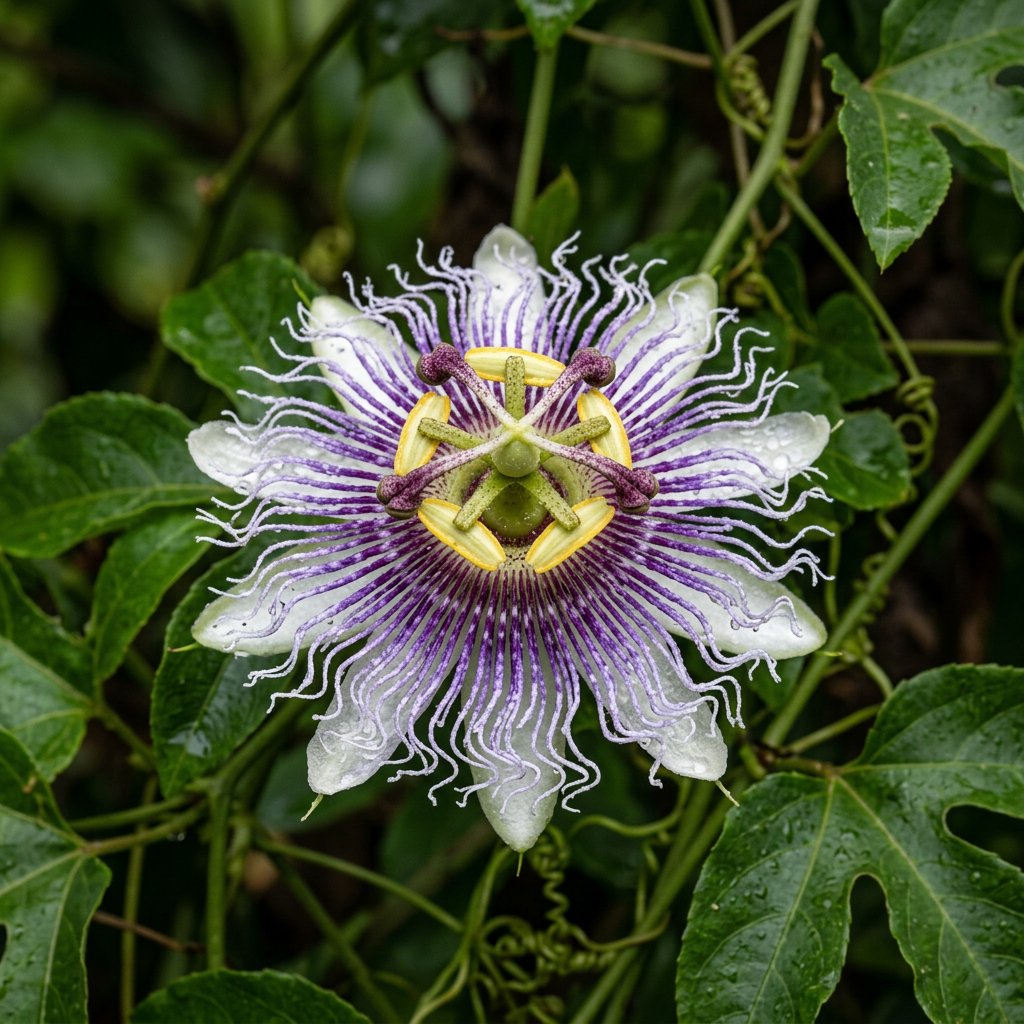
Plant Overview
Known as the Purple Passion Fruit or Maracuja, this tropical beauty is as famous for its intricate, alien-like flowers as it is for its tangy, aromatic fruit. Native to South America, it was named by 16th-century missionaries who saw the complex floral parts as symbols of the "Passion of Christ," turning this vine into a living piece of folklore.
🔍 How to Identify
- 🌸 The "Clock" Flower: Features a stunning white and purple "corona" of hair-like filaments that radiate outward, resembling a clock face or a crown of thorns.
- 🍃 Trilobed Leaves: Dark green, glossy foliage that typically splits into three distinct, pointed lobes with finely serrated edges.
- 🍇 The Fruit: Round or oval berries that transition from smooth green to a wrinkled, deep purple or yellow when they are at their peak sweetness.
🏡 In Your Garden
- 🧗 Born to Climb: This is an incredibly vigorous evergreen vine that uses coiled tendrils to "grab" onto anything nearby. It requires a very sturdy trellis or fence, as the weight of the fruit can cause flimsy supports to collapse.
- 💧 Thirsty but Sensitive: While it craves humidity and regular water to produce juicy fruit, it has a shallow root system that is prone to rot. Mulching is essential to keep the roots cool and moist without letting them sit in "wet feet."
⚠️ Safety & Toxicity
- 🐾 Pet Caution: While the ripe fruit pulp is a delicious treat for humans, the leaves, stems, and unripe green fruit contain cyanogenic glycosides. These can be toxic to cats, dogs, and horses if chewed on.
- 👶 Skin & Stomach: The sap may cause mild skin irritation in sensitive individuals. Ensure children only eat the fruit once it has fully changed color and fallen from the vine.
✨ Fun Fact
🦋 The Butterfly Host: Passiflora edulis is the preferred nursery for the Gulf Fritillary butterfly. If you see bright orange caterpillars munching on the leaves, don't worry! The plant is usually vigorous enough to share, and you'll be rewarded with a garden full of shimmering orange butterflies.

Detailed Care Instructions
| Humidity | Normal |
| Lighting | Part Sun |
| Difficulty | Medium |
| Temperature | 18°C - 24°C |
| Hardiness Zones | Min 9A |
To grow the Passiflora Edulis plant, also known as the passionfruit vine, follow these steps:
- Choose a suitable location: Select a spot in your garden or outdoor space that receives full sun or partial shade. Passionfruit prefers a warm and sunny environment.
- Soil preparation: Make sure the soil is well-draining and fertile. The pH level should ideally be between 6.5 and 7.5. Amend the soil with organic matter like compost to improve its quality.
- Planting: Dig a hole that is twice the size of the rootball of the Passiflora Edulis plant. Place the plant in the hole, making sure the base of the stem is slightly above ground level. Fill the hole with soil and firm it gently around the plant. Space multiple plants approximately 4-6 feet apart.
- Watering: Water your plant thoroughly after planting and keep the soil evenly moist during the growing season. However, avoid over-watering as excessive moisture can lead to root rot. Once the plant is established, it can tolerate short periods of drought.
- Support: Passionfruit vines are climbing plants that require support to grow upright. Install a trellis, fence, or other structures for the vine to climb on. Make sure it is sturdy enough to support the weight of the mature plant.
- Pruning: Regularly prune the plant to maintain its shape and promote healthy growth. Remove any dead, damaged, or diseased branches. Pruning also encourages fruitful growth and helps manage the size of the plant.
- Fertilization: Feed your Passiflora Edulis plant with a balanced, slow-release fertilizer during the growing season. Follow the instructions on the fertilizer packaging for proper application rates and frequency.
- Pests and diseases: Keep an eye out for common pests such as aphids, mealybugs, and spider mites. Treat infestations promptly with insecticidal soap or organic pest control methods. Passionfruit vines can be susceptible to fungal diseases, so ensure good air circulation around the plants and avoid overwatering.
- Harvesting: Passionfruit usually ripens 70-80 days after flowering. The fruits will turn from green to purple or yellow when they are ready to be harvested. Gently twist the fruit off the vine when it is fully colored and slightly soft to the touch.
By following these steps, you can successfully grow Passiflora Edulis and enjoy its delicious fruits.

Place in a window with dappled sun or a spot in the middle of a room. Or directly in a window facing west or east.

To water this plant, it is important to first assess the moisture level of the soil. Check the top layer of soil by touching it with your finger or a moisture meter. If it feels dry or the meter reads low, it's time to water.
Gently pour water around the base of the plant until the soil is evenly moist, but not soaking wet. Be careful not to splash water on the leaves or stems as this can promote fungal growth.
In general, Passiflora Edulis prefers consistently moist soil, but not waterlogged conditions. Allow the top layer of soil to dry slightly before watering again. This may mean watering once a week or more frequently in hot, dry weather.
It's also important to note that this plant benefits from regular fertilization during the growing season, which can help promote overall health and fruit production.
To fertilize this plant, use a balanced fertilizer with equal amounts of nitrogen, phosphorus, and potassium. Apply the fertilizer once a month during the growing season (spring and summer) by mixing it into the soil around the plant. Avoid getting fertilizer on the leaves or stem as this can cause damage. Water the plant well after fertilizing to help distribute the nutrients throughout the soil. If using organic fertilizer, follow the manufacturer's instructions for application rates.
The ideal soil for the Passiflora Edulis plant should be well-draining, moist, and nutrient-rich. It should be a mixture of organic materials such as compost, peat moss, and aged manure. The pH of the soil should be slightly acidic, ranging from 6.0 to 6.5. It is also recommended to mix in some sand or perlite to improve drainage and aeration. Overly compacted soils should be avoided as they can lead to waterlogging and root rot. Additionally, the soil should be amended with a balanced fertilizer once every three months to replenish nutrients.
Passiflora edulis can be propagated by seed or by cuttings.
Propagation by seed involves harvesting ripe fruits, extracting the seeds, and planting them in a soil mix that is kept moist and warm. Germination can take up to several weeks and requires patience and care.
Propagation by cuttings involves taking stem cuttings from healthy plants, dipping the cut ends in rooting hormone, and planting them in a soil mix that is kept moist and warm. Roots should develop within several weeks, and the new plants can be transplanted to larger pots or into the ground.
Both methods require attention to watering, temperature, and light levels to ensure successful growth. It is important to choose healthy parent plants and to maintain a clean, pest-free environment for the seedlings or cuttings.
Common pests of the common passionfruit include Spider mites, aphids, thrips, larvae. Make a habit of checking your common passionfruit frequently for pests so that any infestations can be caught and managed early.








