Plant Overview
Known as the "Maypop" for the way its fruit "pops" loudly when stepped on—or perhaps because it "pops" out of the ground in late spring—Passiflora incarnata is a native North American marvel. Despite its tropical, alien-like appearance, this hardy vine is a tough survivor that brings a touch of the exotic to temperate gardens. It has a long history in herbal medicine and was a significant plant for Indigenous peoples of the Southeast.
🔍 How to Identify
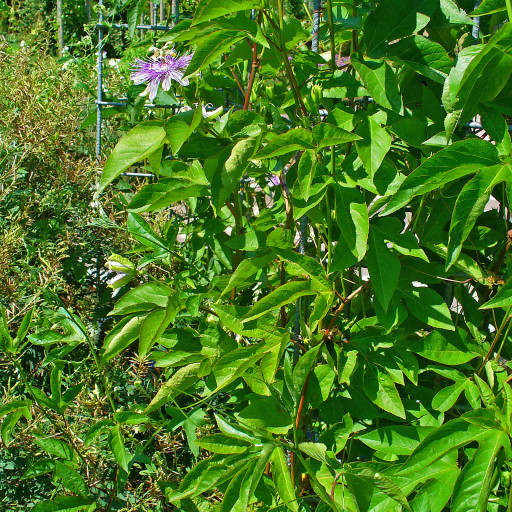
- 🌸 The "Corona" Bloom: The flower is unmistakable, featuring a complex ring of wavy, purple-and-white filaments that sit atop lavender petals like a fringed crown.
- 🍃 Three-Lobed Leaves: The dark green foliage is glossy and deeply divided into three distinct points, often with small nectar glands at the base of the leaf.
- 🥨 Coiling Tendrils: To climb, the plant sends out springy, wire-like tendrils that wrap tightly around anything they touch, from fences to neighboring shrubs.
🏡 In Your Garden
- 🦋 Butterfly Nursery: This is the essential host plant for the Gulf Fritillary butterfly. If you see orange caterpillars munching on the leaves, don't reach for the spray! They are the plant's natural guests and will soon turn into beautiful silver-spotted butterflies.
- 🧊 The Winter Sleeper: Unlike tropical passionflowers, the Maypop is a herbaceous perennial. It will completely disappear in the winter, dying back to the roots. It is a "late riser" and might not emerge from the soil until the ground is thoroughly warm in May or June.
- 🏃 A Persistent Traveler: Be aware that this plant spreads via vigorous underground runners. It "walks" through the garden, and you may find new shoots popping up several feet away from the original planting site.
⚠️ Safety & Toxicity
- 🐾 Pet Safety: Passiflora incarnata is generally listed as non-toxic to dogs, cats, and horses by the ASPCA, making it a much safer alternative to other exotic vines.
- 🥭 Edible Fruits: The yellow, egg-shaped fruits (Maypops) are edible when fully ripe. They have a tart, tropical flavor similar to guava, though they are mostly filled with seeds.
- 🧪 Moderation: While used in teas for its calming properties, the leaves contain small amounts of cyanogenic glycosides and should not be consumed in massive quantities without proper preparation.
✨ Fun Fact
Early Spanish missionaries in the 1500s used the flower as a symbolic tool to explain the "Passion of Christ." They saw the five anthers as the five sacred wounds, the three styles as the three nails, and the frilly purple filaments as the crown of thorns.

Detailed Care Instructions
| Color | Purple, Pink |
| Soil Ph | Neutral, Acidic |
| Humidity | Normal |
| Lighting | Part Sun |
| Soil Type | Well-Drained |
| Bloom Time | Summer, Fall |
| Difficulty | Medium |
| Plant Type | Herbaceous Vine, Perennial |
| Hibernation | Cold Period |
| Mature Size | Up To 20 Ft. Tall |
| Native Area | North America |
| Sun Exposure | Full Sun, Partial Shade |
| Hardiness Zones | 7-11 |
To grow a Passiflora Incarnata plant, also known as the Maypop or purple passionflower, follow these steps:
- Choose a sunny location: Select a spot in your garden that receives full sun or partial shade. Passiflora Incarnata prefers well-draining soil and needs a minimum of six hours of direct sunlight each day.
- Prepare the soil: The soil should be fertile and loamy. Add organic matter such as compost to improve the soil's quality and drainage. Avoid heavy clay soils as they can retain too much water.
- Planting: Dig a hole twice the size of the root ball of your Passiflora Incarnata plant. Place the plant in the hole and backfill with soil, ensuring that the crown is level with the ground. Gently firm the soil around the plant to remove air pockets.
- Watering: Water the plant thoroughly after planting and keep the soil consistently moist but not waterlogged. Passiflora Incarnata prefers regular watering and may require additional water in hot and dry conditions.
- Mulching: Apply a layer of organic mulch around the base of the plant to help retain moisture, regulate soil temperature, and suppress weed growth. Avoid piling mulch directly against the stem to prevent rot.
- Support: Passiflora Incarnata is a climbing vine that needs support. Install a trellis, fence, or other structure near the plant to allow it to climb and spread. Attach the vines to the support using soft ties or garden twine as they grow.
- Pruning: Prune the plant in early spring to remove dead or damaged growth. Passiflora Incarnata blooms on new growth, so pruning can help promote more flowers. Trim back any overgrown or tangled vines to maintain the plant's shape and size.
- Fertilizing: Feed Passiflora Incarnata with a balanced, slow-release fertilizer in early spring and again in midsummer. Follow the manufacturer's instructions for the correct dosage. Avoid excessive use of nitrogen-rich fertilizers, as it can encourage lush foliage growth instead of flowers.
- Protection from frost: Passiflora Incarnata is a cold-hardy plant but can be damaged by severe frost. Cover the plant or bring it indoors during freezing temperatures to protect it.
- Pests and diseases: Monitor the plant for common pests like aphids, spider mites, or caterpillars, and treat them with organic insecticides if necessary. Ensure good air circulation around the plant to prevent fungal diseases.
With proper care and growing conditions, your Passiflora Incarnata plant will thrive and produce beautiful, fragrant flowers.

Place in a bright room that is sun drenched almost all day. Or directly in a south-facing window.

When watering this plant, it is important to keep in mind that it prefers soil that is consistently moist but not waterlogged. This can be achieved by watering deeply and thoroughly once or twice a week, depending on the humidity and temperature of the environment. Avoid overwatering, which can lead to root rot and other issues. Make sure to water at the base of the plant and not on the leaves or flowers. It is also important to avoid letting the soil completely dry out, as this can cause stress and damage to the plant. Consider using a moisture meter to monitor the level of moisture in the soil. In addition to regular watering, this plant may benefit from occasional misting to increase humidity and prevent spider mites.
To fertilize this plant, apply a balanced fertilizer with an NPK ratio of 10-10-10 during the growing season (spring to summer) every 2 to 3 weeks. For best results, dilute the fertilizer to half strength and apply it to the soil around the base of the plant. Be sure to water the plant thoroughly after fertilizing to prevent root burn. Avoid fertilizing during the winter months when the plant is dormant.
For Passiflora Incarnata plant, it is best to use well-draining soil that is rich in organic matter. The soil should have a slightly acidic pH level, ideally between 6.0 and 6.5. Avoid using heavy or clay soils that can retain too much moisture and may cause root rot. A good soil mix for Passiflora Incarnata can be a combination of peat moss, perlite, and vermiculite. It is also recommended to add some slow-release fertilizer to the soil mix to provide the plant with essential nutrients. Additionally, ensure that the soil is moist but not waterlogged, and provide adequate drainage to prevent water from sitting in the soil.
To propagate this plant, take stem cuttings in the early spring or summer from healthy parent plants. Cut about 6-8 inches from the tip of the stem, making sure there are at least 2-3 leaf nodes on the cutting. Remove the lower leaves from the stem and dip the cut end in rooting hormone powder. Plant the cutting in well-draining soil in a container or directly in the ground, making sure to water regularly. Provide bright but indirect sunlight and maintain a warm temperature of 65-75 degrees Fahrenheit. After a few weeks, new growth should start to emerge from the cutting, and it can be gradually acclimated to more direct sunlight and cooler temperatures.
Common pests of the purple passionflower include Spider mites, aphids, thrips, larvae. Make a habit of checking your purple passionflower frequently for pests so that any infestations can be caught and managed early.








