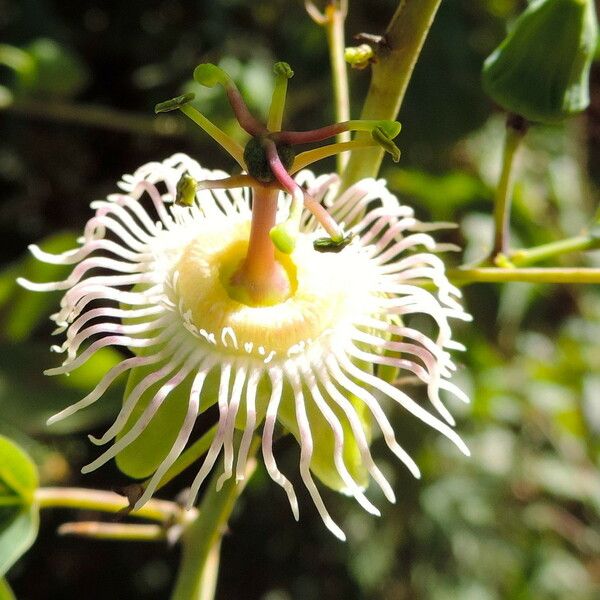
Plant Overview
Known as the "Winged Passionflower" or the "Mexican Bat-wing," this vine is a desert-dweller’s dream. Unlike the flashy, oversized blooms of its tropical cousins, Passiflora mexicana wins hearts with its mysterious, architectural foliage. It is a resilient climber that tells a story of the sun-drenched landscapes of Mexico and the American Southwest, offering a subtle elegance that thrives where other vines might wither.
🔍 How to Identify
- 🍃 Bat-Wing Foliage: The leaves are the primary giveaway; they are deeply two-lobed and broad, looking remarkably like the outstretched wings of a bat or a soaring bird.
- 🌸 Subtle Blooms: The flowers are smaller and more delicate than common passionflowers, featuring greenish-yellow or creamy petals with a striking center of dark purple or crimson filaments.
- 🍇 Dark Berries: After blooming, it produces small, round fruits that transition from a dusty green to a deep, dark purple or black as they ripen.
🏡 In Your Garden
- ☀️ Heat Resilience: This species is a "heat hero." While most passionvines crave humidity, the Mexican variety is remarkably drought-tolerant once established, making it perfect for xeric landscapes or sun-baked patios.
- 🧗 The Taproot Rule: It develops a significant taproot to search for deep moisture. Because of this, it hates being moved! Ensure you plant it in its "forever home" to avoid the dramatic wilting known as transplant shock.
⚠️ Safety & Toxicity
- 🐾 Toxic to Pets: Like many members of the Passiflora genus, the leaves and unripe fruits contain cyanogenic glycosides.
- 🚫 Keep Away: It is considered toxic to cats, dogs, and horses if ingested. While the small purple fruits may look tempting, they should not be consumed by humans or pets, as they can cause severe stomach distress.
✨ Fun Fact
The unique "bat-wing" leaf shape is a clever survival tactic! Some botanists believe the plant evolved this specific shape to mimic the appearance of a butterfly that has already claimed the territory. This tricks real butterflies into thinking the plant is "full," discouraging them from laying their hungry, leaf-eating caterpillars on the vine.

Detailed Care Instructions
To grow Passiflora Mexicana, also known as Mexican passionflower, follow these steps:
- Choose the right location: Passiflora Mexicana prefers full sun to partial shade, so select a spot in your garden that receives at least 6 hours of direct sunlight each day. Ensure the area has well-draining soil.
- Prepare the soil: Before planting, amend the soil with organic matter such as compost to improve drainage and enrich the soil. This will enhance the plant's growth and development.
- Planting: Dig a hole that is slightly wider and as deep as the root ball of the Passiflora Mexicana plant. Carefully place the plant in the hole, ensuring the top of the root ball is level with the soil surface. Backfill the hole with soil and gently firm it around the base of the plant.
- Watering: Water the plant thoroughly after planting to settle the soil and encourage root establishment. Passiflora Mexicana requires consistent moisture, so water regularly, providing about 1-2 inches of water each week. Avoid overwatering, as it can lead to root rot.
- Mulching: Apply a layer of organic mulch, such as wood chips or straw, around the base of the plant. Mulching helps conserve moisture, suppress weeds, and regulate soil temperature.
- Pruning: Prune your Passiflora Mexicana plant to keep it tidy and promote healthy growth. Prune in late winter or early spring before new growth appears. Remove any dead, damaged, or crossing branches. You can also lightly prune to control the plant's size and shape.
- Fertilizing: Passiflora Mexicana benefits from regular feeding during the growing season. Apply a balanced, slow-release fertilizer according to the package instructions. Avoid excessive nitrogen, as it can lead to excessive leaf growth but fewer flowers.
- Support: Passiflora Mexicana can grow as a vine, so provide support such as a trellis, arbor, or fence for the plant to climb on. Secure the vines using soft ties or twine to avoid damaging the plant.
- Protection: In colder climates, Passiflora Mexicana may not tolerate freezing temperatures. Protect the plant during winter with frost cloth or bring it indoors if necessary.
- Pests and diseases: Monitor your Passiflora Mexicana plant for common pests like aphids, spider mites, and whiteflies. Treat infestations promptly with organic insecticides or insecticidal soaps. Additionally, watch for diseases like powdery mildew and treat accordingly with appropriate fungicides.
By following these guidelines, you can successfully grow Passiflora Mexicana and enjoy its beautiful flowers and potentially attract butterflies and hummingbirds to your garden.

Place in a bright room that is sun drenched almost all day. Or directly in a south-facing window.

To water this plant, it is important to consider the soil moisture level and the ambient temperature. The plant needs to be watered regularly during the growing season, which typically falls between spring and autumn. During the winter season, the plant may require less water since growth slows down and the soil may take longer to dry out.
Before watering, it is advisable to check the soil moisture level by slightly digging into the soil with a finger or a gardening tool. If the soil feels dry to the touch, it is time to water the plant. However, if the soil feels moist or damp, it is better to wait before watering.
When watering, avoid using cold water as it may shock the roots and affect the plant's growth. Instead, use water that is at room temperature or slightly warmer. Water the soil gently, avoiding getting water on the leaves or flowers, as this may encourage fungal diseases and cause damage to the plant.
After watering, allow any excess water to drain out of the pot or planting hole to avoid waterlogging, as this can lead to root rot and damage the plant. Finally, monitor the plant's response to watering to determine the best watering routine that suits its needs.
- Use a balanced fertilizer with an NPK (nitrogen, phosphorus, and potassium) ratio of 10-10-10 or 20-20-20.
- Dilute the fertilizer according to the instructions on the packaging.
- Apply the fertilizer to the soil around the base of the plant.
- Avoid getting the fertilizer on the leaves or flowers, as this can cause damage.
- Water the plant after fertilizing to help the nutrients reach the roots.
- Fertilize every 4-6 weeks during the growing season (spring and summer).
- Reduce fertilization during the dormant season (fall and winter) to once every 2-3 months.
The ideal soil for Passiflora Mexicana should be well-draining and fertile with a pH range of 6.0 to 6.5. A mixture of sand, peat moss, and perlite can be combined with garden soil to create a well-aerated growing medium for the plant. It should be kept moist but not waterlogged, and organic fertilizers can be used to provide nutrients to the plant. A layer of mulch can be added on top of the soil to retain moisture and provide insulation during colder months. It is important to avoid using heavy or compacted soil as it can impede the growth of Passiflora Mexicana.
To propagate this particular plant, it is recommended to take stem cuttings from healthy, mature plants. The best time to take cuttings is during the growing season, preferably in spring or early summer.
Before taking the cuttings, prepare a rooting hormone and a small pot with potting soil. The cuttings should be around six inches long and should be taken from the end of a stem. Remove any leaves from the lower half of the stem and dip the cut end of the stem into the rooting hormone.
Make a small hole in the potting soil and insert the cutting, gently pressing the soil around the stem to secure it in place. Cover the pot with a clear plastic bag to create a humid environment and place it in a warm, bright area that is protected from direct sunlight.
Check on the cutting regularly and mist the soil and the inside of the plastic bag to keep the humidity levels high. After a few weeks, the cutting should start to form roots. Once the roots are well established, the young plant can be transplanted into a larger container or planted directly into soil outdoors.








