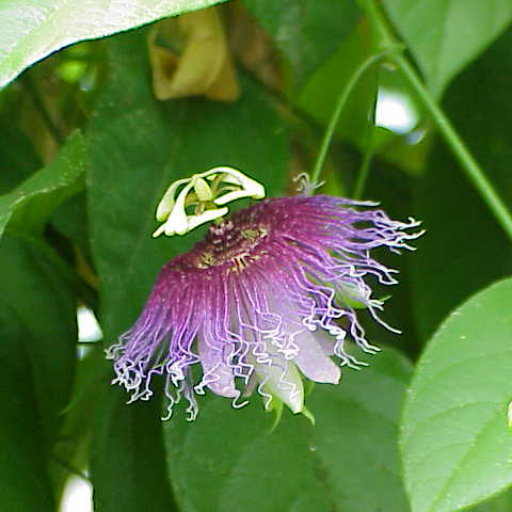
Plant Overview
Known for its distinctively jagged leaves and intricate, multi-layered blooms, Passiflora serratifolia is a crown jewel of the tropical vine world. Originating from the lush rainforests of Mexico and Central America, it acts as a vigorous climber that transforms fences and trellises into a tapestry of deep green and royal violet. It is a favorite for those wanting to achieve a "jungle aesthetic" with a touch of botanical sophistication.
🔍 How to Identify
- 🍃 The Leaves: True to its name (serratifolia means "saw-toothed leaf"), this variety features long, lance-shaped leaves with finely serrated edges that feel slightly velvety to the touch.
- 🌸 The Bloom: The flowers are architectural wonders, featuring a "corona" of long, wavy purple and white filaments that surround a prominent central green stamen.
- 🧶 Vining Tendrils: The plant produces spring-like, wiry tendrils that lash onto nearby structures, allowing it to climb several meters upward in a single growing season.
🏡 In Your Garden
- 🧗 Support is Key: Because of its vigorous growth habit, this plant thrives best when given a sturdy trellis or wire mesh. It "wanders" quickly, so it needs guidance to prevent it from overtaking neighboring shrubs.
- 💧 Humidity Lover: Coming from the tropics, it appreciates consistent moisture and high humidity. If the air is too dry, the delicate flower buds may drop before they have a chance to open.
- ☀️ Light Nuance: While it craves light to produce its famous flowers, the leaves can scorch in intense, direct afternoon heat. It performs best in "dappled" sunlight or spots that receive morning sun and afternoon shade.
⚠️ Safety & Toxicity
- 🐾 Pet Caution: Most passionflower vines, including this species, contain cyanogenic glycosides in their leaves and stems. These can be toxic to cats, dogs, and horses if consumed in significant amounts.
- 👶 Keep Out of Reach: While the ripe fruits are often considered harmless, the ornamental nature of the plant means it should be kept away from curious children who might be tempted to nibble on the foliage or unripe green fruit.
✨ Fun Fact
The "Passion" in Passionflower doesn't actually refer to romance! 15th-century Spanish missionaries named the plant because they believed the complex parts of the flower represented different elements of the Crucifixion story, with the fringed corona representing the crown of thorns.

Detailed Care Instructions
To grow a Passiflora serratifolia plant, also known as the Serrated Passionflower, follow these steps:
- Obtain seeds or a young plant:
- Purchase Passiflora serratifolia seeds or seedlings from a trusted nursery or online seed supplier.
- Alternatively, collect seeds from fresh fruits of the passionflower plant if available.
- Purchase Passiflora serratifolia seeds or seedlings from a trusted nursery or online seed supplier.
- Choose the right location:
- Select a sunny spot with well-draining soil. Ideally, the plant should receive 6-8 hours of direct sunlight per day.
- Select a sunny spot with well-draining soil. Ideally, the plant should receive 6-8 hours of direct sunlight per day.
- Prepare the soil:
- Ensure the soil is loose, fertile, and well-draining. If the soil is heavy or compacted, amend it with organic matter like compost or peat moss to improve drainage.
- Ensure the soil is loose, fertile, and well-draining. If the soil is heavy or compacted, amend it with organic matter like compost or peat moss to improve drainage.
- Sow the seeds or plant the seedling:
- If using seeds, soak them in warm water overnight to promote germination.
- Sow the seeds about 1/4 inch deep in the soil or plant the seedling at the same depth as it was in the pot, ensuring good contact between roots and soil.
- If using seeds, soak them in warm water overnight to promote germination.
- Watering:
- Regularly water the plant, aiming to keep the soil slightly moist but not waterlogged. Avoid overwatering as it can lead to root rot.
- Regularly water the plant, aiming to keep the soil slightly moist but not waterlogged. Avoid overwatering as it can lead to root rot.
- Support:
- Provide a sturdy trellis or support structure for the passionflower vine to grow on. Ensure it is securely anchored in the ground or against a wall.
- Provide a sturdy trellis or support structure for the passionflower vine to grow on. Ensure it is securely anchored in the ground or against a wall.
- Fertilization:
- Apply a balanced, slow-release fertilizer once a month during the growing season (spring and summer) to promote healthy growth. Follow the package instructions for dosage.
- Apply a balanced, slow-release fertilizer once a month during the growing season (spring and summer) to promote healthy growth. Follow the package instructions for dosage.
- Pruning:
- Prune the plant to control its growth, promote bushiness, and remove any dead or damaged parts. Pruning is typically done in late winter or early spring.
- Prune the plant to control its growth, promote bushiness, and remove any dead or damaged parts. Pruning is typically done in late winter or early spring.
- Pest and disease control:
- Monitor the plant for pests like aphids, mealybugs, or spider mites. If detected, treat them with insecticidal soap or organic pest control methods.
- Watch out for fungal diseases like powdery mildew or root rot. Avoid overwatering and ensure good air circulation around the plant to prevent these issues.
- Monitor the plant for pests like aphids, mealybugs, or spider mites. If detected, treat them with insecticidal soap or organic pest control methods.
- Harvesting:
- Passionfruit on Passiflora serratifolia usually matures within 70-80 days of flowering. Harvest the fruits when they turn from green to yellow and show signs of ripeness and fragrance.
Remember to research specific varieties and growing conditions, as they may vary slightly. Regular care, attention, and patience will help your Passiflora serratifolia plant thrive and produce beautiful flowers and delicious passionfruit.
- Passionfruit on Passiflora serratifolia usually matures within 70-80 days of flowering. Harvest the fruits when they turn from green to yellow and show signs of ripeness and fragrance.

Place in a bright room that is sun drenched almost all day. Or directly in a south-facing window.

Passiflora Serratifolia plant requires consistent watering to thrive. To avoid over or under watering it, water the plant moderately and ensure that the soil is moist, but not waterlogged. One can check the soil moisture by inserting a finger two inches deep into the soil. If the soil feels dry, it is time to water the plant. When watering, pour water slowly at the base of the plant, avoiding wetting the leaves. Ensure that the soil drains well and does not hold water because root rot can occur if it remains wet for too long. During periods of hot weather, it may be necessary to water more frequently. Note that over-watering can lead to root rot and eventually result in the death of the plant.
To fertilize this plant, use a balanced fertilizer with equal parts nitrogen, phosphorus, and potassium. Apply the fertilizer every 2-3 weeks during the growing season, following the instructions on the packaging. Be careful not to over-fertilize, as this can cause damage to the plant. Water the plant thoroughly after fertilizing to help distribute the nutrients evenly.
Passiflora Serratifolia is a type of plant that requires a specific type of soil for optimal growth. The type of soil that is best for this plant is a well-draining soil that is rich in organic matter. This type of soil should be able to hold moisture, but not become waterlogged. It should also have a pH level that is slightly acidic, around 6.0-6.5.
To create the optimal soil for Passiflora Serratifolia, it is recommended to mix together loamy soil, garden compost, and peat moss. This will provide the plant with the necessary nutrients and drainage that it needs for healthy growth. The soil should also be lightly fertilized with a slow-release fertilizer to provide additional nutrients.
It is important to note that Passiflora Serratifolia is sensitive to changes in soil moisture and pH levels, so it is best to monitor the soil regularly and make adjustments as needed. Additionally, the plant should be planted in an area with good sunlight and protection from harsh winds.
To propagate this plant, first, take a cutting from the stem of the mature plant. Make sure the cutting is at least 6 inches long and remove any leaves from the bottom 2 inches of the stem.
Next, dip the cut end of the stem in rooting hormone powder to encourage root growth. Place the cutting in a pot filled with potting soil and cover it with a plastic bag to create a humid environment.
Place the pot in indirect sunlight and keep the soil moist but not waterlogged. You should see new growth within a few weeks. Once the new plant has several sets of leaves, it can be transplanted to a larger pot or into the ground.
It's important to note that this plant can be susceptible to fungal diseases, so make sure to use clean tools and sterile potting soil to prevent any contamination.








